

Complex deals are slow because they are uncertain, not because they are governed. Follow one deal through the product, the contract, and the economics, and you can see where the speed is hiding.
The short answer
Complex deals are slow because they are uncertain, not because they are governed. The uncertainty sits three levels below the quote: in the product, in the contract, and in the economics. When revenue governance keeps that context current at the moment a rep builds the quote, the quote is right the first time. Nothing goes back for checking, so the deal moves. That is what we mean by Good Revenue Faster.
That is the job of revenue governance. Take away the reasons to check, and the speed takes care of itself.
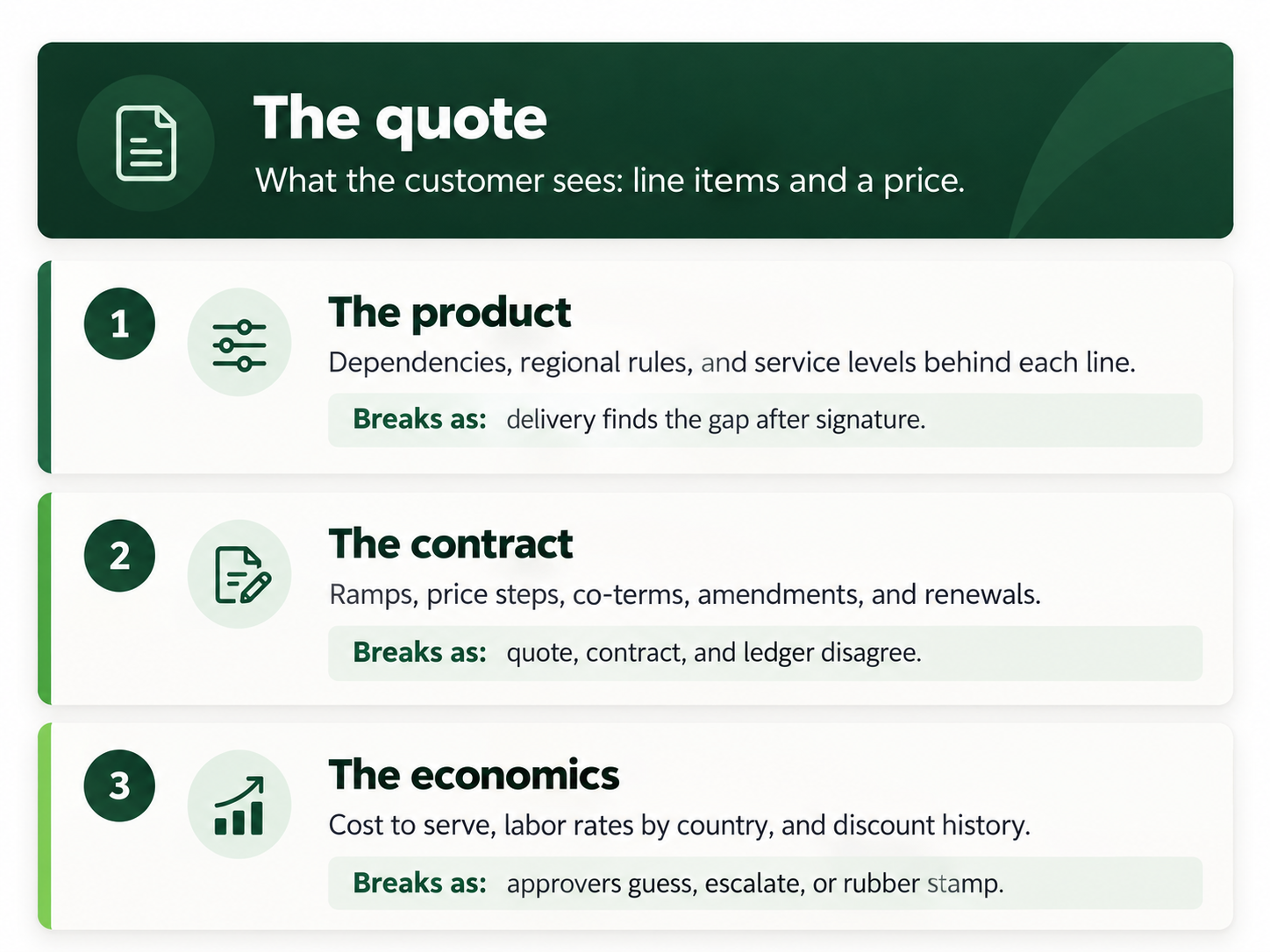
The three levels below the quote
Revenue governance is not the brake
Many revenue leaders carry a quiet assumption: add control and you add delay. More rules, more approvals, slower deals. So they trade one for the other, loosening revenue governance to hit the quarter and tightening it after the margin leaks.
I understand where that comes from. Anyone who has waited a week on an approval that caught nothing knows the feeling. Revenue governance built on guesswork does slow deals down. Every unclear rule turns into another approval, and every approval turns into a queue.
I have no quarrel with approvals. I have a quarrel with approvals that exist only because nobody trusts the number. Those are insurance, and you pay the premium in days.
The odd thing is that pricing leaders know this and still do not fund it. In its April 2026 pricing research, McKinsey asked 419 pricing executives where the impact is and where the money goes. Discount, approval, and governance scored 62% on impact and only 22% on investment. A lever that matters that much and gets funded that little does not get better on its own.
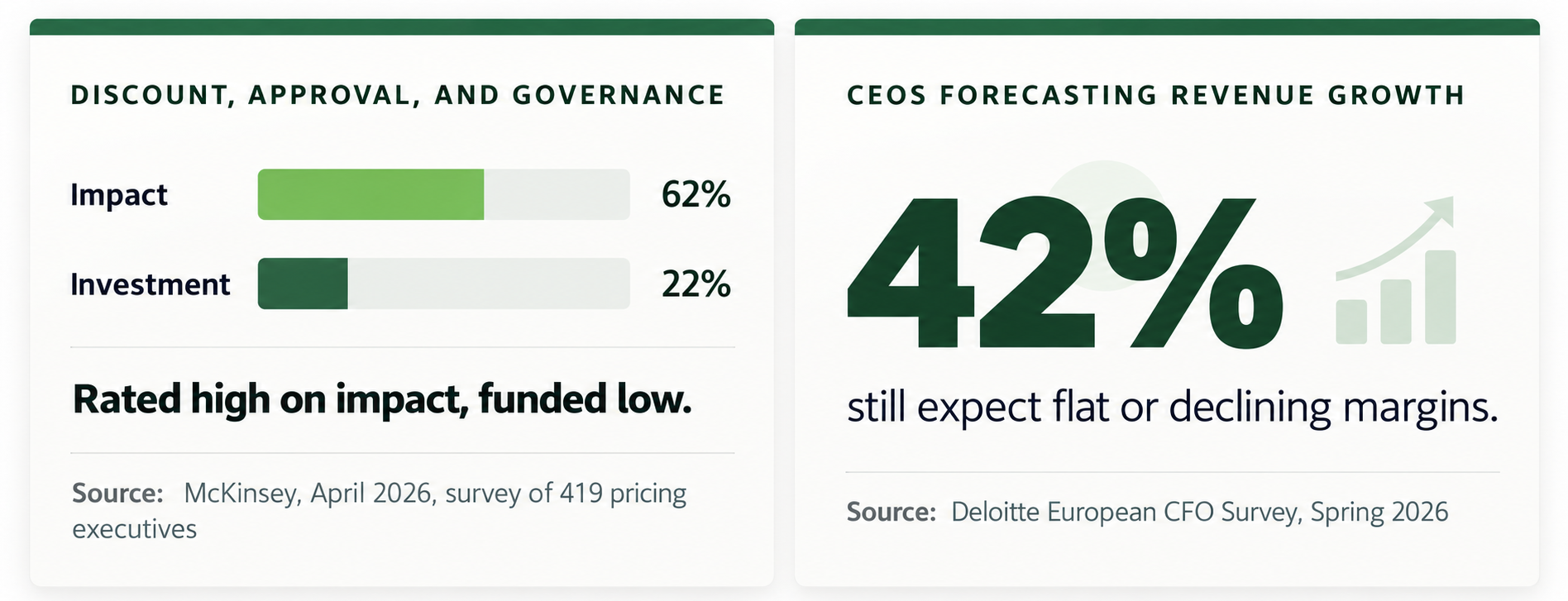
CFOs feel it in the margin line. In Deloitte’s Spring 2026 survey of European CFOs, 42% of those expecting revenue to grow still expect margins to stay flat or fall. Growth that never reaches the margin is the problem revenue governance is supposed to solve.
Where the deal actually stalls
Watch where a complex deal actually stalls. It is rarely the rule itself. It is the four-part, multi-year quote that sits for days while someone rechecks the math, kicks it to finance, hunts for whoever approved the discount, and reprices it after legal flags a term.
I ask revenue leaders how many iterations their deals take. Most can tell me, sometimes to the hour, how fast the first quote goes out the door. Almost none can tell me how many times it came back, or why.
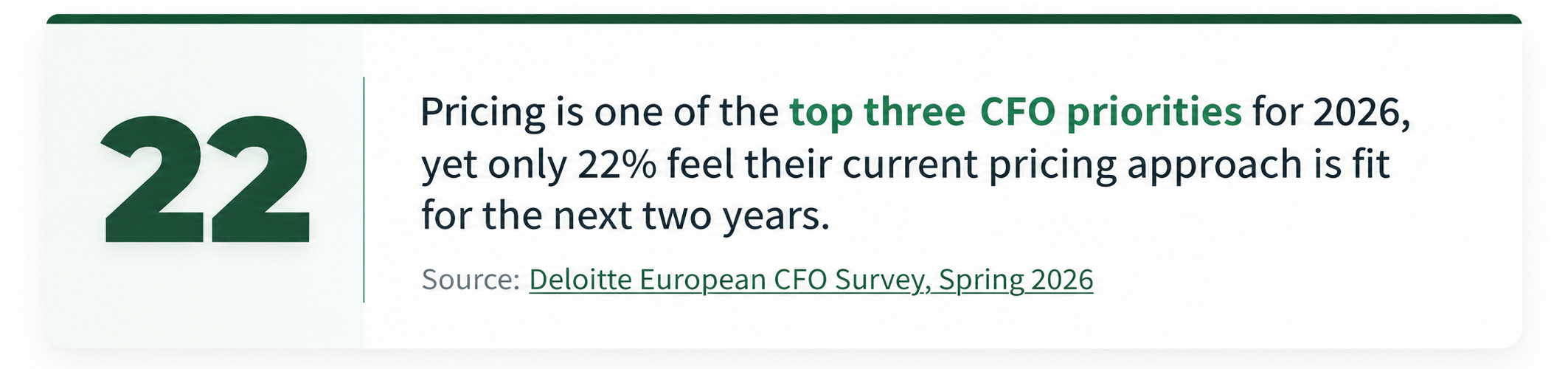
The buyer notices every round trip. Forrester’s 2026 buyer research puts the typical buying decision at 13 people inside the customer and nine advisers outside it. That is 22 people who might read your quote, and any one of them can find the error.
The delay is the checking. And the checking exists because nobody trusted the quote when it left the rep’s hands.
Remove the reason to check and the delay goes with it. That is the whole point of revenue governance. The reason lives in context most quoting tools leave to someone else: three levels below the quote.
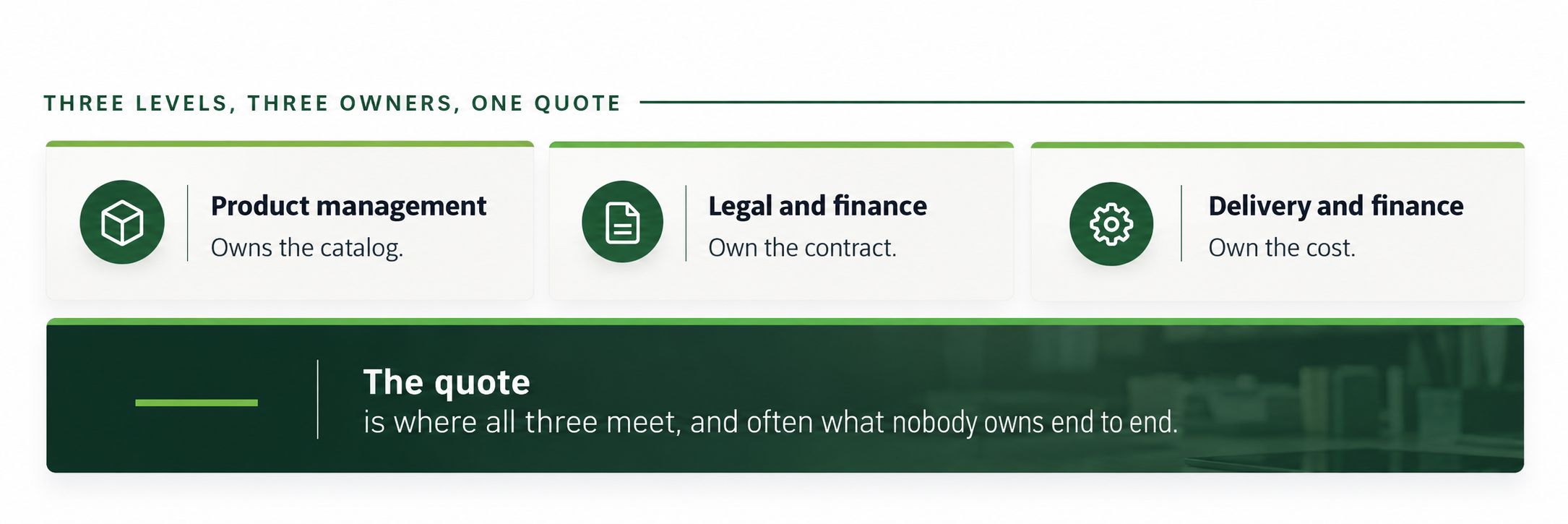
Part of the reason it stays hidden is ownership. Each level has a different owner. Product management owns the catalog. Legal and finance own the contract. Delivery and finance own the cost. The quote is the one place all three meet, and it is often the one thing nobody owns end to end. Revenue governance is the name for owning it.
Level one: the product
The first level down is configuration. A line item on a quote looks simple. Underneath, it depends on other components, carries regional constraints, and ties to a service level that only holds if something else is in the bundle.
Take a rep selling managed security in three countries. It is a made-up deal, but I suspect you will recognize it. The rep does not see that the 24/7 response tier requires a monitoring add-on, or that one country needs a local delivery role priced differently. If the quote misses it, delivery finds it after signature. Then you either eat the cost or reopen the deal.
Configuration mistakes are the cheapest to fix and the most expensive to find late. Before signature, fixing one is a click. After signature, it is a change order, a margin hit, or an awkward call with a customer who thought the price was the price.
Either way, the real question is whether you knew the deal’s margin, risk, and delivery health before you signed, or only after.
I am going to stay with this deal for the rest of the piece. Complex deals rarely fail on one big mistake. They fail on three small blind spots, each invisible from the quote.
Revenue governance starts in the catalog
Governed configuration resolves those dependencies as the rep builds. Invalid combinations never reach the quote, and required components arrive on their own. The rep moves faster because the catalog is doing the remembering.
Reps should sell. Remembering which tier needs which add-on in which country is a job for the system, and the system does not forget.
This is what guided configuration does in servicePath™. Pick the 24/7 tier and the monitoring add-on comes with it. Pick the country and the local delivery role appears. Partners who build their own quotes get the same rules through the self-serve configurator, so a partner’s quote is as right as a rep’s.
The people who own the offer change the rules, with no developers involved, so a new tier goes live when the business decides. And because a managed security bundle is often someone else’s hardware and licenses, our Data Parsing Engine imports the manufacturers’ own product data and pricing, from Cisco, Juniper, HP Enterprise, and others. Nobody rekeys a price file.
So the quote is buildable. Is it bookable?
Level two: the contract
The second level down is the commercial structure. Multi-year deals rarely run flat. Quantities ramp, prices step, terms differ by year, and a price step in month 14 can change how revenue is recognized across the term.
Ramps exist for good reasons. A customer does not want to pay for every seat in month one when most of them will not be in use until month nine. But every ramp is a promise about the future, and the contract has to hold that promise in the same shape the quote made it.
Our security deal runs three years. Seats ramp as each country goes live. And one country already has a monitoring agreement with a different end date, so the new deal has to land on top of an old one. Now the quote is amending something the rep cannot see.
This is where finance gets pulled in late. The quote says one thing, the contract says another, and the ledger has to reconcile both under ASC 606 or IFRS 15. Every mismatch is a manual fix, a delayed booking, or an audit question.
Where revenue governance breaks: the Missing Mile
I call that gap the Missing Mile: the distance between the quote and the general ledger, where commercial intent gets lost before finance ever sees it.
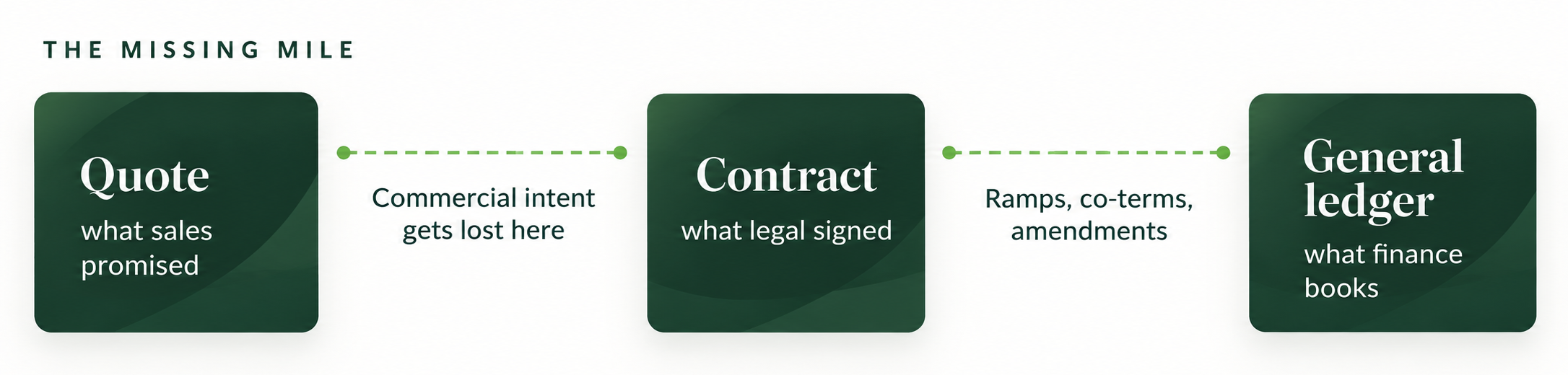
Model ramps, terms, and existing agreements at quote time, and the three describe the same deal.
The accounting does not wait for you to catch up. Under ASC 606, changing the scope or price of an existing contract is a contract modification, and EY’s September 2026 revenue guide sets out when that change counts as a separate contract and when it rolls into the old one.
Add the new countries to the existing monitoring agreement and someone has to make that call. The only question is whether they make it at quote time, with the facts in front of them, or weeks later in finance, by hand.
When revenue governance models quantities over time, ramps, and terms at quote time, the quote and the contract describe the same deal. Finance does not have to reverse engineer it. The deal books cleanly the day it closes.
Finance should be the last team to see a deal, not the first team to fix it.
The renewal starts from the last quote
It does not end at signature, either. One to three years later the renewal comes due, and the renewal starts from whatever the last quote said. Get the contract wrong today and you are pricing the renewal from a guess.
In servicePath™, Service Contracts keeps the customer’s contracts, configurations, and renewals in one place, including revisions for amendments. When our security deal touches the old monitoring agreement, the rep is amending the agreement on record. And because servicePath™ integrates with Salesforce, Microsoft Dynamics, and HubSpot, the CRM record and the contract tell the same story.
Buildable. Bookable. One question left, and it is the one the CFO asks first.
Level three: the economics
The third level down is the one that decides whether the revenue is good. What does this deal cost to deliver? What margin does it carry after discount? How did the last four deals like it perform, and at which approval step did they leak?
Most quoting stops at price. Price is what the customer pays. Margin is what you keep, and it depends on cost to serve, labor rates by country, and the discount history behind similar deals. Without that context, approvers guess, escalate, or rubber stamp.

Back in our deal, the delivery role costs something different in each country, and the 24/7 tier needs people on shift around the clock. Now the customer asks for 15% off. Is that fine? Nobody can say, because the delivery cost is not on the quote.
Put numbers on it
Take a hypothetical $1 million deal at a 30% margin. Fifteen percent off is $150,000, and every dollar of it comes out of the margin, because the delivery cost does not move. The deal still looks fine on the bookings report. Half the profit is gone.

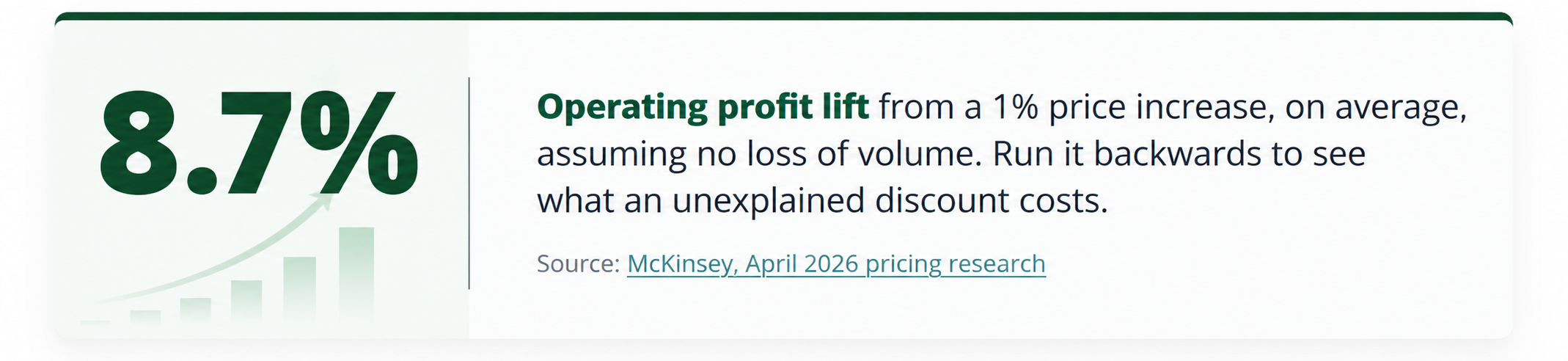
This is not a rounding error. McKinsey’s April 2026 pricing research repeats a figure it has used for years: on average, a 1% price increase lifts operating profit by 8.7%, assuming you do not lose volume. Run that backwards and you can see what an unexplained discount costs.
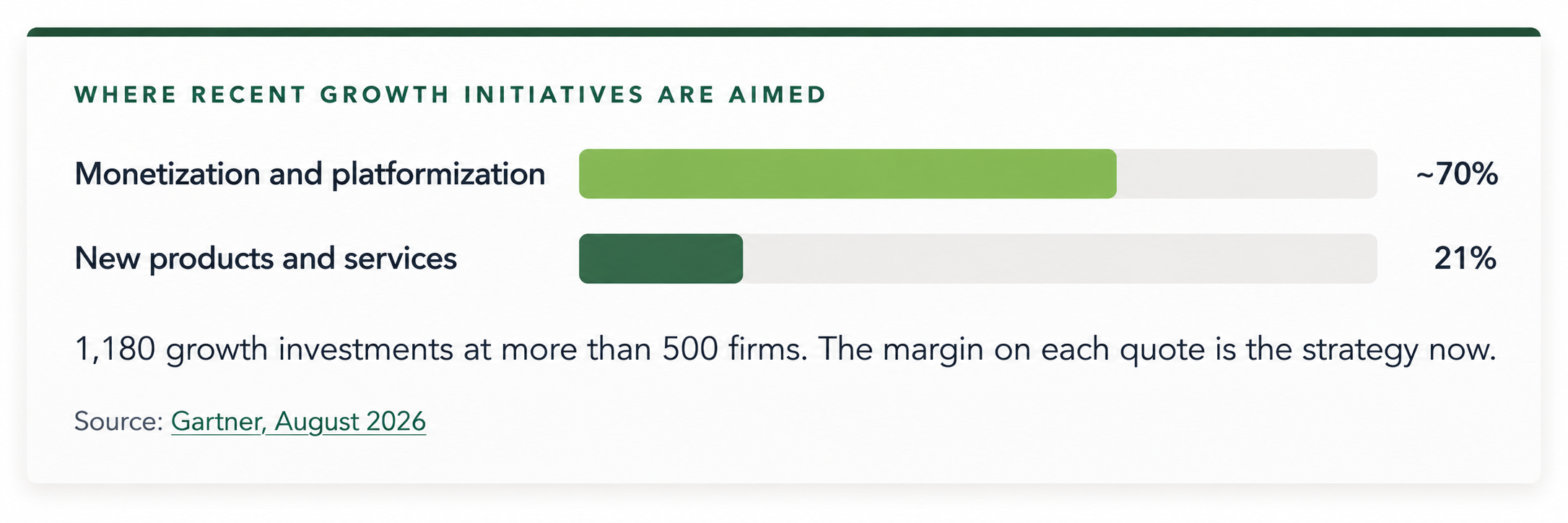
And it matters more every year. A Gartner analysis published in August 2026 looked at 1,180 growth investments at more than 500 firms and found that about 70% of recent growth initiatives centered on monetization and platformization, against 21% on new products and services. Companies are betting more on how they price and package than on what they invent. The margin on each quote is the strategy now.
Approvals that route on facts
When revenue governance puts cost and margin inside the quote, approvals route on facts. A deal inside its guardrails goes straight through. A deal outside them goes to the right person with the reason attached. Fewer escalations, faster decisions, and a margin you can defend.
It only works if people believe the number. BCG wrote up a distributor in May 2026 whose margins rose 2 percentage points, and the main reason was not efficiency. The sales team trusted the pricing recommendations, so they used them. A number nobody believes does not get used.
We built cost to serve into the quote because that is where the decision happens. In servicePath™ the rep sees revenue and margin on any quote, at any time, and sees what a discount does before asking for one. Approval rules send only the quotes outside the norm for review, so the deal desk works the exceptions. Deal dashboards show the structure, margin, and approvals on every deal, and the audit log shows finance who changed what, even a year later.
Telent, one of our customers, describes in its case study a dashboard that shows win rates and margins on each deal. That is how “the last four deals like this one” stops being a guess.
Now the quote is buildable, bookable, and profitable on purpose.
Why AI alone will not give you revenue governance
An AI model can draft a plausible quote in seconds. Plausible is not the bar. A quote has to be exact: valid in configuration, consistent with the contract, and accurate on margin. Each of those answers lives three levels down, in context the model does not have.
Gartner said much the same in May 2026. Without a clear understanding of the relationships and rules in a company’s data, AI agents “cannot operate accurately and are far more likely to hallucinate.”
The AI failures that hurt enterprises will not come from weak models. They will come from capable models working without governed context, producing margin leakage at machine speed. That is a revenue governance problem, not a model problem.
Gartner’s March 2026 predictions say it directly: in the near term, ungoverned decisions using LLMs will cause financial or reputational loss for enterprises. A wrong quote that gets signed is one of those losses.
To be fair to the models, most of what they get wrong is not their fault. Nobody gave them the rule. The model did exactly what a new rep does in week one: it guessed, confidently, from what it could see.
Most companies know their context is not ready for this. In a Deloitte survey published in August 2026, 72% of leaders said they lack unified, accessible data. The agents are coming anyway. Gartner expects AI agents to outnumber sellers ten to one by 2028. Every one of them will quote from whatever context you give it.

AI depreciates, context appreciates
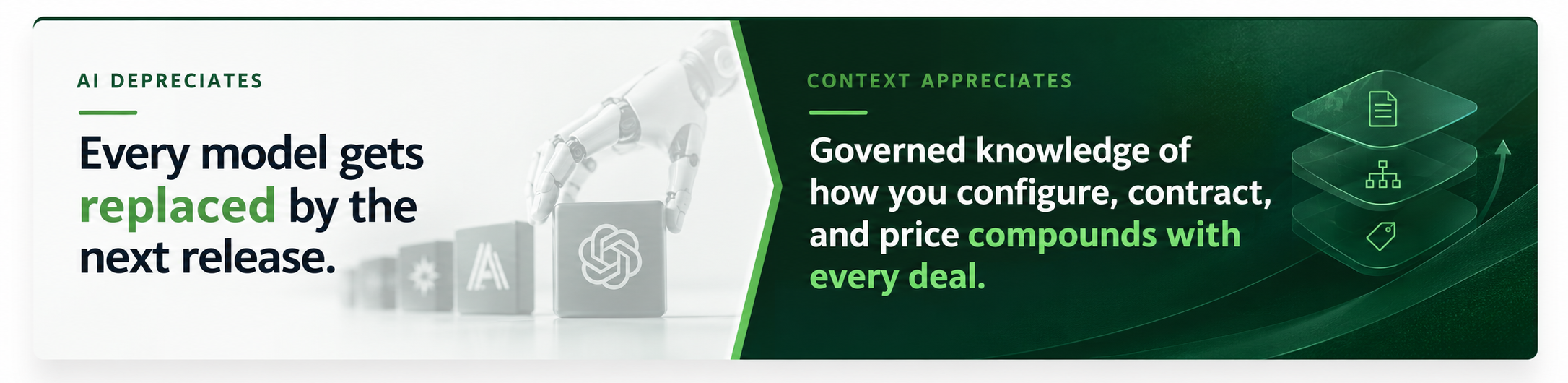
AI depreciates, context appreciates. Every model gets replaced by the next release. The governed knowledge of how your business configures, contracts, and prices compounds with every deal that runs through it.
Context depreciates too, and nobody sends a release note. A rule that was right last year can be wrong today, and a model will apply it with the same confidence.
I landed on that phrase on 3 September 2026, in a working session at servicePath™ on why generic AI keeps failing at pricing precision. Every company I ask has one rule that no model could infer. The best pricing teams can name it in a sentence and show where it is written down.
I am not arguing against AI in the quote. We put it there ourselves. I am arguing about who gets the last word on price.
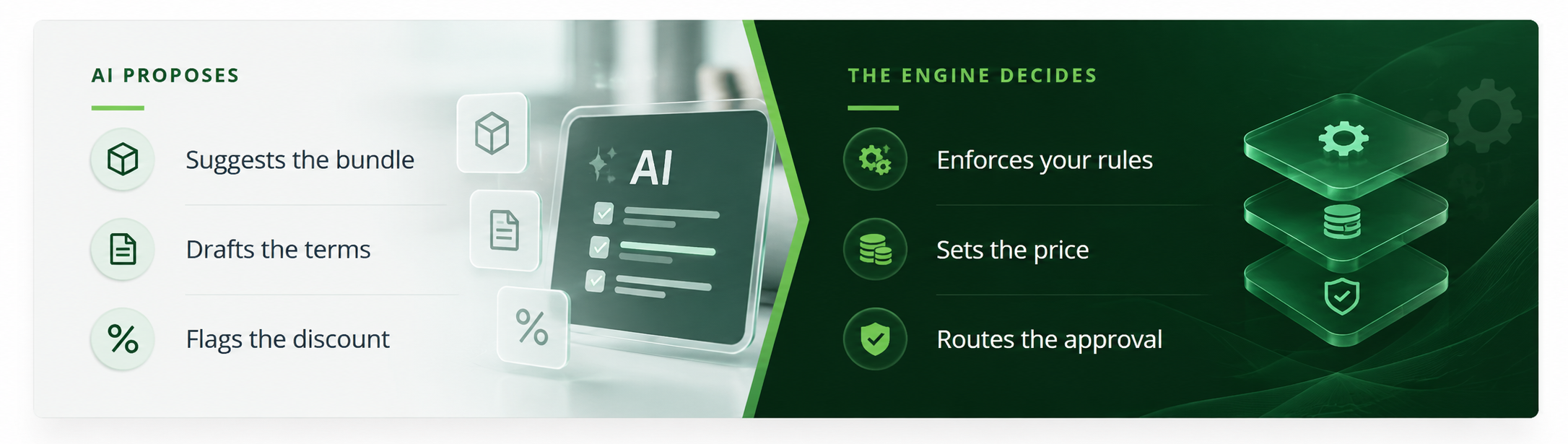
That is why servicePath™ runs revenue governance on a deterministic engine. AI guides the rep and speeds the work. The engine makes sure the answer follows your rules, every time.
BCG reached the same conclusion in May 2026. In its words, “AI proposes and orchestrates,” while rules engines and other rule-based components “enforce precision, auditability, and nonnegotiable guardrails.”
So let an agent suggest the bundle, draft the terms, and flag the discount. Do not let it decide the price on its own.
What Good Revenue Faster looks like
It looks like a complex quote that goes out the same day, correct, approved, and margin checked. It looks like a contract that matches the quote and a booking that matches the contract. And a deal desk that spends its time on the exceptions that matter, not on rechecking the ones that do not.
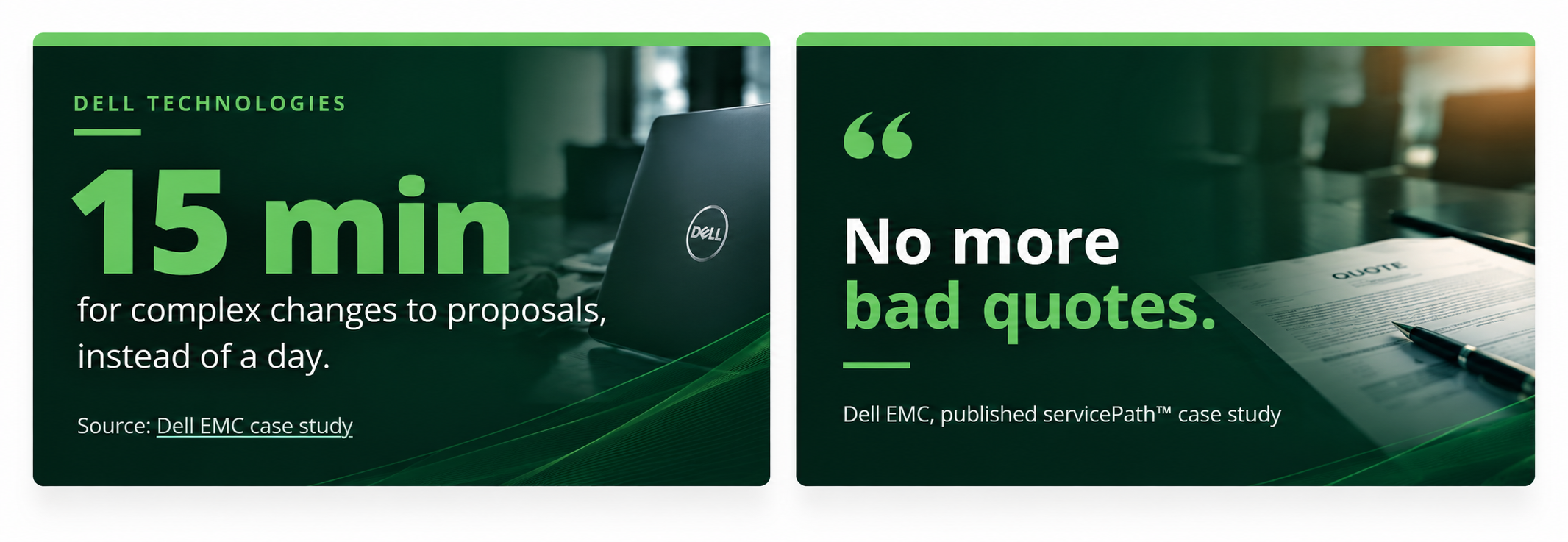
We have seen it work. Dell Technologies, in a case study published when it was still Dell EMC, reported complex changes to proposals taking as little as 15 minutes instead of a day, with many partners now building their own proposals. Dell’s own line for it was “No more bad quotes.” Telent reported accurate quotes out of the gate in minutes after a relatively smooth 8-week implementation.
Speed bought by skipping the checks just moves the iteration downstream.
For the CFO, revenue governance means revenue you can recognize cleanly and margin you can defend in an audit. For the CRO, it means deals that close sooner because nothing is waiting on a manual check. Same mechanism, both outcomes.
That is the part I care about most. For years, revenue leaders heard that revenue governance meant picking speed or control. It was never a real choice.
The people who founded servicePath™ had managed multi-million dollar quotes in spreadsheets at managed service providers and telcos. We built it on a deterministic configuration and pricing engine and kept it that way while the market went the other direction.
The deal desk changes too. When every quote needs checking, the deal desk spends its day checking. When the context is in the quote, it sets the guardrails, owns the real exceptions, and fixes the rule when the same exception keeps coming back. That is a better job, and a more valuable one.
Four numbers that show revenue governance is working
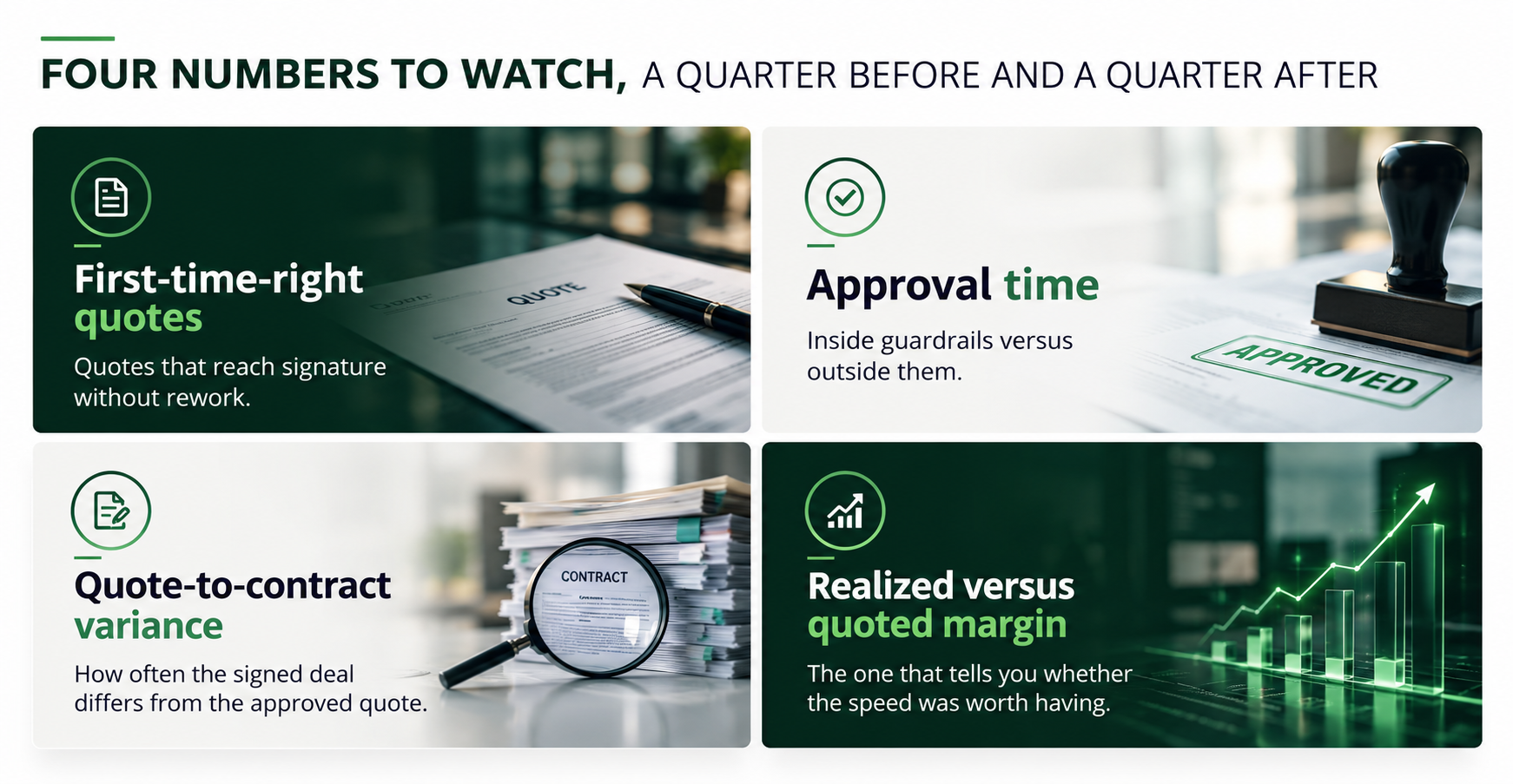
If you want to know whether revenue governance is working, watch four numbers for a quarter before you change anything and a quarter after. How many quotes reach signature without rework. The time approval takes, for deals inside your guardrails and outside them.
How often the signed contract differs from the approved quote. And how the margin you delivered compares with the margin you approved. That last one tells you whether the speed was worth having.
Then go back to the deal that stalled. The fingerprints are usually clear. If a missed component or regional rule changed the deal, it was level one. When finance or legal changed the term, a ramp, or the structure, or the deal ran into a contract nobody had in front of them, it was level two. And if the approver asked for a spreadsheet before saying yes, it was level three.
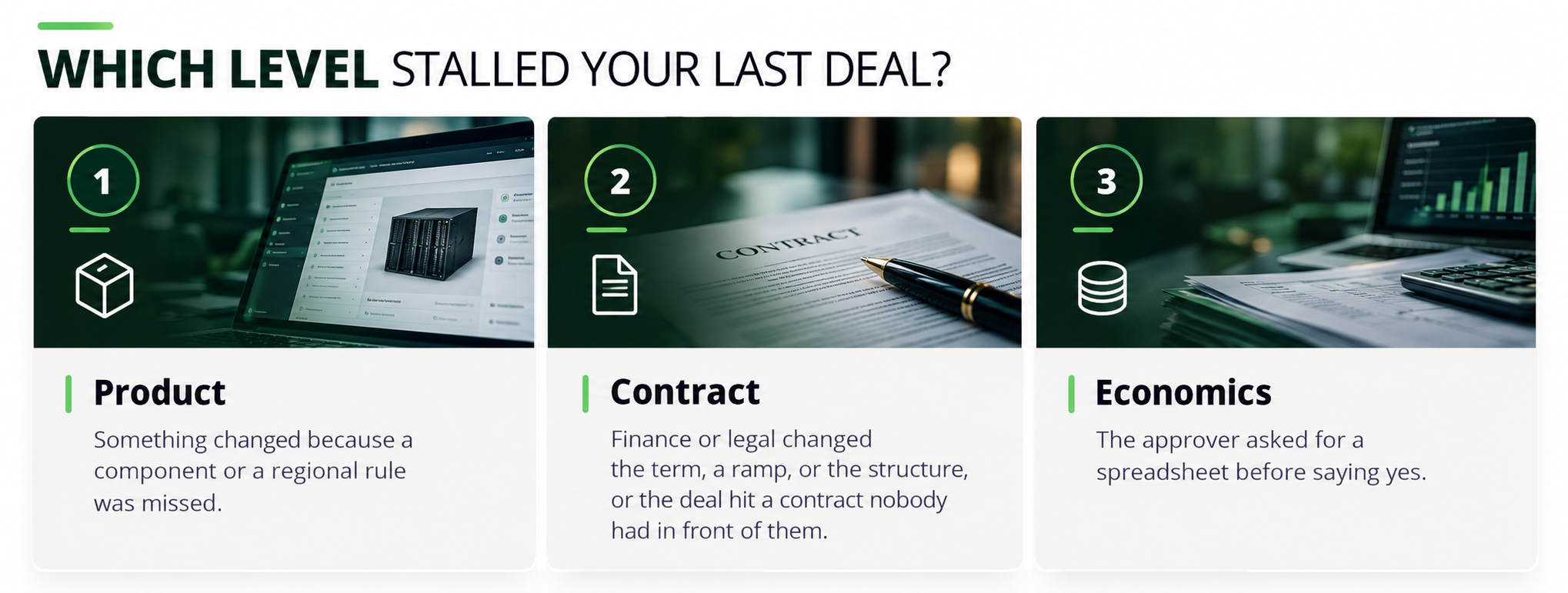
Start with one question for your team: on your last stalled deal, which of the three levels caused it? Then ask why that context was not in the quote. That gap is where your speed is hiding, and where revenue governance starts.
Why servicePath™
servicePath™ is a revenue lifecycle management platform built on a governed, no-code CPQ foundation. Its revenue governance settles all three levels below the quote before the quote leaves the rep’s hands, so speed comes from control rather than at its expense.
The product: Guided configuration, a self-serve configurator for partners, the Data Parsing Engine for vendor catalogs, and rules managed without developers. Configure, price, quote
The contract: Service Contracts keeps contracts, revisions, and renewals in one place, with integrations for Salesforce, Microsoft Dynamics, and HubSpot. Service Contracts
The economics: Cost to service modeling, revenue and margin on every quote, approval rules for exceptions, deal dashboards, and audit logs. Margin leakage
Telent came to servicePath™ after a failed CPQ implementation, and its case study credits the platform with the ability to track and audit all actions on the system.
Frequently asked questions
Does revenue governance slow down sales?
Not when it is designed well. Revenue governance built on guesswork does. Deals slow down when quotes are uncertain and need manual checking. Revenue governance settles configuration, contract terms, and margin at quote time, so the quote is right the first time and moves without rework.
What does “three levels below the quote” mean?
It is the context revenue governance has to settle and a quote rarely shows: product configuration dependencies, contract structure such as ramps, amendments, and terms, and deal economics such as cost to serve and margin.
Why can’t AI quoting tools do revenue governance on their own?
AI produces plausible answers. Revenue needs exact ones. Without revenue governance supplying current context on configuration, contracts, and cost, AI quoting speeds up errors rather than deals.
What is Good Revenue Faster?
“Good Revenue Faster.” is the servicePath™ tagline. It describes deals that close sooner and carry protected margin, because speed comes from control rather than at its expense.
Sources
- McKinsey: B2B pricing, the next phase of the AI revolution 7 April 2026
- Deloitte: European CFO Survey, Spring 2026 7 August 2026
- Forrester: State of Business Buying 2026 21 January 2026
- EY: Revenue from contracts with customers (ASC 606) September 2026
- Gartner: CFOs must prioritize platformization and monetization 27 August 2026
- BCG: AI Can Transform B2B Pricing, but It Isn’t Plug and Play 8 May 2026
- Gartner: lack of semantics causes inaccurate AI agents 11 May 2026
- Gartner: top predictions for data and analytics 2026 11 March 2026
- Deloitte: AI readiness gap survey 12 August 2026
- Gartner: AI agents will outnumber sellers 10 to 1 by 2028 28 July 2026