The Tables Turn: Daniel Kube Interviews Frank Sohn on CPQ Pitfalls, AI & Revenue Growth
What happens when you bring together two CPQ veterans for a candid conversation? You get a treasure trove of insights on how B2B sales technology has evolved—and where it’s headed next. I recently sat down with Frank Sohn, founder of Novus CPQ Consulting (and a seasoned CPQ expert with a career spanning from Fortran to modern SaaS), to talk about the past, present, and future of Configure-Price-Quote (CPQ) and sales enablement.
Frank’s experience is hard-won: he’s helped enterprise giants implement complex configuration tools and now advises companies on choosing and succeeding with CPQ. Our conversation ranged from his origin story and CPQ’s early days, to best practices after you go live, to big trends like Salesforce’s CPQ shake-up, vertical specialization, AI hype, and why CPQ is never a “set it and forget it” project. The discussion was engaging, insightful, and even a bit humorous at times. Here are the highlights and lessons we learned:
Accidental CPQ Pioneer: Frank’s Origin Story and the Evolution of CPQ
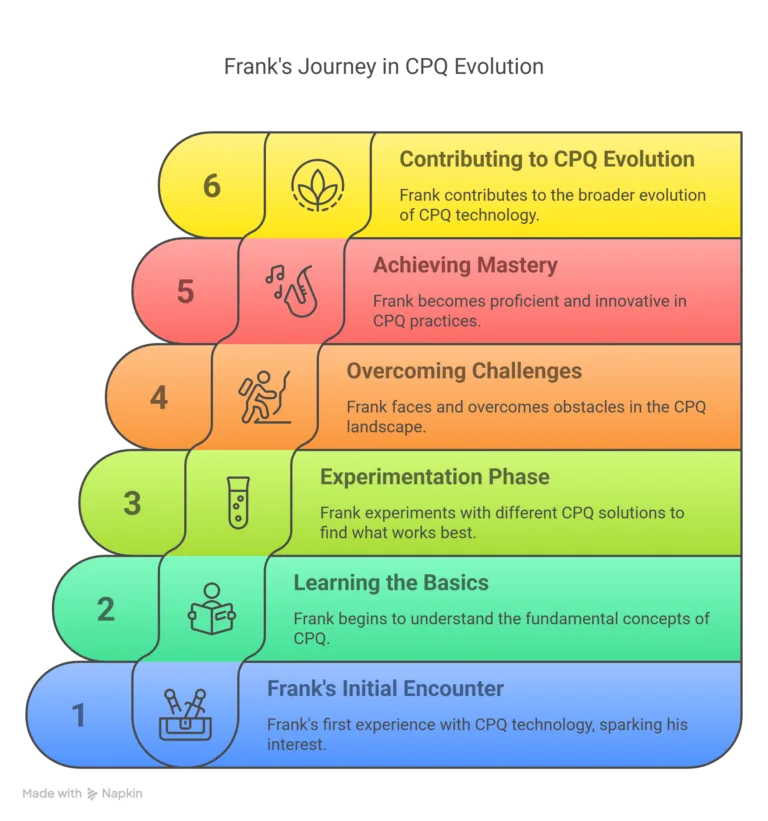
Every expert has an origin story. Frank’s began by accident. “I started not voluntarily in this area,” he recalls. In his early career at SAP, he was tasked with a product configuration project that no one else wanted. Frank was “pretty junior at the time,” so the team figured “OK, give it to him.” He admits, “Initially I was not excited… but then I realized, the deeper I looked into it, the more fun it was.”
That unexpected assignment turned into a lifelong passion. Frank found himself deep in the world of configuring complex manufacturing products, learning the business processes hands-on. He even ended up writing code in languages like Fortran, Pascal, COBOL, and RPG to make things work (prompting me to say “Oh wow” during our chat!). The deeper he went, the more he enjoyed solving real business problems with technology. Demand for these solutions only grew.
? Want to hear the full conversation? Listen to the audio interview with Frank Sohn here: https://tinyurl.com/2kknfzte
“I never got away from it. And I just discovered the name CPQ afterwards… around 2010.” – Frank Sohn
Frank notes that the term “CPQ” (Configure-Price-Quote) wasn’t even around in his early days. It was only about a decade ago that this niche got its now-familiar name. By then, he had already helped companies like HP implement numerous configurators. In short, Frank was doing CPQ before we called it CPQ.
Over the years, he’s witnessed CPQ evolve from rudimentary, heavily coded systems into a critical component of the sales enablement stack. But as we discussed, some fundamental challenges and opportunities remain remarkably consistent — it’s still about making selling complex products easier and faster.
From Spreadsheets to Intelligent Automation (and Why Cheap Isn’t Always Cheerful)
I asked Frank whether, after all this time, spreadsheets and manual processes are still the biggest “competitor” to CPQ solutions. Are companies still clinging to Excel instead of modern automation? Frank’s answer: it depends on the company’s size and mindset. Small firms often start with DIY tools to save cost, which is fine until it isn’t.
“With smaller firms, you want to do it as cheap as possible… The problem is at one point it just becomes too much. Then it’s not about Excel or something else – you just cannot handle it anymore, so you have to get something else.” – Frank Sohn
In other words, using spreadsheets for quoting works up to a point, but as a business grows, the complexity will eventually overwhelm manual methods. The risk Frank highlighted is that first-time CPQ buyers often choose a lightweight or cheap tool to replace their spreadsheets, only to outgrow it in a few years. “If everything goes well, this will grow and you will probably outgrow the system… Even though it’s nice when it’s cheap in the beginning, you probably have to go through this exercise again,” he warns. And re-implementing a CPQ solution (migrating data, retraining people, hiring expensive consultants) is no one’s idea of fun.

Frank, with a chuckle, acknowledged that redoing CPQ projects can be intellectually fun for experts like him, but not so much for the companies footing the bill: “Even though it’s fun for me… it’s not fun for lots of other people. And it’s also not cheap. So you don’t want to do these changes more than you have to.” The takeaway for business leaders? Think long-term when moving off spreadsheets—choose a solution that can scale with you so you’re not ripping it out two years later.
We also talked about the push toward “no-code” or “low-code” CPQ tools – systems that business users can administer without hardcore programming. Frank’s take is refreshingly pragmatic: “Codeless is great, but it depends on the people you have in the company,” he noted. If you have skilled developers on staff, they might not mind writing rules in code. But generally, reducing the need for coding bridges the gap between business experts and IT. In the old days, one team would gather product rules, write specs, and toss them to IT to code – a back-and-forth that could take weeks and lead to misunderstandings. Modern CPQ platforms aim to eliminate that friction. Still, Frank cautions that technology alone isn’t a silver bullet: companies often need to change their processes too. You can’t just install a CPQ tool and call it a day; you have to rethink how your teams sell and quote to fully leverage the automation.
Post-Implementation Success: The “Care and Feeding” Phase
One observation I shared with Frank is that many companies treat a CPQ project as finished once it’s implemented – only to see adoption stall out. In fact, a lot of new clients come to both servicePath™ and Novus CPQ after a failed CPQ implementation elsewhere. Everyone is enthusiastic during the initial rollout, but afterward the project team moves on, and the system doesn’t evolve with the business. Frank agreed this is a common pattern, and he had plenty of advice on avoiding that trap. I asked him to boil it down: What are the top three things a company should do post-implementation to ensure CPQ success?
Frank laughed that narrowing it to three is tough, but he delivered a powerful trio. Here are Frank Sohn’s Top 3 Post-Implementation CPQ Success Factors:
1. Make adoption a priority
“You could have the best implementation… if nobody uses it, it’s worthless,” Frank said bluntly. Even before go-live, plan how you’ll drive user adoption. This is classic sales enablement: training, internal marketing, and ongoing support. Don’t assume sales reps will automatically embrace the new tool. Frank has seen companies send out mass email announcements that sellers promptly ignore.
Instead, find creative ways to educate and excite your team. For example, some of Frank’s clients host informal “CPQ Friday” sessions where they demo features and share tips over pizza. Identify enthusiastic power users and make them champions.
In short, “adoption is key” – treat it as importantly as the technical implementation itself.
2. Keep improving after go-live
Launching CPQ in one phase is just the beginning. It’s unlikely your first release covers all products, sales channels, or geographies. Don’t declare victory and shelve the project after Phase 1. Continuously iterate.
Frank emphasized you should be rolling out enhancements, adding remaining product lines, and taking advantage of frequent vendor upgrades. Modern CPQ vendors push new capabilities at an astonishing pace – sometimes dozens of updates every quarter.
It’s a “ridiculous amount of capability” coming out, and it can be overwhelming. The only way to stay on top is to define clear KPIs and measure results with each enhancement. Know what success looks like (cycle time, error rate, deal size – whatever metrics matter for your business) and track them.
“Forget all the talk from the system integrator or vendor,” Frank advises. “You have to know what you’re looking for and measure it with every step.”
By monitoring key metrics and user feedback continuously, you’ll see the value from each new feature and ensure the tool is delivering on its promise over time.
3. Treat CPQ as a long-term investment, not a one-off project
Perhaps Frank’s most emphatic advice: don’t think of CPQ as just another IT project that ends on a go-live date. “Do not expect these projects to stop,” he insisted. CPQ is an ongoing capability that needs care for its entire life cycle.
Frank actually suggests companies dedicate at least one person (or a small team) on the business side to own the CPQ program post-implementation. This role would stay up-to-date on new market developments, keep an eye on what the CPQ vendor is rolling out, and continuously align the tool with evolving business needs.
As Frank put it, “stay on top of all the CPQ capabilities even after you go live.”
If a new feature or an AI capability comes along, this team can ask, “Is that relevant for us? Could it help our sales?” Then work with the vendor or implementation partner to adopt it if it adds value.
CPQ is a journey, not a destination – you’ll likely be using a CPQ platform for the next decade or more.
“It’s a long-term investment – it’s not going away. If you started with a CPQ tool, you will probably use it for the foreseeable future… maybe the next 10-15 years. You may switch solutions, but you will have to deal with it one way or another.”
In other words, committing to CPQ is like a marriage; plan accordingly and put in the work to keep it healthy! 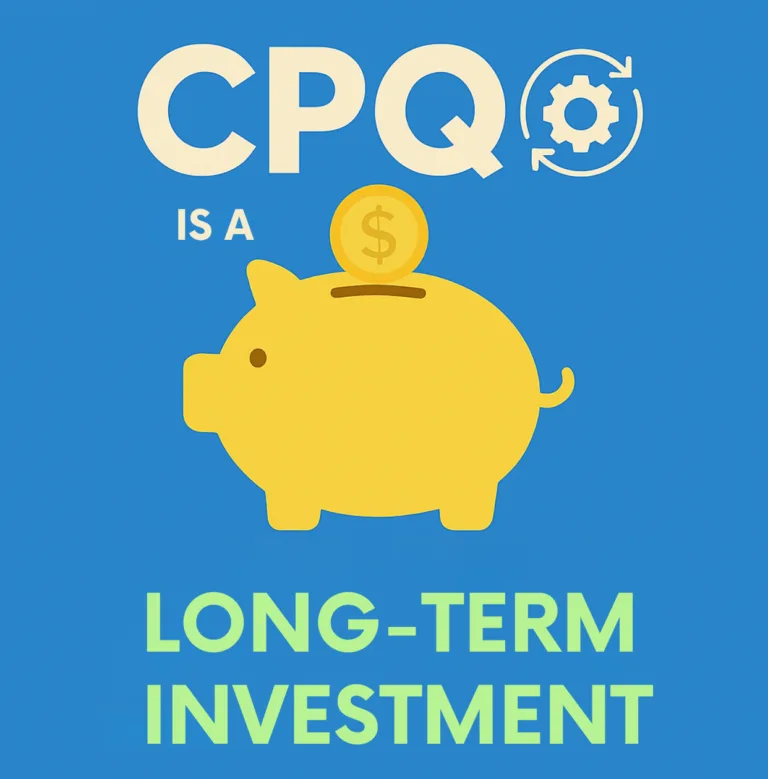
Sunsetting Salesforce CPQ: Full Stack vs. Best-of-Breed Dilemma
Shifting gears, we dove into some big changes in the CPQ vendor landscape. I brought up Salesforce’s recent decision to sunset Salesforce CPQ (Steelbrick) as a standalone product. Salesforce has folded its CPQ offering (originally Steelbrick) into a broader Revenue Cloud bundle and is steering customers toward a new CPQ solution gained from its Vlocity acquisition (now part of Salesforce’s Sales Cloud for industries). This move has caused confusion for buyers: companies that invested in Steelbrick are now unsure of the roadmap, and new buyers are wondering if they should go “all-in” with Salesforce’s stack or look elsewhere. I asked Frank how he advises clients facing this kind of decision: stick with a single-vendor homogeneous stack or mix and match the best-of-breed solutions for each function?

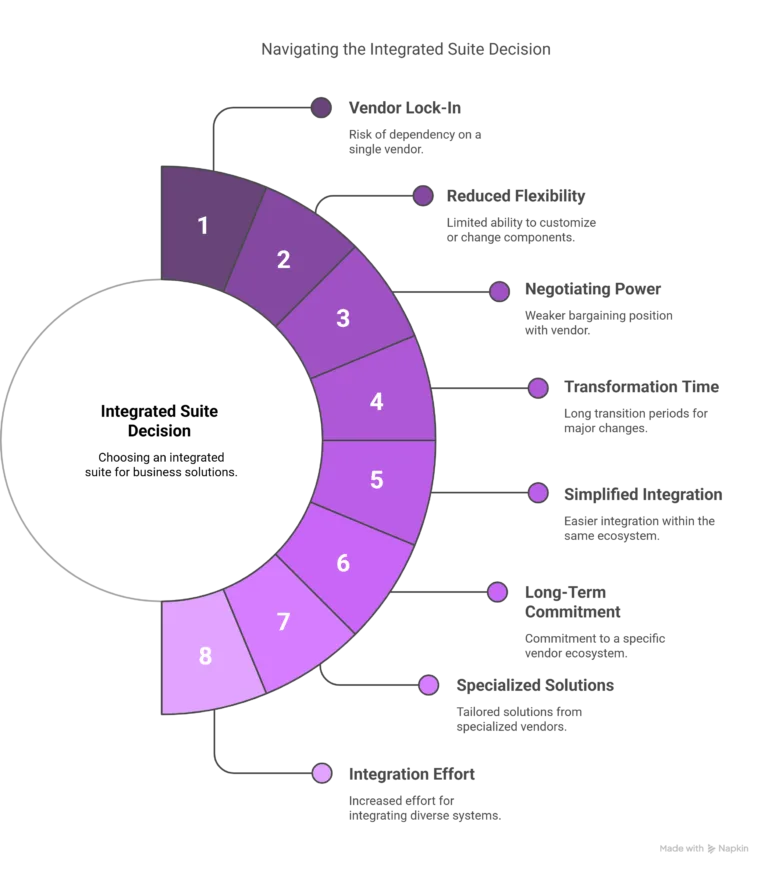
Frank noted that this full-suite vs. best-of-breed debate is not new – it resurfaces every few years, now under the shiny new label of “Revenue Lifecycle Management (RLM).” His take is balanced: there are clear pros and cons to each approach, and context (like industry and existing systems) matters. On one hand, a one-stop-shop suite can be appealing. “If I have a solution that provides all these things in a row, in general it’s good,” Frank said, because data flows seamlessly. When your CPQ, CRM, ERP, and other tools are all part of one platform, integration is easier by design. You can use data across applications readily, and even apply AI on top of a unified data set. The vision Salesforce and others pitch – of an end-to-end integrated revenue platform – is attractive in theory and can reduce some maintenance headaches.
But Frank quickly pointed out the downsides. With a single-vendor stack, “as a customer, I’m now very dependent,” he said. You effectively lock yourself in with that vendor. If one component of the suite isn’t meeting your needs, you can’t swap it out without affecting everything. Your negotiating power on pricing also diminishes when you’ve bet the farm on one ecosystem. And large transformations aren’t quick: “This is not like you’re deciding to change it and six months later you have a different solution,” Frank observed. Big enterprises might take 5+ years to fully transition if they choose to rip and replace. In short, the integrated suite approach has trade-offs: easier in some respects, but far less flexibility.
So what to do? Frank’s advice is to weigh the pros and cons in your specific context. If you already run Salesforce CRM and are comfortable with that ecosystem, adopting Salesforce’s CPQ might simplify things. But be aware of the long-term commitment you’re making. If your business has unique needs, a specialized CPQ (even if it’s from a smaller vendor) could serve you better – at the cost of more integration effort. There’s no universal right answer. The key is to be intentional about the choice rather than swept up by vendor marketing. The Salesforce Steelbrick saga is a cautionary tale: even big-name platforms can change direction, so buyers need to stay informed and have a strategy (and perhaps a contingency plan) for their CPQ and sales tech stack.
One Size Doesn’t Fit All: Verticalization of CPQ Platforms
Another trend we explored was verticalization – CPQ solutions tailored for specific industries. I mentioned that at my company (servicePath™) we focus on the tech-enabled services space and don’t do much with, say, heavy manufacturing. The CPQ market seems to be segmenting by industry expertise. Frank enthusiastically agreed, noting this has been happening for quite a while and is only accelerating. In fact, by his count there are well over 100 CPQ vendors out there (he recently heard it might be 200+!). Many of these are small firms targeting niche markets.
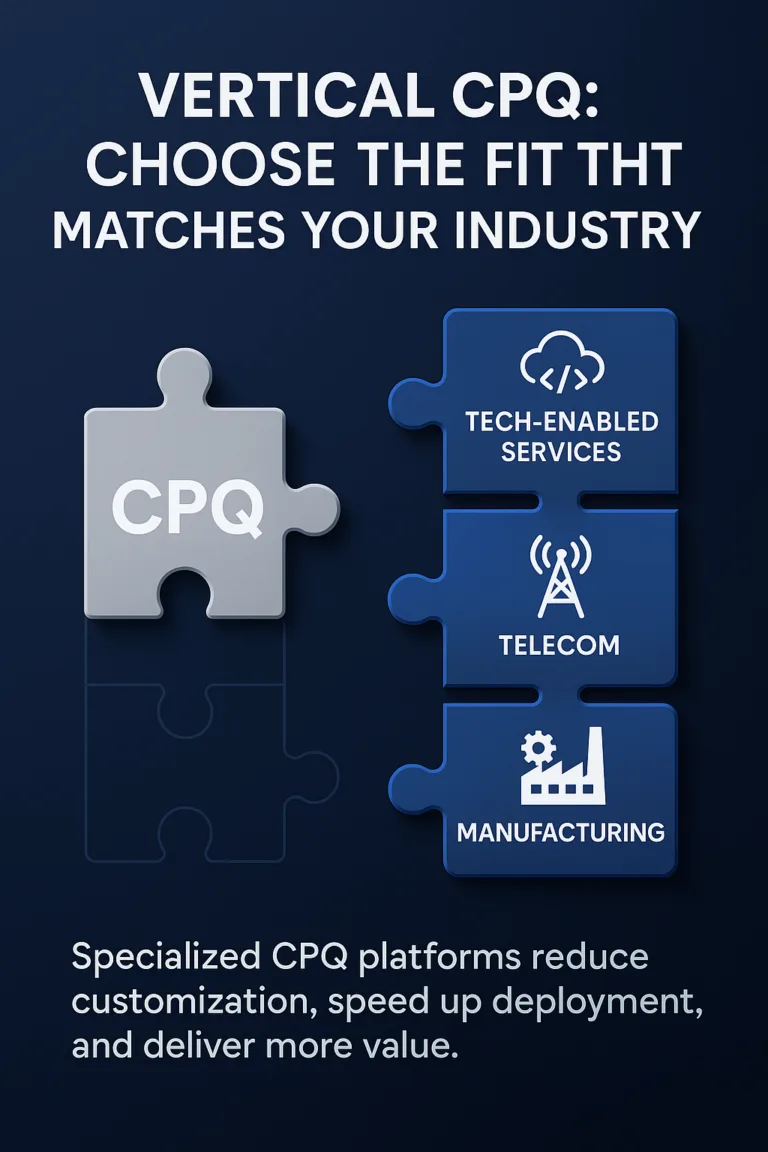
This proliferation tells us two things: First, no single CPQ product can be the best at everything. Different industries simply have different requirements – configuring a telecom service bundle is a very different ballgame from quoting industrial equipment. Second, customers should be wary of vendors that claim to “do it all.” Frank put it bluntly: “If somebody tells you they are doing 10 industries and they have 50 people [in their company] and they work with larger customers… that’s not true. Something in the story doesn’t make sense.” In his experience, a smaller CPQ vendor can realistically specialize in maybe two or three industries, not ten. And that’s okay – in fact, it’s good. You want a provider that goes deep in your area, rather than shallow in everyone else’s.
Vertical focus will only become more important. End-users are expecting solutions that fit their business out-of-the-box, with faster deployment and lower cost. Frank pointed out that if a vendor isn’t specialized, they’ll struggle to meet the “do more, do it faster, do it cheaper” demands that companies have today. So, if you’re evaluating CPQ platforms, one of Frank’s tips is to dig into the vendor’s customer base and features: Do they have a track record in your industry? Do they speak your language (literally and figuratively)? A CPQ built for high-tech SaaS will have a very different data model and workflow than one built for medical devices. Choosing a more verticalized solution can mean less customization, less pain, and more value in the long run.
That said, specialization doesn’t eliminate the need for integration (nothing does!). Frank reminded us that integration is critical for any CPQ, vertical or not – you’ll always need to connect to CRM, ERP, etc. But if the core functionality matches your industry needs, you’re ahead of the game.
AI in CPQ: Hype vs. Reality
Of course, no discussion about the future of enterprise tech would be complete without addressing artificial intelligence (AI). CPQ is no exception – in recent years we’ve all heard buzz about AI-driven product recommendations, pricing optimization algorithms, and even generative AI writing sales proposals. I asked Frank where AI really fits in CPQ today and what’s still just hype. His answer might surprise the AI evangelists out there.
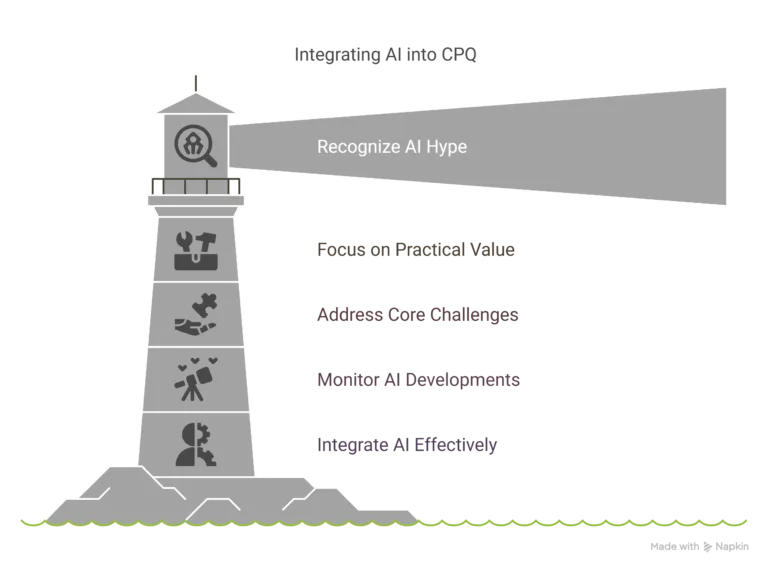
Frank recalled that the AI buzz in CPQ really kicked into high gear a couple of years ago. Ever since, vendors and analysts have been talking up AI as the next big thing in sales tools. But, he says, if you listen to actual customers, the story is a bit different. “Based on what you read and hear, you would think that all customers are interested [in AI]. And I’m happy to burst the bubble here, but that’s not what I see,” Frank shared. “It’s still pretty early.” In other words, while clients are curious about AI, few are basing their CPQ decisions on it today. They’re not coming to Frank asking, “So, does this CPQ have GPT built-in?”
“I’m happy to burst the bubble… that’s not what I see customers asking for all the time. It’s not like everyone’s deciding, ‘hey, what can your AI do and how does it save me something?’” – Frank Sohn
That doesn’t mean AI has no future in CPQ. Frank actually believes it will play a big role in time. But he urges a focus on practical value: How can AI actually help your sales process? If an AI feature can save time or suggest smarter configurations, great – but it needs to prove itself. Many core sales challenges haven’t changed: companies still grapple with complex product rules, pricing consistency, and enabling sales across multiple channels (direct, partners, e-commerce, etc.). Those basics must be solved first. As Frank put it, the fundamental goal is the same as when he started in this field: businesses want to make quoting faster and better. AI might become a powerful means to that end, but it’s not a magic wand you wave at an inefficient process.
The hype cycle can make it sound like every company is rushing to implement AI in their quoting process, but the reality on the ground is more cautious. Frank’s advice is to keep an eye on AI developments (many CPQ vendors are adding machine learning and analytics features), but don’t lose sight of your real-world requirements. A fancy AI demo means little if your sales reps are struggling with basics like configuring a bundle correctly or getting approvals in a timely manner. Solve those first; AI can amplify a good process, but it won’t rescue a broken one.

Beyond Go-Live: CPQ as a Continuous Journey
Towards the end of our discussion, I reflected on a theme that kept emerging: whether talking about adoption, vendor strategy, vertical specialization, or AI, the through-line was long-term thinking. Success with CPQ (or any sales enablement tool) isn’t just about selecting the right software; it’s about how you continually adapt and invest in it. Frank’s career itself is a testament to continuous learning and evolution. He even started his firm, Novus CPQ, to help clients navigate the CPQ journey more effectively over the long haul.
For me, one of the biggest takeaways from Frank was this mindset: CPQ is not a one-and-done project. You don’t simply “finish” it. The companies that reap the most value are those that treat CPQ as an ongoing program – akin to how you’d approach improving sales strategy or product offerings perpetually. That might mean having a quarterly CPQ enhancement roadmap, keeping your content (product catalog, pricing, templates) up to date, training new reps as they come on board, and staying plugged into the CPQ user community for best practices.
Frank’s passion for this space is infectious. After decades in the trenches, he still speaks about CPQ and sales tech with enthusiasm, pragmatism, and a drive to help others succeed. As we wrapped up, it was clear that while tools and buzzwords will change (who knows what acronym we’ll be using in 2030), the core mission remains: enable sales teams to sell smarter, faster, and more effectively. And that mission is never truly finished.
?️ You can also listen to the full interview here for additional insights straight from Frank.
If you found these insights useful, consider following my LinkedIn page and subscribing to this newsletter. I regularly share conversations with industry leaders like Frank, and I’d love to have you join the discussion. Feel free to connect with Frank Sohn as well — he’s a wealth of knowledge and always open to networking with fellow professionals interested in CPQ and sales enablement. Here’s to continuously learning, evolving, and driving success in our businesses by tackling these challenges head-on!
Ready to Take the Next Step?
-
Read More: Explore additional blogs and insights on CPQ, quoting transformation, and digital sales enablement.
-
Download Our Case Studies: See how leading enterprises have transformed revenue operations with servicePath™.
-
Check Out Our G2 Reviews: Discover what real users love about servicePath™.
-
Recognized by Gartner: Find out why we’ve been named a Visionary in the Gartner Magic Quadrant for CPQ Application Suites three years in a row.
-
Book a Virtual Coffee: Let’s chat about your challenges and explore how servicePath™ can help. No pressure—just insights.
Let’s grow revenue together—one smart quote at a time.