CEO’s Insider Playbook: 10 Game-Changing Non-AI Moves to Ignite AI Readiness, Amplify CPQ Revenue, and Transform Your Enterprise
servicePath™: AI Readiness & Digital Transformation – 10 Non-AI Priorities to Future-Proof Your Enterprise
Discover 10 non-AI actions to enable enterprise AI readiness, boost revenue operations with CPQ, and drive digital transformation. This executive playbook, backed by insights from IDC, Gartner, McKinsey, Deloitte, and more, is your roadmap to sustainable growth.
1. Introduction: AI-Readiness in the Modern Enterprise
In today’s dynamic business environment, organizations are under increasing pressure to harness artificial intelligence (AI) as a key driver of digital transformation. AI is not merely a technological upgrade—it represents a fundamental shift in how enterprises operate, compete, and innovate. However, successful AI deployment depends on more than just acquiring advanced algorithms; it requires a solid foundation built on quality data, streamlined processes, and a culture that embraces change.
A recent IDC outlook highlights that nearly 80% of AI projects fail to deliver tangible value due to issues like poor data management and misaligned processes informatica.com
This statistic makes it clear that organizations must focus on building robust foundational elements before embarking on full-scale AI initiatives.
This playbook outlines 10 non-AI strategic priorities that are essential for creating a future-ready enterprise. By laying the groundwork in these key areas, organizations can ensure that when they do implement AI, their systems are resilient, their data is reliable, and their teams are fully prepared.
2. The Winners and Losers of AI: Why Foundations Matter
In the competitive world of digital transformation, winners are not the ones who invest solely in advanced AI models but those who create an ecosystem that supports AI from the ground up. Successful companies focus on four main pillars
- Clean, Unified Data: Integrating disparate data sources into a centralized repository is crucial. Unified data systems allow organizations to feed AI models with accurate, high-quality information.
-
Agile, Well-Documented Processes: Establishing standardized and documented processes ensures consistency and scalability in operations.
-
Continuous Learning and Adaptability: A workforce that is continuously upskilling and open to innovation can drive significant improvements in productivity and creativity.
-
Robust Governance: Implementing ethical and risk governance frameworks protects organizations from potential pitfalls and ensures compliance with industry regulations.
Conversely, companies that rush into AI without first establishing these foundational elements often experience fragmented initiatives, poor ROI, and increased operational risks. For instance, Gartner’s 2025 AI Readiness Report found that only 17% of enterprises have the cross-functional alignment needed to scale AI successfully gartner.com
“Winners in AI focus on unified data, agile processes, and a culture of continuous learning—while losers neglect these critical foundations.”(Reference: gartner.com)
3. 10 Game-Changing Non-AI Moves to Accelerate AI Readiness
These 10 strategic priorities form the backbone of any successful AI transformation strategy. They ensure that the underlying environment is prepared for both current and future technological advancements.
3.1 Strengthen Data Governance & Infrastructure
-
Unify Data Silos: Consolidate all data sources—including ERP, CRM, and legacy systems—into a centralized data lake or lake house.
-
Ensure Data Quality: Deploy advanced data cleansing and validation techniques to eliminate inaccuracies.
-
Deploy Metadata Frameworks: Implement robust metadata catalogs to track data lineage, ensure regulatory compliance (e.g., GDPR, CCPA), and facilitate data discovery.
“Unified data sources boost AI project success by 2.3x.”(Reference:informatica.com)
 3.2 Upskill the Workforce for AI Fluency
 3.2 Upskill the Workforce for AI Fluency
-
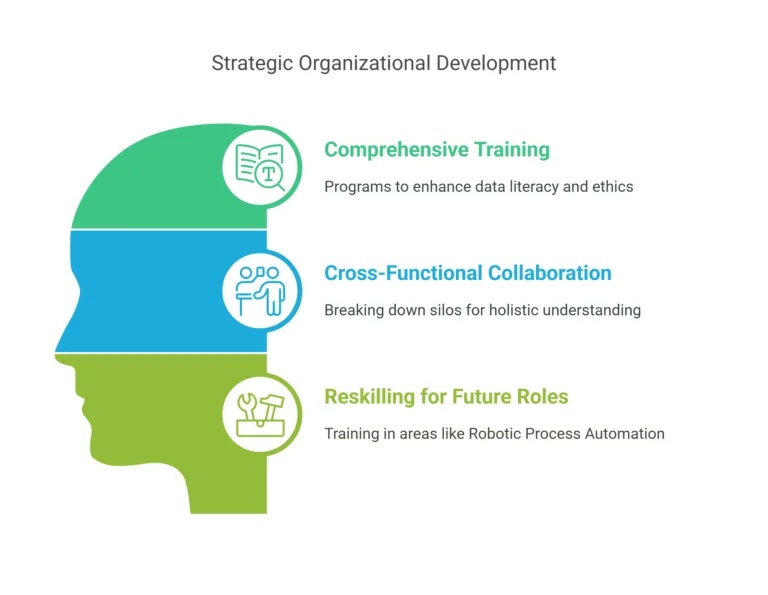
Invest in Comprehensive Training: Develop programs that enhance data literacy, AI fundamentals, and ethical practices.
-
Promote Cross-Functional Collaboration: Break down silos between IT, business, and legal teams to foster holistic understanding.
-
Reskill for Future Roles: Emphasize training in areas such as Robotic Process Automation (RPA), advanced analytics, and agile methodologies.
Top 3 Workforce Upskilling Actions:
Launch AI Literacy Workshops: Regular training sessions for all employees.
Develop Role-Specific Modules: Tailor training to specific job functions and future roles.
Establish Incentive Programs: Reward continuous learning and application of new skills.
3.3 Optimize Core Processes for Automation
-
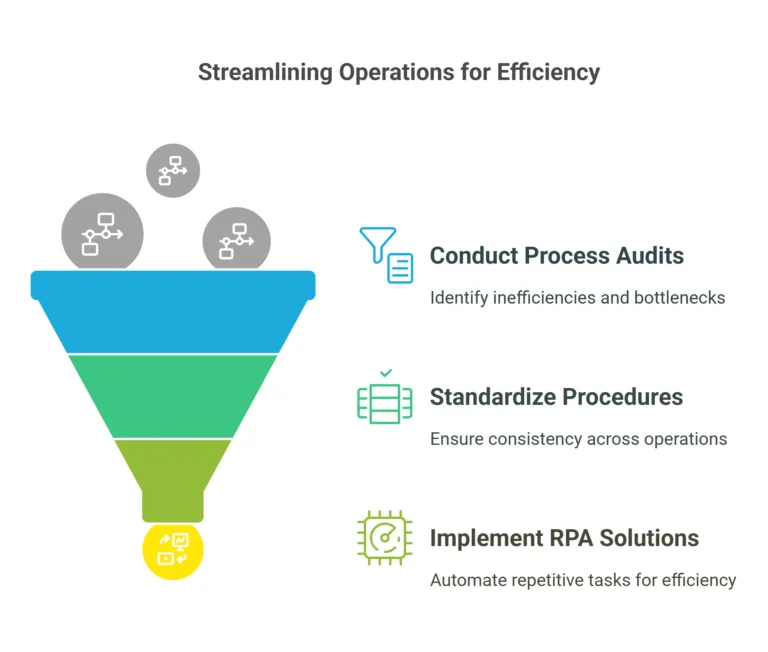
Conduct Process Audits: Identify inefficiencies and bottlenecks across workflows.
-
Standardize Procedures: Create clear, documented processes to ensure consistency.
-
Implement Quick Win RPA Solutions: Use robotic process automation to automate repetitive tasks and generate immediate benefits.
 3.4 Modernize Cloud & Compute Infrastructure
-
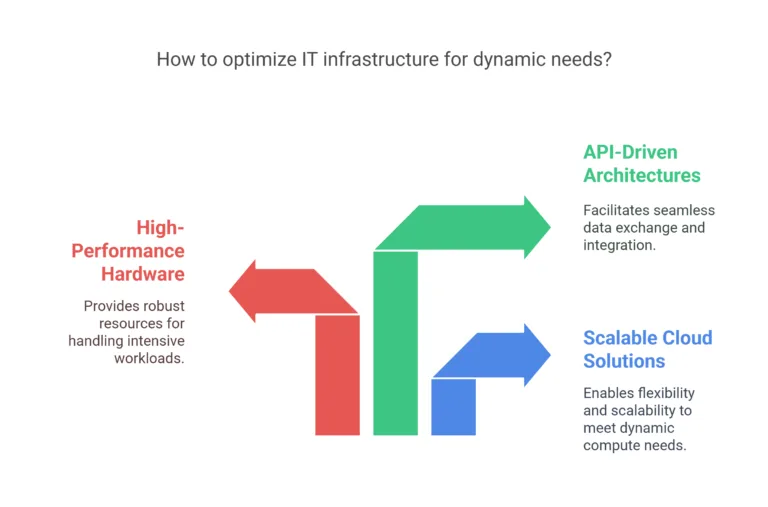
Adopt Scalable Cloud Solutions: Transition to public, hybrid, or multi-cloud environments to support dynamic compute needs.
-
Invest in High-Performance Hardware: Ensure availability of robust CPU/GPU resources to handle intensive workloads.
-
Build API-Driven Architectures: Create integrations that support seamless data e
-
xchange across systems.
Cloud & Compute Infrastructure
3.5 Establish Ethical & Risk Governance
-
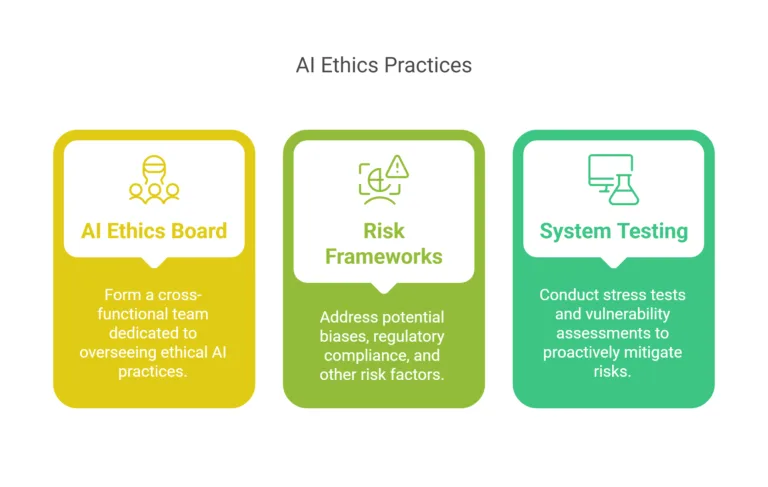
Create an AI Ethics Board: Form a cross-functional team dedicated to overseeing ethical AI practices.
-
Develop Risk Frameworks: Address potential biases, regulatory compliance, and other risk factors.
-
Regularly Test Systems: Conduct stress tests and vulnerability assessments to proactively mitigate risks.
“A robust governance framework can significantly reduce AI-related risks and ensure compliance.”(Reference: rtinsights.com)
3.6 Cultivate Strategic Partnerships
-
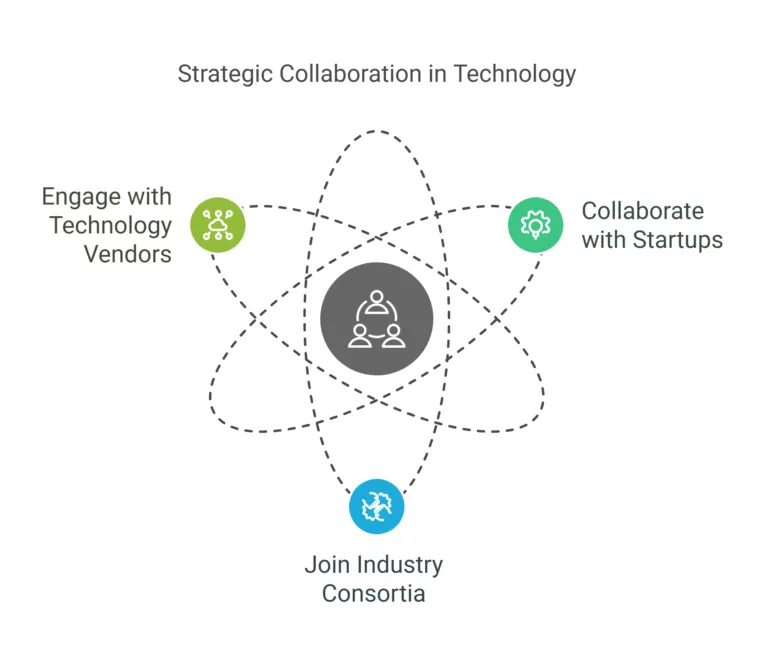
Collaborate with Startups: Leverage innovative ideas and agile approaches from smaller technology firms.
-
Join Industry Consortia: Participate in organizations like Partnership on AI to access shared research and best practices.

-
Engage with Technology Vendors: Work closely with cloud providers and hardware manufacturers to stay ahead of technological advances.
Benefits of Strategic Partnerships:
Access to Innovation: Gain insights from cutting-edge research and development.
Cost Sharing: Distribute the financial burden of R&D and infrastructure investments.
Market Insights: Learn from industry leaders to guide your strategy.
3.7 Drive Customer-Centric Innovation
-
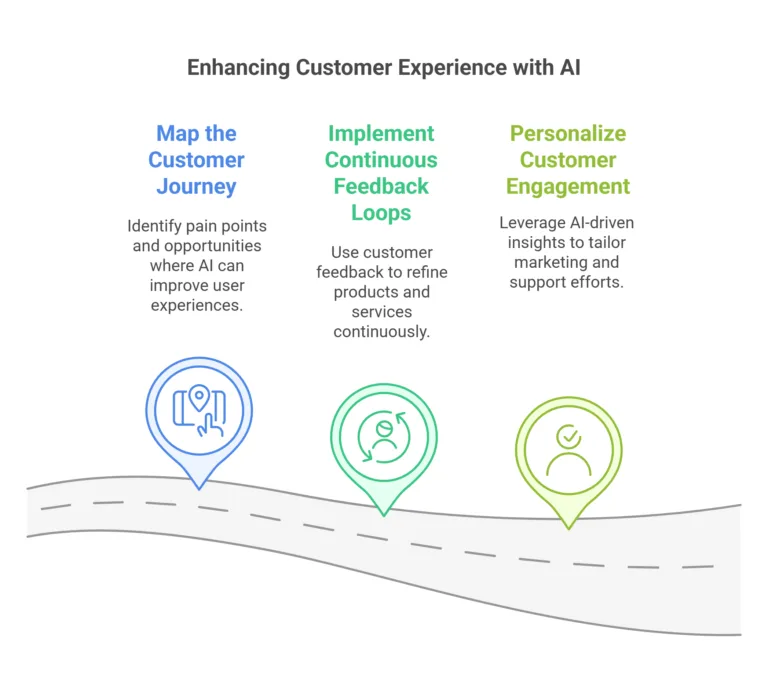
Map the Customer Journey: Identify pain points and opportunities where AI can improve user experiences.
-
Implement Continuous Feedback Loops: Use customer feedback to refine products and services continuously.
-
Personalize Customer Engagement: Leverage AI-driven insights to tailor marketing and support efforts.
3.8 Implement Agile Operating Models
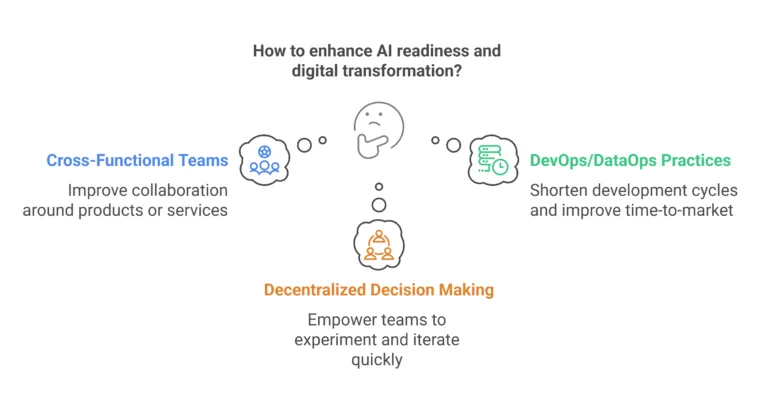
- Establish Cross-Functional Teams: Organize teams around specific products or services for better collaboration.
- Adopt DevOps/DataOps Practices: Shorten development cycles and improve time-to-market.
- Decentralize Decision Making: Empower teams to experiment and iterate quickly, reducing bureaucratic delays.
3.9 Fortify Cybersecurity Posture
- Secure Data Pipelines: Apply zero-trust principles to protect sensitive data across channels.
-
Prepare for AI-Specific Threats: Develop safeguards against model poisoning, adversarial attacks, and other vulnerabilities.
-
Conduct Regular Security Audits: Monitor and update cybersecurity protocols continuously.
-
 Define a Clear AI Vision: Articulate long-term goals and how AI fits into the overall business strategy.
 -
Encourage Innovation: Create an environment that supports hackathons, pilot projects, and internal competitions.
-
Normalize Experimentation: Celebrate learning from failures as a step toward continuous improvement.
 Define a Clear AI Vision: Articulate long-term goals and how AI fits into the overall business strategy.
Key Steps to Foster Adaptability:
Communicate the Vision: Share the long-term strategy with all stakeholders.
Celebrate Small Wins: Recognize incremental successes to build momentum.
Empower Teams: Allow independent decision-making and experimentation.
4. Revenue Lifecycle Spin: Where CPQ Fits In
Configure-Price-Quote (CPQ) systems are essential for streamlining revenue processes and generating high-quality data for future AI applications. By automating and standardizing key sales functions, CPQ not only accelerates quote turnaround times but also creates a unified data repository critical for advanced analytics.
CPQ: The Catalyst for Revenue Transformation
CPQ solutions integrate data from sales, finance, and product management into one cohesive system. This creates a structured environment where data can be easily analyzed and used for forecasting and decision-making.
“Deloitte’s CPQ Effectiveness Survey (2025) finds that CPQ solutions can deliver 27% faster quote turnaround times and boost deal margins by 15%.
Real-World CPQ Success: Case Studies & Benchmarks
Dell EMC: By automating pricing rules with CPQ, Dell EMC reduced proposal revisions from one full day to just 15 minutes, resulting in enhanced partner satisfaction and streamlined operations.
telent (UK ICT Services Provider):
Transitioning from spreadsheets to a centralized CPQ system enabled telent to generate quotes in minutes for deals valued at £50–£60 million annually, significantly reducing errors and boosting efficiency.
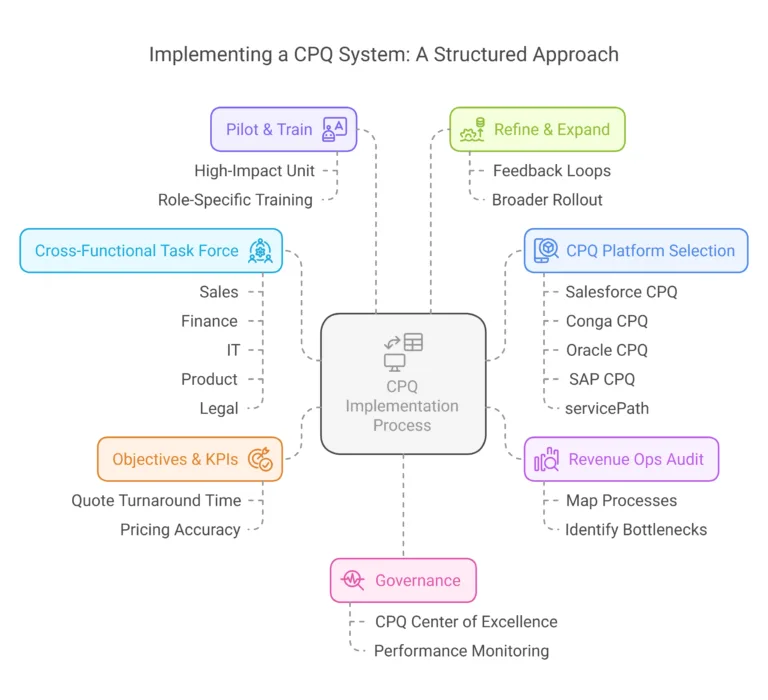
Step-by-Step CPQ Rollout Guide
-
 Form a Cross-Functional Task Force:
Gather stakeholders from sales, finance, IT, product, and legal, and appoint an executive sponsor. -
Conduct a Revenue Ops Audit:
Map the quote-to-cash process, identifying bottlenecks and inefficiencies. -
Define Objectives & KPIs:
Set measurable targets such as reducing quote turnaround time and improving pricing accuracy. -
Select a CPQ Platform:
Evaluate vendors such as Salesforce CPQ, Conga CPQ, Oracle CPQ, SAP CPQ, or servicePath™. -
Pilot in a High-Impact Unit:
Start with a small product line or region to refine processes. -
Train and Onboard Users:
Provide role-specific training and establish CPQ champions to drive adoption. -
Refine and Expand:
Use feedback loops to optimize workflows before broader rollout. -
Establish Governance:
Set up a CPQ Center of Excellence to monitor performance and manage ongoing updates.
 Form a Cross-Functional Task Force:
5. Strategies for Overcoming Internal Resistance
Internal resistance is a common challenge when implementing new digital initiatives. To overcome this, organizations should adopt the following strategies:

Engage Influencers Early:
Identify key individuals in sales and operations who are likely to champion the new processes.-
Showcase Quick Wins:
Publicize early successes such as reduced turnaround times and improved accuracy to build confidence. -
Tie Incentives to Adoption:
Integrate performance incentives linked to the effective use of CPQ and other digital tools. -
Provide Robust Support:Set up dedicated help desks and real-time communication channels (e.g., Slack, Teams) for ongoing support.
-
Promote Transparency:
Regularly share how data-driven insights from new systems are driving improvements. -
Frame Change as Empowerment:
Emphasize that these technologies are designed to offload mundane tasks, allowing employees to focus on strategic work.

“Gartner emphasizes that business success is driven by AI-ready data and an agile, empowered culture—a lesson for overcoming internal resistance.”(Reference:rtinsights.com)
6. On-Page FAQ
Q1: What is AI readiness?
AI readiness refers to the state where an organization’s data, processes, systems, and culture are fully prepared to adopt and scale AI technologies effectively.
Q2: How does CPQ support digital transformation?
CPQ systems streamline the quoting, pricing, and discounting processes, creating a unified data repository that enhances operational efficiency and prepares the enterprise for advanced AI analytics.
Q3: Why focus on non-AI priorities before investing in AI?
Without strong foundations in data quality, process optimization, and workforce skills, AI projects are unlikely to succeed. These priorities ensure that the organization is well-prepared for scalable AI integration.
Q4: How can the success of CPQ be measured?
Key performance indicators include quote turnaround time, pricing accuracy, improved deal margins, and overall sales team satisfaction.
7. Conclusion: Drive Future-Ready Transformation
Building an AI-driven future starts with a strong foundation. By focusing on 10 non-AI priorities—including data governance, workforce upskilling, process automation, cloud modernization, ethical governance, strategic partnerships, customer-centric innovation, agile operating models, cybersecurity, and fostering adaptability—organizations create an environment where advanced AI technologies can thrive.
Integrating CPQ into your revenue operations further amplifies this foundation, providing a structured, data-rich environment that is essential for future AI analytics. Together, these initiatives form a comprehensive roadmap that not only supports digital transformation today but also positions your organization as a leader in tomorrow’s AI-driven economy.
“IDC, Gartner, and Deloitte all underscore that robust foundational investments are key to unlocking AI’s full potential—making these 10 priorities critical for future success.”(References:informatica.com ,gartner.com,medium.com)
As you implement these strategies, remember that transformation is an iterative process. Embrace continuous improvement, foster a culture of innovation, and remain agile to adapt to emerging challenges and opportunities.
8. Call-to-Action
Ready to take the next step toward digital transformation?
-
- 🌐 Discover servicePath™ and explore our innovative CPQ solution.
- 📄 Download our Case Studies to see how leading organizations are winning with servicePath™
- 📰 Subscribe to our Blog for the latest updates, expert analysis, and industry trends.
- Connect with us on LinkedIn.
-
Interested in Mastering Complexity in Technology Sales?
If you’d like to discover how CPQ systems can optimize efficiency, drive revenue, and enable global scalability—turning chaos into a competitive advantage—simply write to us. We’ll send you a copy of our exclusive whitepaper:“Leveraging CPQ Systems to Optimize Efficiency, Drive Revenue, and Enable Global Scalability: Mastering Complexity in Technology Sales”
For your copy, please email: malika.durrani@servieparh.co
Take the first step today and position your organization for a future-ready digital transformation with servicePath™.
9. Active Links for Referenced Sources
Below are all the active source links referenced throughout this playbook. Click any link to access the original resource:
-
Informatica Blog – The Surprising Reason Most AI Projects Fail:
The Surprising Reason Most AI Projects Fail – And How to Avoid It at Your Enterprise
(Reference:informatica.com) -
Gartner – Get AI Ready: Action Plan for IT Leaders:
Get AI Ready: Action plan for IT Leaders | Gartner
(Reference:gartner.com) -
X (formerly Twitter) – Rediminds, Inc: 80% of AI Projects Fail. Here’s How to Be in the 20% That Succeed:
Rediminds, Inc on Twitter / X
(Reference:x.com) -
Microsoft Blog – IDC’s 2024 AI Opportunity Study: Top Five AI Trends to Watch:
IDC’s 2024 AI opportunity study: Top five AI trends to watch – The Official Microsoft Blog
(Reference:blogs.microsoft.com) -
Medium – Why Over 85% of AI Projects Fail and How to Turn the Tide:
Why Over 85% of AI Projects Fail and How to Turn the Tide
(Reference:medium.com) -
RTInsights – Gartner Keynote: Be AI-ready to Empower Change:
Gartner Keynote: Be AI-ready to Empower Change – RTInsights
(Reference:rtinsights.com)
Take the first step today and position your organization for sustainable, future-ready growth.