Future of Digital Transformation 2025: Insights from Thought Leaders

Navigating the Technological Frontier of 2025
As we approach 2025, organizations are grappling with transformative technologies such as Quantum Computing, Artificial Intelligence (AI), Hyper-automation, and Data-centric decision-making. These innovations are not only reshaping operations but also redefining competitive dynamics across industries. This comprehensive analysis leverages insights from esteemed thought leaders—including Forbes, Gartner, Harvard, McKinsey, Deloitte, and Forrester—providing a strategic roadmap for navigating this evolving terrain. As visionaries from these top industry analysis firms unanimously agree, enterprises that fail to adapt will be left behind in this fast-paced race. The pressing question is: Will you spearhead innovation, or risk being disrupted?
CPQ: A Critical Tool for Futureproofing
As we approach 2025, businesses face unprecedented challenges and opportunities. Insights from industry leaders paint a clear picture of a rapidly evolving business landscape. In this environment, Configure, Price, Quote (CPQ) solutions emerge as a critical tool for organizations looking to stay ahead of the curve. Here’s how CPQ addresses key challenges:
1. Addressing Rising Customer Expectations
With customer expectations at an all-time high, CPQ can help deliver the meaningful personalization and enhanced authenticity that consumers demand. By leveraging AI-powered CPQ systems, businesses can:
- Offer Tailored Product Configurations: Meet individual customer needs with customized product offerings.
- Provide Real-Time Pricing: Reflect current market conditions accurately.
- Generate Professional Quotes Quickly: Improve the overall customer experience with swift and accurate quotations.
Forbes, in the September 2024 article “4 Insights C-Suite Leaders Should Focus On As 2025 Approaches“ Billee Howard emphasizes the importance of continuous innovation to meet rising customer expectations:
“As 2025 unfolds, the core focus will be to find new and innovative ways to meet rising consumer expectations and better understand their behavior.”
Additionally, Gartner’s report “Magic Quadrant for CPQ Application Suites“ highlights that CPQ systems are essential for enhancing customer satisfaction by enabling personalized interactions and streamlined sales processes.
2. Navigating Data-Driven Decision Making
As organizations transition towards data-driven decision-making, CPQ systems serve as a valuable source of insights. By implementing a robust CPQ solution, businesses can:
- Analyze Customer Preferences: Inform product development with detailed customer behavior analysis.
- Track Conversion Rates: Optimize pricing strategies by monitoring quote-to-order conversion rates.
- Identify Top Performers: Replicate success by identifying top-performing products and sales representatives.
According to McKinsey’s 2023 report, “The Data-Driven Enterprise of 2025“ data is a strategic asset that drives innovation and informed decision-making. Brian Jackson of Infotech Research Group (ITRG) adds:
“Organizations must shift their mindset to view data as a strategic asset that can unlock new opportunities.”
Furthermore, Forrester’s report “The CPQ Landscape“ indicates that companies utilizing CPQ systems see a 15% increase in sales efficiency due to enhanced data analytics capabilities.
3. Enhancing Supply Chain Resilience
In an era where supply chain agility is crucial, CPQ systems can play a pivotal role in maintaining operational continuity. With CPQ, organizations can:
- Quickly Adjust Product Offerings: Respond to component availability changes swiftly.
- Implement Dynamic Pricing: Account for supply chain fluctuations with flexible pricing models.
- Ensure Accurate Quotes: Reflect current inventory and lead times accurately.
Harvard Business Review (HBR), in the October 2024 article “Mastering Supply Chain Resilience and Agility by 2025“, highlights the role of predictive analytics and automation in supply chain optimization:
“Leading organizations are leveraging AI to revolutionize their supply chains, enhancing both resilience and agility.”
Deloitte’s “Crunchtime Finance 2025 Revisited“ further supports this by stating that real-time data integration through CPQ systems enables businesses to anticipate and mitigate supply chain disruptions effectively.
4. Integrating Advanced Technologies
As AI and machine learning become integral to business operations, CPQ systems are at the forefront of this technological revolution. Modern CPQ solutions offer:
- AI-Driven Product Recommendations: Enhance cross-selling and upselling opportunities.
- Machine Learning Algorithms: Optimize pricing based on historical data.
- Automated Workflow Processes: Streamline the quote-to-order cycle for increased efficiency.
In Gartner’s “Strategic Vision 2025 & Beyond“, Daryl Plummer, Distinguished VP Analyst, states:
“AI is evolving as human use of AI evolves. Before we reach the point where humans can no longer keep up, we must embrace how much better AI can make us.”
Moreover, Forrester in their “AI-Driven CPQ Solutions“ report, underscores that integrating AI into CPQ systems can lead to a 20% increase in quote accuracy and a 25% reduction in sales cycle time.
5. Fostering a Data-Centric Culture
To create a truly data-driven enterprise, organizations need tools that empower employees at all levels. CPQ systems democratize access to critical sales and product data, enabling:
- Informed Sales Decisions: Empower sales teams with real-time data during customer interactions.
- Trend Identification: Allow product managers to spot trends and opportunities for innovation.
- Executive Visibility: Provide executives with real-time insights into sales performance and forecasts.
Deloitte, in their “Crunchtime Finance 2025 Revisited“, underscores the importance of data governance and real-time analytics:
“Predicting outcomes rather than merely recording past events is crucial for future success.”
Additionally, McKinsey’s insights from “The Data-Driven Enterprise of 2025“, highlight that companies with strong data governance frameworks are 5 times more likely to make faster decisions than their competitors.
6. Champion Agility and Experimentation
Embed agility and innovation into your organizational DNA. Encourage risk-taking and experimentation with new technologies to stay adaptable in a fast-paced digital world.
“In today’s era of volatility, there is no other way but to re-invent. The only sustainable advantage you can have over others is agility, that’s it. Because nothing else is sustainable, everything else you create somebody else will replicate.” — Jeff Bezos, Founder, Amazon
Action Steps:
- Adopt Agile Methodologies: Enhance project flexibility and responsiveness by implementing agile frameworks such as Scrum or Kanban across teams.
- Create Innovation Labs: Establish dedicated spaces to pilot and test emerging technologies and innovative solutions.
- Reward Creative Problem-Solving: Encourage a culture of continuous improvement by recognizing and incentivizing innovative efforts.
- Implement Rapid Prototyping: Enable quick development and testing of new ideas to accelerate innovation cycles.
- Foster a Fail-Fast Mentality: Encourage experimentation by accepting failure as a learning opportunity and reducing the stigma associated with it.
“Agility and a willingness to experiment are key to thriving in a rapidly changing technological landscape.” — Shantanu Narayen, CEO, Adobe
7. Prepare for the Future of AI
While embracing AI’s potential, also consider its long-term implications and prepare for a future where AI capabilities continue to expand rapidly. This involves ethical considerations, workforce transformations, and continuous innovation.
“The development of full artificial intelligence could spell the end of the human race… It would take off on its own, and re-design itself at an ever-increasing rate. Humans, who are limited by slow biological evolution, couldn’t compete, and would be superseded.” — Stephen Hawking
Action Steps:
- Stay Informed About AI Advancements: Continuously monitor AI developments and assess their potential impacts on your industry using resources like MIT Technology Review and AI research publications.
- Develop Ethical Guidelines for AI Use: Establish comprehensive ethical frameworks to govern AI deployment and usage within your organization, ensuring fairness, accountability, and transparency.
- Invest in Research and Development: Allocate resources to R&D to remain at the forefront of AI innovation and application, fostering a culture of continuous learning and adaptation.
- Collaborate with AI Thought Leaders: Engage with AI experts and thought leaders to stay updated on best practices and emerging trends.
- Prepare for Workforce Transformations: Implement strategies to reskill and upskill employees to work alongside AI technologies, ensuring a smooth transition and minimizing workforce disruptions.
“AI is evolving as human use of AI evolves. Before we reach the point where humans can no longer keep up, we must embrace how much better AI can make us.” — Daryl Plummer, VP Research, Gartner
The Path Forward
CPQ technology goes beyond being a simple tool—it acts as a catalyst for building a more efficient, customer-centric, and adaptable business environment. By integrating CPQ solutions, organizations can leverage AI, data insights, and automation to not only survive but excel in 2025 and beyond.
servicePath™, recognized as a Visionary in Gartner’s Magic Quadrant for CPQ Application Suites, stands out as a leading CPQ technology solution that enhances operational efficiency and improves customer experiences. As a comprehensive CPQ solution, servicePath™ enables businesses to:
- Streamline Sales Processes: Automates quote generation and approval workflows for faster turnaround.
- Ensure Pricing Compliance: Maintains consistent pricing strategies across different regions and markets.
- Unlock Data-Driven Insights: Utilizes analytics to inform strategic decision-making and optimize sales performance.
For a detailed breakdown of CPQ’s pivotal role in future-proofing your business and actionable strategies to transform your operations, refer to the conclusion of this analysis. The race to 2025 has begun—ensure you’re equipped to lead with innovation and resilience.
Insights from Industry Leaders
Forbes: Navigating Rising Customer Expectations and Personalization
Businesses encounter unprecedented challenges and opportunities driven by evolving consumer expectations. In the Forbes article “4 Insights C-Suite Leaders Should Focus On As 2025 Approaches“ published (September 2024), Bill Lee Howard outlines critical areas that executives must prioritize to navigate this landscape effectively. Here are the key insights for C-suite leaders to focus on as they prepare for the future:
1. Rising Customer Expectations
Customer expectations are soaring, compelling organizations to continuously innovate to meet and exceed these demands.
-
Continuous Innovation: To stay ahead, businesses must develop new and creative ways to understand and respond to customer behaviors and preferences.
“As 2025 unfolds, the core focus will be to find new and innovative ways to meet rising consumer expectations and better understand their behavior.”
By leveraging innovative approaches, companies can enhance product development, boost customer engagement, and optimize marketing strategies, thereby gaining a competitive advantage through informed decision-making.
2. Meaningful Personalization
Delivering personalized experiences is no longer optional—it’s essential for building lasting customer relationships.
- Advanced AI Solutions: Utilize Generative Pre-trained Transformers (GPTs) and Large Language Models (LLMs) to gain deeper insights into customers’ emotional, functional, and behavioral drivers.
“Customer expectations continue to mount around everything from more meaningful personalization, respect for their data privacy, and a need for both convenience and improved authenticity.”
These AI-driven tools enable organizations to create highly tailored experiences that resonate with individual customer needs and preferences.
3. Respecting Data Privacy
Balancing personalization with data privacy is crucial for fostering trust and loyalty.
- Rich Data Ecosystems: Move beyond first-party datasets by cultivating richer data sources that tap into emotional triggers, ensuring personalization efforts are both effective and respectful of privacy.
“Finding the right disruptive technologies that can offer both agile and predictive consumer intelligence—be it emotional, functional or otherwise—will be the leading trend in 2025.”
This approach not only enhances personalization but also ensures compliance with data privacy regulations, thereby strengthening customer trust.
4. Enhancing Authenticity
Authenticity is key to building genuine connections with consumers, driving loyalty and satisfaction.
- Emotional Connections: Use AI-powered personalization tools to predict and respond to both functional needs and emotional triggers, creating deeper, more meaningful customer relationships.
“With an AI-powered personalization tool, retailers can provide highly relevant and meaningful experiences… A positive customer experience yields 20% higher customer satisfaction rates and a 10-15% boost in sales conversion rates.”
By fostering authentic interactions, businesses can significantly enhance customer loyalty and drive sustained growth.
Real-World Application: AI-Powered Personalization in Retail
AI-powered personalization is revolutionizing the retail sector by creating tailored customer experiences that drive loyalty and boost sales. Here’s how leading retailers are leveraging this technology to stay ahead:
Personalized Product Recommendations
- AI algorithms analyze a customer’s browsing history and purchasing behavior in real-time. This deep understanding allows retailers to offer product recommendations that truly resonate with individual preferences.
- Example: A customer browsing for summer dresses receives suggestions that match their style and size preferences, increasing the likelihood of a purchase.
Real-Time Segmentation
As highlighted by “Enterprise AI Orchestration Platform | Vue.ai“, “AI can look at individual granular preferences and create relevant segments in real-time.” This capability enables retailers to target specific customer groups with precision, enhancing marketing effectiveness.
Virtual Fitting Rooms
- AI-driven virtual fitting rooms allow customers to visualize clothing on diverse body types before making a purchase. This not only personalizes the shopping experience but also significantly increases conversion rates by reducing uncertainty and returns.
- Example: A customer can see how a jacket looks on a virtual model with a similar body shape, making them more confident in their purchase decision.
Impact on Business Metrics
Implementing AI-powered personalization tools leads to tangible business benefits:
-
20% Higher Customer Satisfaction Rates: Personalized experiences make customers feel valued and understood.
-
10-15% Boost in Sales Conversion Rates: Relevant recommendations and enhanced shopping experiences drive more sales.
“With an AI-powered personalization tool, retailers can provide highly relevant and meaningful experiences… A positive customer experience yields 20% higher customer satisfaction rates and a 10-15% boost in sales conversion rates.”
Why It Matters
By embracing AI-driven personalization strategies, brands can:
- Meet Rising Consumer Expectations: Customers now expect tailored experiences that cater to their unique preferences.
- Build Lasting Relationships: Personalization fosters trust and loyalty, turning one-time buyers into repeat customers.
- Gain Competitive Advantage: In an increasingly crowded market, personalized experiences differentiate your brand and attract more customers.
The 5 Biggest Business Trends for 2025
Building on the insights about customer expectations, Bernard Marr’s Forbes article published in September 2024, “The 5 Biggest Business Trends For 2025 Everyone Must Be Ready For Now” outlines key trends that organizations must prepare for to ensure sustained growth and competitiveness.
1. Strategic Integration & Transformational Potential of Automation
Businesses are moving beyond the initial hype of generative AI, strategically embedding it into operations to rethink and transform their business models.
“2025 could be the year that this starts to change, as more strategic use cases – involving rethinking business models around the potential of generative AI – begin to come through.”
Transformational Potential: Focus shifts to developing AI applications that create new possibilities across sectors like healthcare and manufacturing, rather than merely enhancing existing services.
2. Sustainability and Circular Economies
Sustainability will drive business practices, influenced by regulatory pressures and consumer expectations.
“The development of circular economies – where the focus is on reusing materials and recycling resources in a ‘closed loop’ system.”
Intelligent Enterprises: As companies adeptly use AI, data flows seamlessly across departments, providing true insights into their environmental impact. This enables informed decisions that optimize operations while positively impacting the globe, aligning sustainability with profitability.
3. Remote Work and Hybrid Models
The hybrid work model is set to become standard in 2025, balancing remote work with in-office collaboration.
“As markets mature and buyers become more discerning, businesses that excel in delivering friction-free, hyper-personalized, and memorable experiences will find they are well-positioned to rise above the competition.”
Technological Support: Advanced collaboration tools will be essential to facilitate effective communication among remote teams, ensuring productivity in hybrid environments.
4. Health and Wellbeing Focus
Organizations will prioritize employee health and wellbeing, implementing initiatives that address mental health, work-life balance, and overall wellness.
“Understanding and adapting to the huge changes that this will bring to society will involve mitigating technological risks.”
Long-term Benefits: Prioritizing wellbeing enhances engagement, reduces turnover rates, and leads to a more productive workforce.
5. Data Privacy and Cybersecurity
With digital transformation comes heightened concern for data privacy and cybersecurity.
“Businesses must navigate the implications for human jobs and the future of work, emphasizing the critical role of cybersecurity as companies handle sensitive customer data.”
Investment in Security: Organizations are expected to invest heavily in cybersecurity measures to protect against breaches and maintain customer trust through transparent practices.
Key Strategies for 2025
Forbes provides a comprehensive overview of the key trends and insights that will shape the business landscape in 2025. Organizations can navigate the complexities of the future with confidence and agility by:
- 🎯 Addressing rising customer expectation
- 🤝 Embracing meaningful personalization
- 🤖 Integrating strategic automation
- 🌿 Committing to sustainability
- 🏠💼 Adapting to hybrid work models
- 🧘 Prioritizing employee wellbeing
- 🔒 Ensuring robust data privacy and cybersecurity
These strategies will be crucial for businesses to thrive in the rapidly evolving digital transformation landscape of 2025 and beyond.
Gartner: The AI Imperative and Strategic Vision for 2025
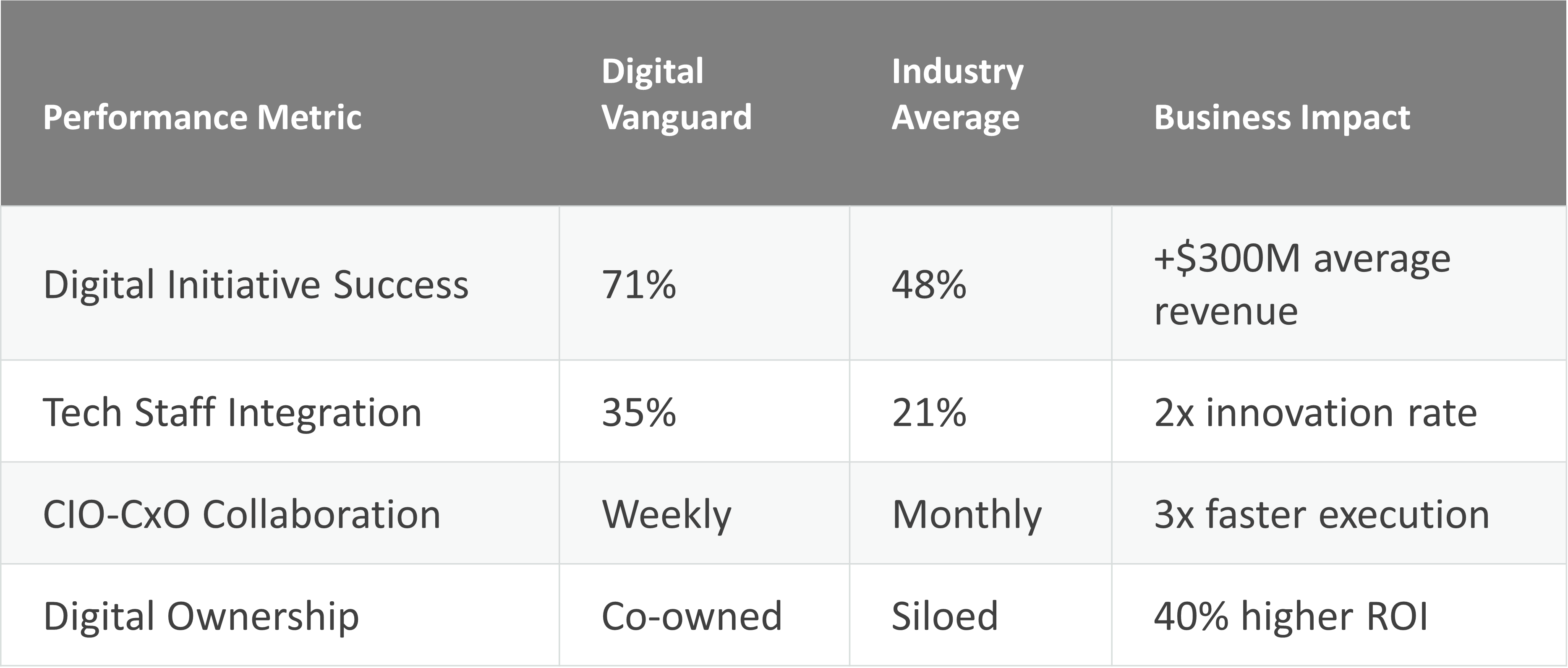
As we move toward 2025, the enterprise technology landscape is undergoing a profound transformation fueled by Artificial Intelligence (AI). Gartner’s latest research emphasizes the critical need for organizations to adapt swiftly to AI or risk falling behind. A notable 52% of companies struggle to achieve their digital objectives, while a distinguished group known as the Digital Vanguard boasts an impressive 71% success rate through strategic AI integration. This gap highlights an urgent call for organizations to reevaluate their technology and leadership strategies.
AI as a Catalyst for Transformation
Daryl Plummer, Distinguished VP Analyst at Gartner, captures the essence of this transition:
“AI is evolving as human use of AI evolves. Before we reach the point where humans can no longer keep up, we must embrace how much better AI can make us.”
This pivotal moment demands decisive action from C-suite leaders. AI should be embraced not just as a tool, but as a cornerstone of forward-thinking business strategies. Leaders who leverage AI to its fullest potential will be at the forefront of the next wave of business innovation and success. The choice is clear: adapt and lead, or risk being left behind in the rapidly evolving digital landscape. More on this here.
Investment Focus and Strategic Priorities
Organizations are focusing investments in key areas, with significant allocations planned for 2025. The following chart provides a clear picture of these strategic priorities:
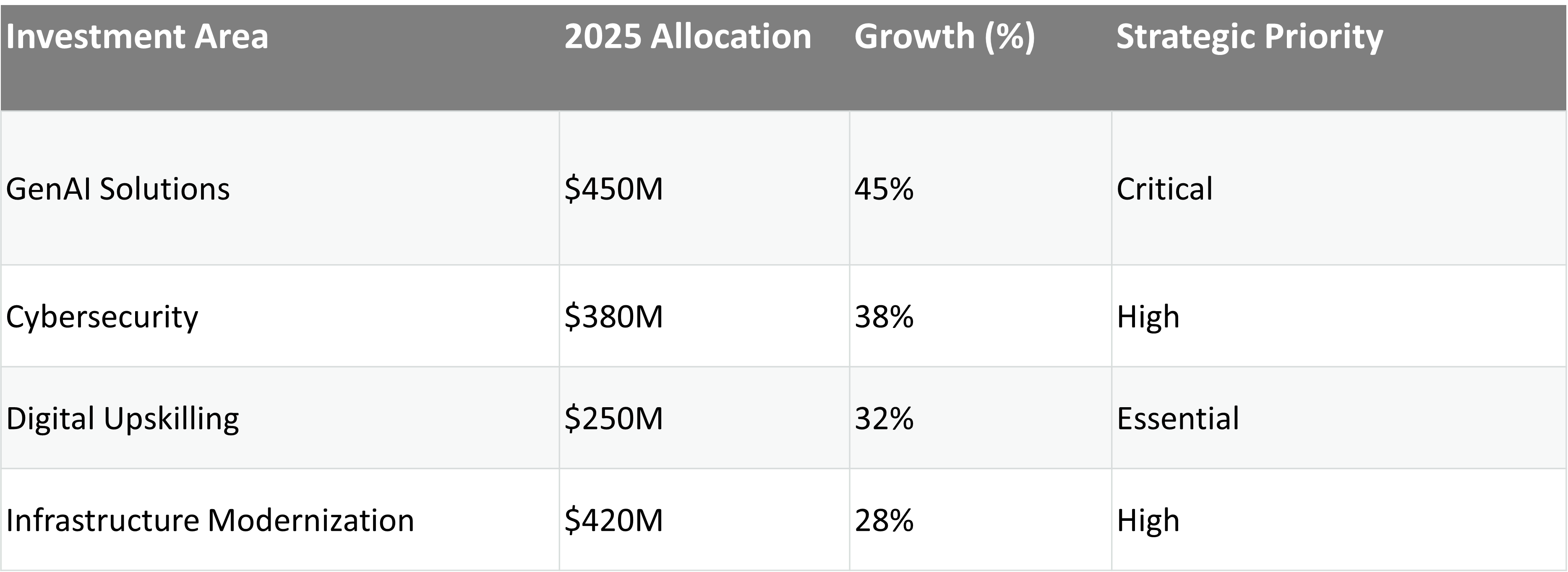
The emphasis on AI/GenAI solutions highlights the urgency for innovation, while investment in digital upskilling underscores the need to equip teams with essential skills for a digital-first world.
“The traditional paradigm of IT delivery and business ‘project sponsorship’ is dead. Success in the AI era demands co-ownership between technology and business leaders.” – Raf Gelders, VP Research, Gartner http://stocktitan.net/news/IT/gartner-survey-np3mwbmk3c4z.html
The Digital Vanguard Phenomenon
The Digital Vanguard represents a select group of organizations excelling in AI-driven transformation. Their achievements go beyond mere technology adoption and reflect a fundamental shift in their digital initiatives. As Raf Gelders, VP Research at Gartner, notes:
“The traditional paradigm of IT delivery and business ‘project sponsorship’ is dead. Success in the AI era demands co-ownership between technology and business leaders.”
The following key findings from Gartner’s 2025 CIO and Technology Executive Survey shed light on these priorities:
- Cybersecurity, AI/GenAI, and Data Analytics: Over 80% of CIOs plan to increase investments in these domains.
- Reduction in Legacy Infrastructure: 43% of CIOs aim to shift spending from legacy systems to cloud-based solutions.
- Technology Workforce Development: Only 16% prioritize broad technology workforce development, limiting digital potential.
- Shared Leadership: Merely 18% of CIOs are focusing on collaborative technology leadership across business areas.
Jaime Capella, Distinguished VP, Research, Gartner, reinforces this message:
“CIOs’ success now depends on their CxOs’ success. To succeed in the next phase of digital initiatives, CIOs need their CxOs to work together and co-lead. Their fortunes are intertwined: one cannot succeed without the other.”
Performance Metrics and Business Impact:
The difference in outcomes between Digital Vanguard companies and the industry average is striking. The chart below highlights the advantages enjoyed by these high-performing organizations:
Harvard Business Review: Mastering Supply Chain Resilience and Agility by 2025
As we approach 2025, supply chain resilience and agility emerge as critical drivers of business success. Harvard Business Review (HBR) emphasizes the transformative role of predictive and transparent technologies in optimizing supply chain management. In the article “What Business Leaders Need to Know About Supply Chain Management“ HBR provides essential insights for organizations aiming to thrive in a rapidly changing environment.
Agility and Resilience
Agility is paramount for effective supply chain management. Organizations must swiftly adapt to disruptions—be it geopolitical tensions, natural disasters, or market fluctuations—to maintain operational continuity.
Real-World Application: AI-Driven Supply Chain Optimization
Leading organizations are leveraging AI to revolutionize their supply chains, enhancing both resilience and agility.
-
Predictive Analytics: AI algorithms analyze vast amounts of data to predict potential disruptions and suggest optimal responses, ensuring minimal impact on operations.
-
Automated Processes: Automation reduces manual intervention, speeds up processes, and minimizes errors, leading to more efficient supply chain management.
Harvard Business Review’s insights highlight the indispensable role of agility, data-driven decision-making, sustainability, and technology integration in supply chain management. By prioritizing these elements, organizations can navigate the complexities of modern supply chains, ensuring resilience and operational excellence as they move towards 2025.
Key Takeaways:
- Embrace Agility: Invest in flexible supply chains to swiftly adapt to disruptions.
- Leverage Data: Utilize real-time analytics for informed and proactive decision-making.
- Prioritize Sustainability: Adopt eco-friendly practices to meet regulatory and consumer demands.
- Integrate Technology: Implement AI and automation to enhance efficiency and predictive capabilities.
McKinsey: The Data-Driven Enterprise of 2025
McKinsey’s “The Data-Driven Enterprise of 2025“ article outlines essential strategies and trends that organizations must adopt to thrive in a data-centric future. Combined with insights from Brian Jackson of Infotech Research Group (ITRG), these perspectives offer a comprehensive roadmap for businesses aiming to harness the full potential of their data assets.
Transformative Power of Data for 2025
As we look toward 2025, McKinsey’s insights highlight the critical role of data in shaping successful enterprises. Organizations must recognize data as a strategic asset to drive innovation and informed decision-making. Integrating AI and machine learning is essential, enabling businesses to swiftly analyze vast datasets and derive actionable insights that enhance operational efficiency and customer engagement.
“Organizations must shift their mindset to view data as a strategic asset that can unlock new opportunities.”
Key Strategies for a Data-Driven Enterprise
- Data as a Strategic Asset: Leverage data to inform product development, optimize marketing strategies, and gain a competitive edge through timely and accurate decision-making.
- AI and Machine Learning Integration: Harness AI technologies to transform raw data into meaningful insights, facilitating agile business practices and proactive strategies.
- Robust Data Governance: Implement strong data governance frameworks to ensure compliance, maintain high data quality, and protect against privacy and security risks.
- Cultural Shift to Data-Driven Decision Making: Foster a culture where employees at all levels are empowered to use data effectively, promoting collaboration and continuous innovation.
- Real-Time Analytics: Utilize real-time analytics to respond swiftly to market changes, enhancing organizational agility and improving customer experiences.
Why It Matters
By embracing these strategies, companies can:
- Drive Innovation: Use data to uncover new opportunities and develop innovative solutions that meet evolving market demands.
- Enhance Efficiency: Streamline operations through data-driven insights, reducing costs and improving productivity.
- Improve Customer Engagement: Deliver personalized experiences that increase customer satisfaction and loyalty.
- Maintain Competitive Advantage: Stay ahead of competitors by making informed, agile decisions based on real-time data.
McKinsey’s insights provide a comprehensive roadmap for organizations aiming to harness the full potential of their data assets by 2025. Treating data as a strategic asset, integrating advanced technologies, ensuring robust governance, fostering a data-driven culture, and leveraging real-time analytics are essential steps for sustained success in an increasingly competitive landscape.
Deloitte: Crunch time Finance 2025 Revisited
Deloitte’s “Crunchtime Finance 2025 Revisited“ report highlights the evolution of finance functions, emphasizing self-service tools, data-driven operating models, and advanced ERP systems. These insights are crucial for organizations aiming to enhance efficiency, drive innovation, and maintain a competitive edge as we approach 2025.
The Role of Data in Modern Enterprises
Data is the cornerstone of strategic decision-making, driving innovation, improving operations, and enhancing customer experiences.
Data as an Asset: Viewing data as a strategic asset enables organizations to extract actionable insights that inform everything from product development to marketing strategies.
“Predicting outcomes rather than merely recording past events is crucial for future success.”
Companies can leverage data to inform product development, enhance customer engagement, and optimize marketing strategies, gaining a competitive edge through informed decision-making.
Data Governance: Robust data governance frameworks are essential to ensure compliance, maintain high data quality, and secure sensitive information. Effective governance mitigates risks associated with data breaches and enhances trust among stakeholders.
Real-Time Analytics: Utilizing systems capable of processing and analyzing data in real-time allows organizations to make swift, informed decisions, maintaining a competitive edge in fast-paced industries.
Transforming Business Processes with ERP Systems
Enterprise Resource Planning (ERP) systems integrate various business processes into a unified platform, enhancing efficiency and visibility.
- Streamlined Operations: ERPs facilitate seamless information flow across departments, reducing silos and improving collaboration for processes like inventory management and financial reporting.
- Data-Driven Insights: Modern ERPs incorporate advanced analytics and AI, enabling organizations to generate insights from operational data for strategic decision-making and identifying improvement areas.
- Scalability and Flexibility: A robust ERP system scales with business growth, accommodating new processes or additional users without significant disruptions, essential for adapting to market changes.
Evolving Operating Models for Greater Agility
Operating models define how organizations deliver value to customers and stakeholders. Evolving these models is essential to maintain competitiveness amidst increasing complexity and rapid change.
Agility in Operations: Adopt agile operating models that allow quick pivots in response to market demands or disruptions, embracing cross-functional teams for effective collaboration.
“Agility allows organizations to pivot quickly, ensuring they can meet customer demands even in uncertain times.”
Technology Integration: Leverage digital tools to enhance real-time communication, collaboration, and data sharing across teams, boosting efficiency and responsiveness. Customer-Centric Approaches: Align processes with customer needs to improve satisfaction and loyalty, driving growth through enhanced customer experiences.
Additional Key Topics from Deloitte’s Report
Sustainability: Integrate sustainability practices into financial functions, enabling CFOs to incorporate sustainability metrics into financial reporting and decision-making, reducing environmental impact.
“Sustainable practices are not just good for the planet; they are essential for long-term business success.”
Risk Management: Strengthen risk management frameworks to mitigate operational risks like cybersecurity threats and data breaches, ensuring resilience against potential disruptions.
Regulatory Compliance: Adopt advanced technologies to navigate the increasingly complex regulatory landscape, ensuring transparency and data security to remain compliant with global regulations.
The Evolving Role of CFOs: Transition CFOs from financial gatekeepers to strategic leaders driving digital transformation, leveraging AI-driven insights and cloud-based financial tools to optimize operations and fuel growth.
Key Takeaways for Business Leaders
- Enhance Self-Service: Empower users to increase efficiency and satisfaction through robust self-service platforms.
- Leverage Data Strategically: Transform data into actionable insights with comprehensive governance to drive informed decision-making.
- Optimize ERP Integration: Utilize advanced ERP systems for streamlined operations and data-driven decisions.
- Foster Agility: Implement agile operating models and integrate digital tools to stay responsive and customer-centric.
Forrester: Navigating AI and Technology Leadership in 2025
According to ITBrief Australia, Forrester’s 2025 Predictions report offers a comprehensive view of the evolving landscape of artificial intelligence (AI) and technology leadership. It highlights both opportunities and challenges that organizations will face in their digital transformation journeys. Below are the key insights tailored for business leaders preparing for the future:
Key Trends in AI
1.BYOAI Limitations While the trend of employees bringing their own AI tools (BYOAI) has gained traction, Forrester warns that this approach alone is insufficient for long-term success. A robust strategy that integrates data with AI is essential for maximizing the potential of these technologies. “Organizations must focus on developing a cohesive strategy rather than relying solely on individual tools.”
2.ROI Challenges Forrester predicts that many enterprises will experience frustration with the ROI from their AI investments. As leaders realize that achieving significant returns will take longer than expected, there may be a tendency to scale back initiatives prematurely. “Achieving significant returns will take longer than expected, leading to potentially scaling back initiatives prematurely.”
3.Integration of Roles The report anticipates that 30% of Chief Information Officers (CIOs) will incorporate Chief Data Officers (CDOs) into their teams to address challenges related to data management and collaboration. “Incorporating Chief Data Officers is crucial for bridging the gap between technical capabilities and business needs.”
4.High Failure Rate of Advanced AI Initiatives Forrester forecasts that 75% of firms attempting to develop advanced AI architectures will fail due to the complexity involved.
Technology Leadership Insights
- Optimism Amid Challenges : Despite economic uncertainties, 91% of technology decision-makers anticipate an increase in IT budgets in the upcoming year.
- Success Rates in Digital Transformation: Forrester highlights a stark reality: only 20% of tech executives leading digital transformations are expected to succeed.
- Rising Tech Debt and AIOps Adoption: As organizations grapple with increasing technological debt, there will be a significant shift toward adopting AIOps (Artificial Intelligence for IT Operations).
- Evolving Technology Risk Landscape: By 2025, technology risk is projected to become the primary strategic risk for 60% of organizations.
Forrester’s 2025 Predictions highlight the critical need for strategic planning, effective integration of roles, and a proactive approach to managing AI initiatives and technology risks. By developing cohesive AI strategies, addressing ROI challenges, integrating data-centric roles, and mitigating high failure rates in AI projects, organizations can navigate the complexities of digital transformation.
Additionally, maintaining optimism in IT investments, enhancing success rates in digital transformations, adopting AIOps, and maturing technology risk strategies will position businesses for sustained success in an evolving digital landscape.
Preparing for 2025: Strategic Imperatives for Enterprise Leaders
As we approach 2025, the business landscape is undergoing a profound transformation driven by rapid technological advancements and shifting market dynamics. This roadmap synthesizes the collective insights and strategic recommendations presented by industry thought leaders throughout this blog. To excel and lead their organizations in this era of dynamic change and continuous innovation, C-suite executives must prioritize the following strategic imperatives:
1. Craft a Forward-Thinking Digital Strategy
Develop a dynamic digital roadmap that aligns seamlessly with your organization’s long-term objectives. This strategy must be adaptable, allowing for pivots in response to emerging technologies and evolving market conditions.
“Every industry and every organization will have to transform itself in the next few years. What is coming at us is bigger than the original internet and you need to understand it, get on board with it and figure out how to transform your business.” — Tim O’Reilly, Founder and CEO, O’Reilly Media
Action Steps:
- Conduct Comprehensive Market and Technology Trend Analyses: Utilize frameworks like Gartner’s Hype Cycle and Forrester’s Technology Radar to identify and prioritize emerging technologies.
- Align Digital Initiatives with Core Business Objectives: Ensure that every digital project directly supports the overarching goals and mission of the organization.
- Establish a Governance Framework: Implement a robust governance structure to oversee strategy execution, monitor progress, and facilitate necessary adjustments.
- Engage Stakeholders Across the Organization: Involve key stakeholders from various departments to ensure buy-in and alignment with the digital strategy.
- Allocate Resources Strategically: Ensure that sufficient resources—both financial and human—are dedicated to the execution of the digital strategy.
“A well-defined digital strategy acts as a compass, guiding organizations through the complexities of technological evolution.” — Mary Barra, CEO, General Motors
2. Scale AI and Hyper-automation Across Core Functions
Harness the power of artificial intelligence and hyper-automation to drive efficiency, innovation, and mitigate operational risks across key departments.
“AI is one of the most profound things we’re working on as humanity. It’s more profound than fire or electricity.” — Sundar Pichai, CEO, Google and Alphabet
Action Steps:
- Identify and Prioritize Processes Ripe for Automation: Focus on areas with high volume, repetitive tasks that can benefit from AI-driven efficiency.
- Invest in Scalable AI Platforms and Infrastructure: Adopt flexible AI solutions that can grow with your organization’s needs.
- Foster Cross-Functional Teams to Lead AI-Driven Initiatives: Encourage collaboration between IT, operations, and business units to ensure seamless AI integration.
- Implement AI Governance Policies: Establish guidelines to ensure responsible and ethical use of AI technologies.
- Measure and Optimize AI Performance: Continuously monitor AI systems to ensure they deliver the desired outcomes and make necessary adjustments.
“Integrating AI into core functions not only optimizes operations but also unlocks new avenues for innovation.” — Satya Nadella, CEO, Microsoft
3. Prioritize Customer-Centric Innovation
Leverage AI to deliver hyper-personalized, real-time customer experiences that deepen loyalty and differentiate your brand in competitive markets.
“Clearly, the thing that’s transforming is not the technology — it’s the technology that is transforming you.” — Jeanne W. Ross, MIT Sloan’s Center for Information Systems Research
Action Steps:
- Implement Advanced Customer Analytics: Use predictive analytics and machine learning to anticipate customer needs and behaviors.
- Develop AI-Driven Personalization Engines: Tailor products and services to individual customer preferences in real-time.
- Continuously Gather and Act on Customer Feedback: Utilize sentiment analysis and other AI tools to refine and enhance customer experiences proactively.
- Enhance Omnichannel Engagement: Ensure seamless and personalized interactions across all customer touchpoints.
- Integrate Customer Data Silos: Consolidate customer data from various sources to create a unified view of the customer.
“Customer-centric innovation powered by AI creates unparalleled value and fosters long-term loyalty.” — Brian Chesky, CEO, Airbnb
4. Invest in Future-Proof Digital Infrastructure
Upgrade your technology stack to include robust cloud computing solutions, state-of-the-art cybersecurity measures, and scalable data management systems to support ongoing innovation and growth.
“A resilient digital infrastructure is the backbone of any successful enterprise, enabling agility and innovation.” — Safra Catz, CEO, Oracle
Action Steps:
- Transition Critical Applications to the Cloud: Enhance scalability and flexibility by migrating essential services to cloud platforms such as AWS, Azure, or Google Cloud.
- Enhance Cybersecurity Protocols: Implement advanced security measures, including AI-driven threat detection and response systems, to protect against evolving threats.
- Implement Unified Data Platforms: Ensure seamless data flow and accessibility across the organization through integrated data management systems.
- Adopt Edge Computing Solutions: Reduce latency and improve data processing speeds by leveraging edge computing where appropriate.
- Ensure Compliance and Data Privacy: Adhere to regulatory requirements and best practices for data privacy and security.
“Investing in cutting-edge digital infrastructure is not just about staying current—it’s about setting the stage for future innovation.” — Arvind Krishna, CEO, IBM
5. Foster a Data-Driven Decision Culture
Empower your entire organization to leverage data through comprehensive governance frameworks and real-time analytics, driving informed and strategic decision-making.
“Cultivating a data-driven culture transforms how organizations make decisions, driving efficiency and innovation.” — Ginni Rometty, Former CEO, IBM
Action Steps:
- Implement Robust Data Governance Policies: Ensure data integrity, security, and compliance across all organizational levels.
- Invest in Real-Time Analytics Tools: Provide actionable insights through advanced analytics platforms that support swift decision-making.
- Promote Data Literacy: Conduct targeted training programs to enhance data proficiency and analytical skills across the workforce.
- Establish Data Stewardship Roles: Assign data stewards to oversee data quality and governance initiatives.
- Integrate Data Silos: Break down data silos to enable seamless data sharing and collaboration across departments.
“Data is the new oil, and the organizations that can harness it effectively will lead their industries.”— Michael Dell, CEO, Dell Technologies
6. Champion Agility and Experimentation
Embed agility and innovation into your organizational DNA. Encourage risk-taking and experimentation with new technologies to stay adaptable in a fast-paced digital world.
“In today’s era of volatility, there is no other way but to re-invent. The only sustainable advantage you can have over others is agility, that’s it. Because nothing else is sustainable, everything else you create somebody else will replicate.” — Jeff Bezos, Founder, Amazon
Action Steps:
- Adopt Agile Methodologies: Enhance project flexibility and responsiveness by implementing agile frameworks such as Scrum or Kanban across teams.
- Create Innovation Labs: Establish dedicated spaces to pilot and test emerging technologies and innovative solutions.
- Reward Creative Problem-Solving: Encourage a culture of continuous improvement by recognizing and incentivizing innovative efforts.
- Implement Rapid Prototyping: Enable quick development and testing of new ideas to accelerate innovation cycles.
- Foster a Fail-Fast Mentality: Encourage experimentation by accepting failure as a learning opportunity and reducing the stigma associated with it.
“Agility and a willingness to experiment are key to thriving in a rapidly changing technological landscape.” — Shantanu Narayen, CEO, Adobe
7. Prepare for the Future of AI
While embracing AI’s potential, also consider its long-term implications and prepare for a future where AI capabilities continue to expand rapidly. This involves ethical considerations, workforce transformations, and continuous innovation.
“The development of full artificial intelligence could spell the end of the human race… It would take off on its own, and re-design itself at an ever-increasing rate. Humans, who are limited by slow biological evolution, couldn’t compete, and would be superseded.” — Stephen Hawking
Action Steps:
- Stay Informed About AI Advancements: Continuously monitor AI developments and assess their potential impacts on your industry using resources like MIT Technology Review and AI research publications.
- Develop Ethical Guidelines for AI Use: Establish comprehensive ethical frameworks to govern AI deployment and usage within your organization, ensuring fairness, accountability, and transparency.
- Invest in Research and Development: Allocate resources to R&D to remain at the forefront of AI innovation and application, fostering a culture of continuous learning and adaptation.
- Collaborate with AI Thought Leaders: Engage with AI experts and thought leaders to stay updated on best practices and emerging trends.
- Prepare for Workforce Transformations: Implement strategies to reskill and upskill employees to work alongside AI technologies, ensuring a smooth transition and minimizing workforce disruptions.
Key Takeaways
As we stand on the brink of an AI-driven future, the path forward requires bold leadership and strategic investment. Essential takeaways for C-suite leaders include:
- Embrace AI Integration: Proactively incorporate AI into operations and decision-making processes to drive efficiency and innovation.
- Strategic Flattening: Utilize AI to streamline organizational structures, enhancing efficiency while effectively managing workforce dynamics.
- Prioritize Health and Well-being: Address digital addiction and promote employee well-being to maintain high productivity and morale.
- Enhance Decision-Making: Leverage AI-driven insights to support executive decisions and improve accountability across the organization.
- Strengthen Security Measures: Implement robust security protocols to prevent AI-related breaches and protect sensitive data.
- Foster Collaborative Leadership: Encourage collaboration between CIOs and other executives to drive successful digital initiatives and holistic transformation.
- Promote Ethical AI Use: Ensure that AI deployment aligns with ethical standards, fostering trust and integrity within and outside the organization.
- Invest in Continuous Learning: Support ongoing education and training programs to keep the workforce adept with the latest technological advancements.
“AI is evolving as human use of AI evolves. Before we reach the point where humans can no longer keep up, we must embrace how much better AI can make us.” — Daryl Plummer, VP Research, Gartner
The future belongs to those who boldly embrace the AI revolution while maintaining a steadfast focus on ethical implementation and human values. Organizations that successfully navigate this transformation will emerge as leaders in the next era of business excellence.
Embracing the Future of Digital Transformation with servicePath™ CPQ+
As we approach 2025, the landscape of digital transformation continues to evolve rapidly, demanding innovative solutions for complex business challenges. servicePath™ CPQ+ stands at the forefront of this revolution, offering a comprehensive platform that transforms intricate sales processes into streamlined, efficient operations.
A Gartner Visionary, servicePath™ CPQ+ is your partner in navigating the complexities of modern sales environments. Our advanced CPQ solution empowers organizations to accelerate quote-to-cash cycles, enhance quote accuracy, boost sales team productivity, ensure global pricing compliance, and unlock data-driven insights.
By leveraging cutting-edge automation and robust ecosystem models, servicePath™ CPQ+ enables businesses to achieve unparalleled agility and intelligence in their sales strategies:
✅ Accelerate Quote-to-Cash Cycles Reduce the time from quote generation to cash receipt, enhancing operational efficiency.
✅ Enhance Quote Accuracy and Consistency Ensure all quotes are precise and uniform, building customer trust and minimizing errors.
✅ Boost Sales Team Productivity Equip your sales teams with tools that increase their efficiency and effectiveness.
✅ Ensure Global Pricing Compliance Maintain consistent pricing strategies across diverse markets, mitigating compliance risks.
✅ Unlock Data-Driven Sales Insights Utilize analytics to inform strategic decision-making and optimize sales performance.
As we close this discussion on the future of digital transformation, we invite you to take the next step in revolutionizing your sales processes. Connect with servicePath™ to explore how our CPQ solution can address your unique business needs and propel your organization into a future of enhanced efficiency and growth.
- Ready to Transform Your Sales Strategy? Let’s Discuss Your Unique Needs
- Stay Informed: Subscribe to our Newsletter for the latest insights on sales transformation strategies.
- Connect with Us: Join our community of forward-thinking leaders on LinkedIn.
- Get in Touch: Email us at info@servicePath™.co or visit our Website.
Don’t just manage complexity—turn it into your strategic advantage. Stay Connected.
Sources & References
-
- Gartner’s complete “Top Strategic Technology Trends for 2025”
- Detailed analysis of the “2025 CIO and Technology Executive Survey”
- In-depth study of Digital Vanguard organizations and their success factors
- Top 4 Insights C-Suite Leaders Should Focus On as 2025 Approaches
- Crunch Time Finance 2025 Revisited
- Gartner Magic Quadrant for Configure, Price, and Quote (CPQ) Applications 2023
- The Data-Driven Enterprise of 2025
- Top Technology Predictions for 2025 and Beyond – Gartner
- Mastering Supply Chain Resilience and Agility by 2025
- The 5 Biggest Business Trends for 2025 Everyone Must Be Ready For Now
- Gartner Survey Reveals That Only 48% of Digital Initiatives Meet or Exceed Their Business Outcome Targets
- Enterprise AI Orchestration Platform | Vue.ai,