Configurability
Synonyms
- System Flexibility
- Platform Adaptability
- Application Adjustability
- Dynamic Configuration
- No-Code Customization
- User-Defined Settings
- Parameter-Driven Software
- Business-Driven Modifiability
- Rule-Based Configuration
- Self-Service Software Management
What is Configurability?
Configurability refers to a system’s ability to be tailored, modified, or adjusted by end users or administrators—without altering the underlying code. In business software, configurability allows companies to adapt a platform to their specific processes, rules, and product structures, making it easier to scale, respond to customer needs, and manage complex operations.
Unlike customization, which often involves heavy development and long timelines, configurability is built into the software’s architecture—empowering users to make changes through no-code or low-code interfaces.
Why Configurability Matters in Modern Business
Highly configurable systems help:
- Reduce time-to-market for new offerings
- Empower non-technical users to manage change
- Ensure consistency across teams and channels
- Minimize technical debt
- Support global scalability and localization
servicePath™ CPQ+: Built for Configurability. Designed for Growth.
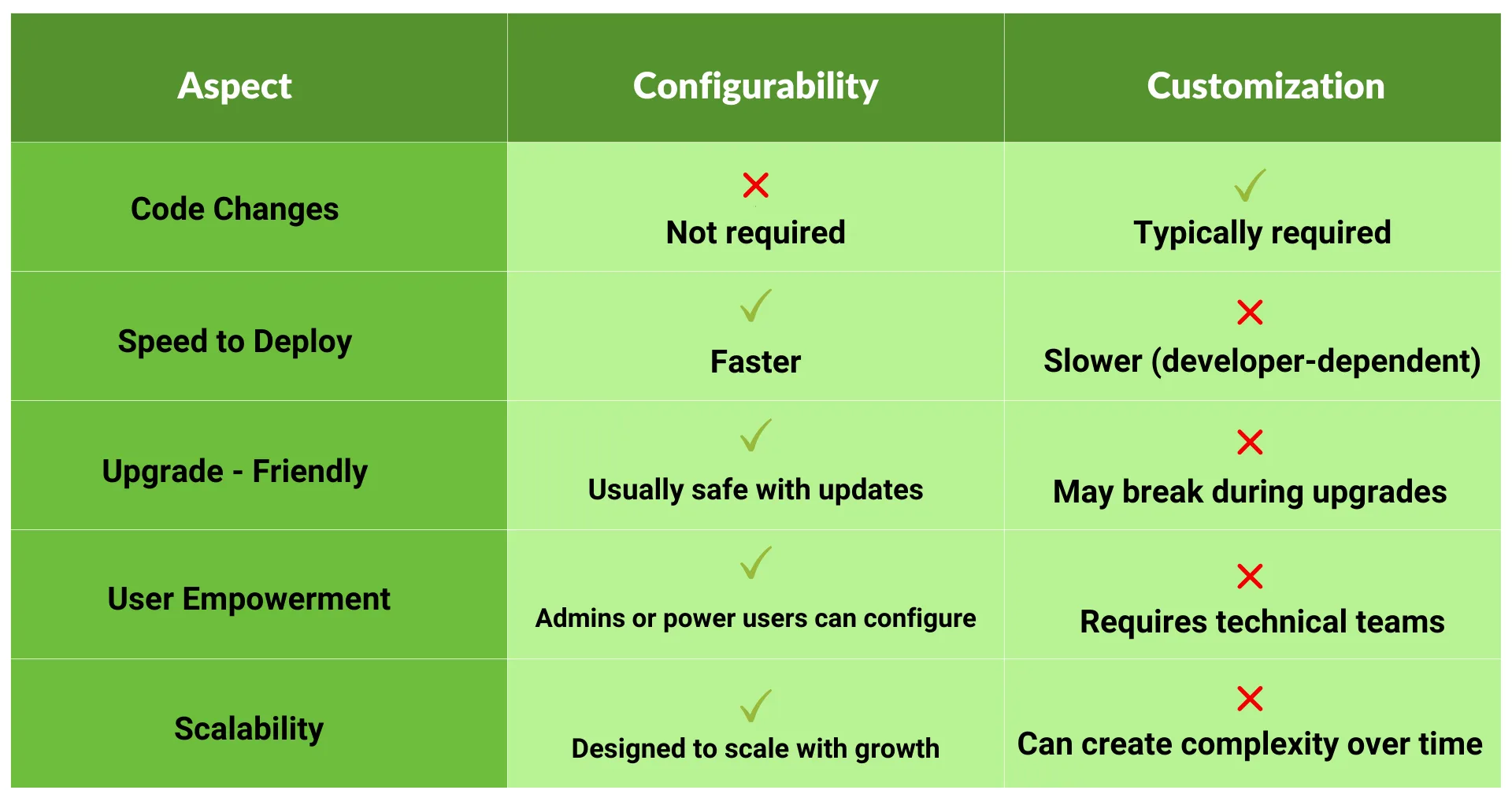
Configurability vs. Customization
Key Dimensions of Configurability
- UI/UX Adjustments – Modify dashboards, data fields, or workflows without code.
- Business Rule Management – Set logic for pricing, approvals, discounts, and validation rules.
- Product Configuration – Create and manage bundles, features, dependencies, and constraints.
- Multi-Tenant Controls – Configure settings by business unit, geography, or segment.
- Data & Workflow Integration – Connect and orchestrate processes across CRM, ERP, and billing platforms.
CPQ and the Critical Role of Configurability
Configurability is the backbone of any high-performing CPQ (Configure, Price, Quote) solution. In today’s fast-moving SaaS and enterprise environments, CPQ tools must accommodate a wide range of pricing models, sales motions, and customer requirements—without writing custom code every time a change is needed.
With a highly configurable CPQ like servicePath™ CPQ+, teams can:
- Launch new products and pricing models faster with rule-based logic
- Manage multi-segment quoting with flexible templates and workflows
- Support guided selling paths for reps and partners across verticals
- Configure region-specific compliance rules, discounts, and approvals
- Adapt bundles, upsells, and renewals without breaking downstream systems
This level of agility is only possible with deep configurability built directly into the CPQ architecture—enabling your sales, product, and revenue operations teams to move in lockstep without friction.
Benefits of Configurability
- Speed & Agility – Make updates quickly in response to market shifts
- User Empowerment – Admins and ops teams can adapt systems without IT support
- Lower Total Cost of Ownership (TCO) – Reduce dependency on custom development
- Improved Scalability – Manage complexity across regions and products with minimal disruption
- Future-Proofing – Adapt to new pricing models, products, and processes without code refactoring
Real-World Example
A SaaS company uses servicePath™ CPQ+ to launch usage-based pricing. Instead of writing new code, the revenue ops team configures pricing tiers, volume-based rules, and quote templates—all through the admin interface. As a result, new pricing goes live in days instead of months.
Challenges of Low Configurability
- Rigid Systems – Force businesses to conform to software limitations
- Increased Developer Dependency – Slows innovation and creates bottlenecks
- High Maintenance Costs – Customized systems are harder to upgrade and scale
- Limited Business Agility – Inability to adapt to evolving market needs
Industry Use Cases of Configurability
SaaS & Subscription Platforms
Enable product-led growth with configurable onboarding paths, usage-based billing, and real-time account updates.
Enterprise Software Vendors
Support regional compliance, pricing localization, and feature toggling without code changes.
Manufacturing & High-Tech
Configure complex BOMs (Bills of Materials), pricing rules, and delivery schedules using rule-based logic and guided selling.
Professional Services
Offer modular service packages that sales and delivery teams can adapt on the fly—without involving IT.
Related Terms
- Customization
- No-Code / Low-Code Platforms
- Product Configuration
- Business Rule Engine
- CPQ (Configure, Price, Quote)
- Guided Selling
Frequently Asked Questions (FAQs)
1. What’s the difference between configurability and customization?
Configurability refers to adapting software through built-in tools—no code required. Customization typically involves writing or modifying code, which can increase complexity and slow down future updates.
2. Why is configurability critical in CPQ platforms?
3. Can configurability reduce total cost of ownership (TCO)?
4. Is configurability scalable across multiple business units or regions?
5. How does configurability impact time-to-market?
The Strategic Power of Configurability in Modern SaaS
Configurability is a strategic advantage in today’s SaaS and enterprise environments. It allows companies to iterate faster, reduce IT overhead, and align systems with real-world business processes. With a platform like servicePath™ CPQ+, teams gain the power to build dynamic, scalable solutions—without waiting on code.
Discover the servicePath™ Advantage
Experience next-level configurability with servicePath™ CPQ+. Empower your revenue team to adapt, scale, and execute complex pricing and quoting strategies—without writing a single line of code.
📞 Contact us for a demo | 📚 Explore success stories | 🎧 Listen to our CEO’s podcast with Frank Sohn