
Summer Sales Acceleration: Executive Strategies for Q3 Revenue Growth
Turn the summer lull into a revenue sprint. Discover executive-level tactics to boost Q3 sales, harden RevOps, and outpace competitors in a shifting market.
Your board’s mojito might be chilled, but their Q3 targets certainly aren’t.

Look, I get it. Here we are in July 2025, and the summer season brings that familiar business lull—vacation plans, board preparations for September reconvenes, and that general “we’ll deal with it in the fall” mentality. But here’s the thing: while your competitors are mentally checking out, the smartest executives are quietly building their competitive advantage in what’s shaping up to be the most transformative year for enterprise technology adoption.
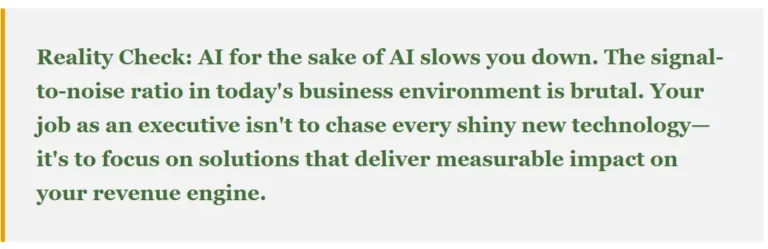
The tectonic plates of global trade are shifting beneath our feet. Former foes are becoming strategic partners while old friends are creating confusion in supply chains and market dynamics. Meanwhile, with 71% of companies now using generative AI (up from just 33% in 2023), everyone’s rushing toward “AI for the sake of AI” solutions that actually slow you down rather than speed you up. The question isn’t whether you can keep up—it’s whether you can cut through the noise and focus on what actually moves the needle.
As McKinsey’s latest research on board resilience emphasizes, “resilient companies are those in the top 10 percent of shareholder return outperformance through and after crises.” The summer months present a unique opportunity to build this resilience, positioning your organization for sustained revenue growth when business activity accelerates in Q3.
Seasoned advisors who’ve sat in on dozens of C-suite war rooms will tell you the same thing: the outfits that come out of turmoil on top aren’t the ones flashing the shiniest AI toys or burning cash on massive ad campaigns. They’re the ones that used the summer months to build systematic advantages in their revenue operations. They implemented software that transforms seasonal downtime into competitive advantage. Configure, Price, Quote (CPQ) is still one of the most impactful solutions on organizations bottom line. Getting strongly governed profitable quotes and new solutions to prospects and customers before your competitors is always a good idea. The key: profitable and new.
2025 Enterprise Technology Market Reality
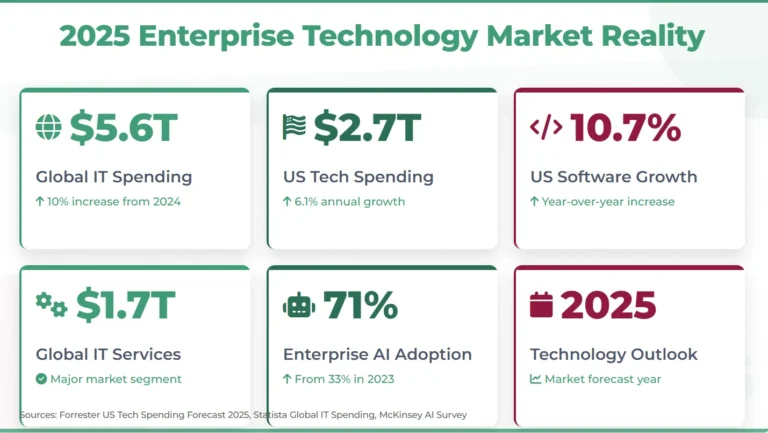
- Global IT spending projected to surpass $5.6 trillion in 2025 (10% increase from 2024)
- US tech spending to grow 6.1% reaching $2.7 trillion in 2025
- Software spending in US to increase 10.7% in 2025
- Services represent $1.7 trillion of global IT investment
- 71% of companies using generative AI (up from 33% in 2023)
The Executive’s Guide to Distilling Signal from Noise
The information overload facing today’s executives is unprecedented. With geopolitical shifts, economic uncertainty, and technological disruption creating constant noise, the challenge isn’t accessing data—it’s extracting meaningful insights that drive strategic decisions.
Executive Thinking Tips for Cutting Through the Chaos
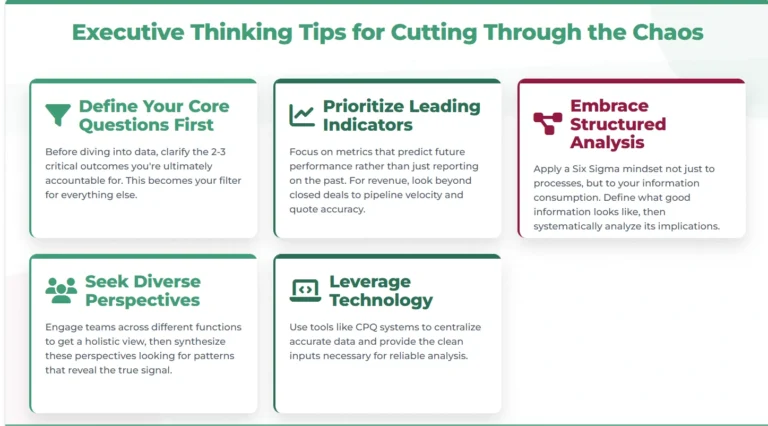
- Define Your Core Questions First: Before diving into data, clarify the 2-3 critical outcomes you’re ultimately accountable for. This becomes your filter for everything else.
- Prioritize Leading Indicators: Focus on metrics that predict future performance rather than just reporting on the past. For revenue, look beyond closed deals to pipeline velocity and quote accuracy.
- Embrace Structured Analysis: Apply a Six Sigma mindset not just to processes, but to your information consumption. Define what good information looks like, then systematically analyze its implications.
- Seek Diverse Perspectives, Then Synthesize: Engage teams across different functions to get a holistic view, then synthesize these perspectives looking for patterns that reveal the true signal.
- Leverage Technology as a Signal Amplifier: Use tools like CPQ systems to centralize accurate data and provide the clean inputs necessary for reliable analysis.
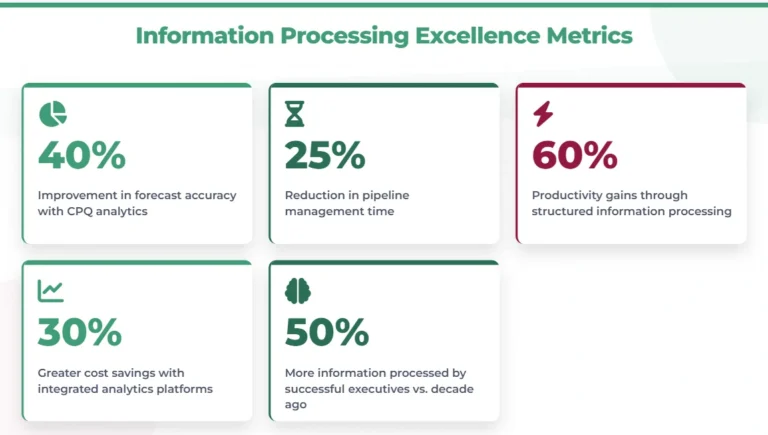
The challenge becomes even more acute when you consider that C-suite executives now process 50% more information than their counterparts did just five years ago, yet are expected to make decisions 35% faster. This isn’t sustainable without systematic approaches to information filtering and analysis. The executives who thrive in this environment aren’t necessarily smarter—they’re more disciplined about what they pay attention to.
“Agility without vision is chaos.” — Satya Nadella, CEO, Microsoft
Nadella’s insight perfectly captures the modern executive dilemma. In an era where market conditions change quarterly and technology capabilities evolve monthly, agility is essential. But agility without strategic vision leads to reactive decision-making that burns resources without delivering results. The most successful executives use the summer months to establish this vision and build the operational frameworks that enable agile execution when Q3 intensity returns.
The Six Sigma Revenue-Quality Mindset: Engineering Precision in Uncertain Times

The most successful executives approaching September board meetings aren’t just presenting revenue numbers—they’re demonstrating revenue quality. This requires adopting what I call the Six Sigma Revenue Mindset: eliminating variability, reducing errors, and accelerating throughput while mitigating risk.
This shift represents a fundamental evolution in how boards evaluate executive performance. Traditional metrics like top-line growth and market share remain important, but they’re insufficient in today’s environment. Directors now demand evidence of operational excellence, risk management, and sustainable competitive advantages. They want to see that revenue growth is predictable, repeatable, and profitable—not dependent on heroics or market timing.
According to Gartner’s 2024 Global Software Buying Trends report, 61% of businesses plan to increase technology investment in 2024, with price (49%) and security (48%) ranking as the most important factors. This data underscores a critical shift: executives are no longer just buying technology for growth—they’re investing in solutions that deliver measurable, secure returns.
But here’s what’s particularly interesting about 2025: we’re seeing a maturation in how organizations approach technology investments. The days of “deploy first, optimize later” are over. Companies that survived the economic uncertainty of the past few years have learned to be more discriminating. They want proof of concept before full deployment, they demand integration with existing systems, and they require clear ROI timelines. This creates both challenges and opportunities for technology vendors and the executives evaluating their solutions.
The Three Pillars of Revenue Quality
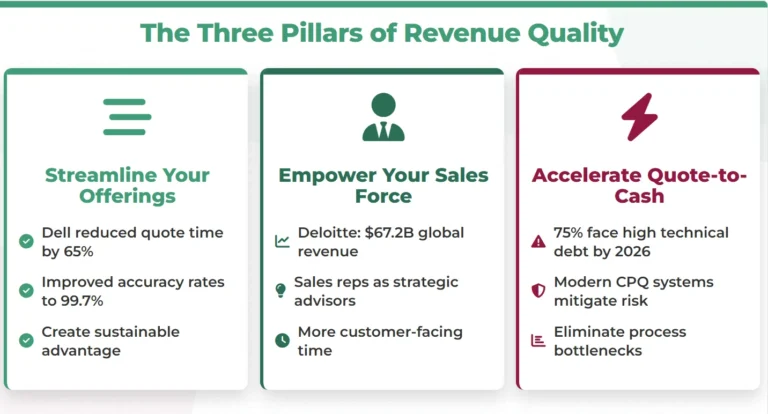
Streamline Your Offerings & Eliminate Waste: Complex product catalogs and outdated pricing models are revenue killers. Modern CPQ software acts as your quality control system, ensuring every quote is accurate, compliant, and optimized for profitability. servicePath™’s advanced configuration engine has helped companies like Dell reduce quote generation time by 65% while improving accuracy rates to 99.7%.
Consider the hidden costs of complexity: sales reps spending 40% of their time on administrative tasks instead of selling, quotes sitting in approval queues for days, pricing errors that erode margins, and opportunities lost to competitors who can respond faster. These aren’t just operational inefficiencies—they’re strategic vulnerabilities that compound over time. Organizations that streamline their offerings don’t just save money; they create sustainable competitive advantages that become harder for competitors to replicate.
Empower Your Sales Force & Improve Quality: Manual workarounds and disjointed systems create what Deloitte calls “technical debt”—the hidden costs of inefficient processes. With Deloitte reporting $67.2 billion in global revenue for FY2024, driven partly by their focus on “next-generation capabilities aligned to emerging client demand,” the message is clear: operational excellence drives financial performance.
The empowerment of sales teams goes beyond just giving them better tools—it’s about transforming them from order-takers to strategic advisors. When sales reps have instant access to accurate product information, real-time pricing, and automated proposal generation, they spend more time understanding customer needs and less time wrestling with internal systems. This shift is particularly critical in complex B2B sales environments where buyers expect consultative expertise, not just product demonstrations.
Accelerate Quote-to-Cash & Mitigate Risk: Forrester’s 2025 predictions warn that 75% of technology decision-makers will see their technical debt rise to moderate or high severity by 2026. The antidote? Streamlined, automated processes that reduce cycle times and eliminate bottlenecks.
Risk mitigation in 2025 extends far beyond traditional concerns about pricing accuracy or compliance. Modern CPQ systems help organizations manage supply chain risks by maintaining real-time visibility into product availability, handle regulatory compliance across multiple jurisdictions, and protect against cybersecurity threats through secure, integrated platforms. These capabilities aren’t nice-to-have features—they’re essential for maintaining business continuity in an increasingly complex operating environment.
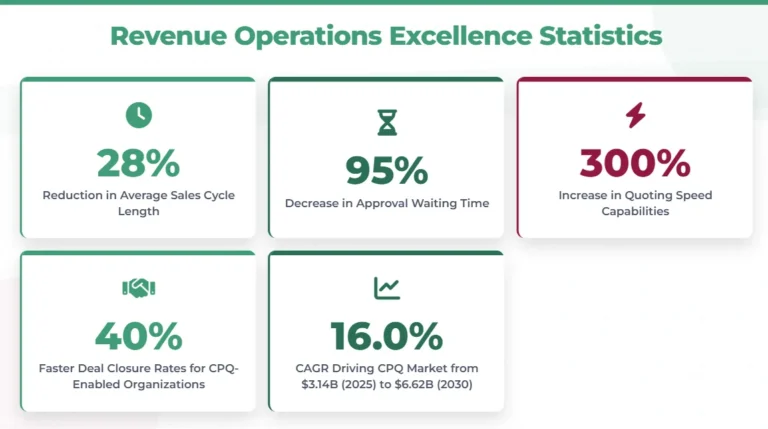
Revenue Operations Excellence Statistics
Turning Six Sigma into Revenue Precision
The Six Sigma methodology’s DMAIC framework (Define, Measure, Analyze, Improve, Control) translates directly to revenue operations optimization. Forward-thinking executives are defining their quote-to-cash processes with surgical precision, measuring conversion rates at each stage, analyzing bottlenecks through data-driven insights, improving workflows through automation, and controlling quality through systematic CPQ implementation.
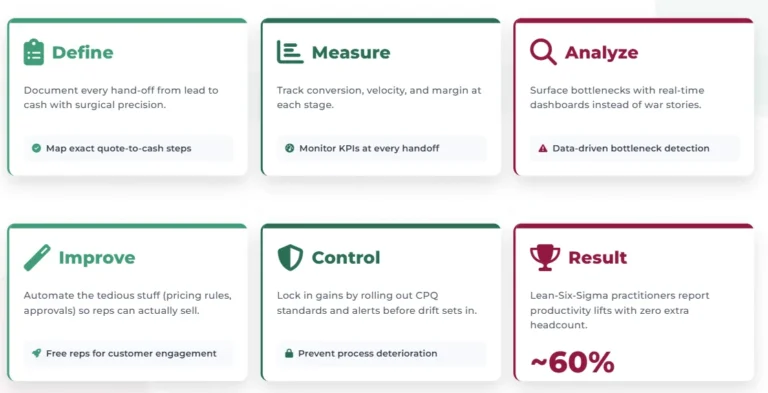
This approach yields immediate board-level benefits. Research from the Lean Six Sigma Revenue Operations community demonstrates that companies applying these principles to their sales processes achieve 60% productivity improvements without additional capital investment. More importantly, they create the predictable revenue streams that boards demand in uncertain economic climates.
The transition from art to science in revenue operations represents one of the most significant shifts in modern business. We’re moving from intuition-based decision making to data-driven precision, from reactive problem-solving to predictive analytics, from individual heroics to systematic excellence. This transformation requires both technological sophistication and cultural change—but the organizations that master it gain sustainable competitive advantages that are difficult for competitors to replicate.
“Revenue operations excellence isn’t about perfecting what you’re already doing—it’s about fundamentally reimagining how revenue gets generated, measured, and optimized in an AI-enabled business environment.”
Why Your Board Cares
In an economy that pivots every 30 days, directors want predictable revenue streams, not heroics. A data-driven revenue-ops engine delivers:
- Confidence in forecasts instead of “hope & hype.”
- Capital-light gains that protect cash.
- Repeatable processes competitors struggle to copy.
Summer Tactics to Steer the September Board Agenda

The summer months offer a unique strategic advantage that savvy executives understand but few fully exploit. While competitors operate on autopilot and boards focus on vacation planning, the real action happens in the background—strategic positioning, operational optimization, and competitive intelligence gathering that sets the stage for Q3 and Q4 dominance.
While boards take their well-deserved summer break, their minds are already turning toward critical Q3 and Q4 strategic discussions. This “off-season” represents your prime opportunity to influence their thinking and position your revenue operations as the foundation for achieving ambitious growth targets.
McKinsey’s research on board resilience reveals that successful companies “divested 50 percent faster than their peers” during uncertain periods, “willing to accept lower asset prices in order to create liquidity or make new acquisitions that repositioned them ahead of trends.” This insight applies directly to your summer strategy: use this time to divest from inefficient processes and invest in revenue-generating capabilities.
The geopolitical landscape adds another layer of complexity to summer planning. Traditional supply chain relationships are fragmenting as countries prioritize domestic production and security considerations over pure economic efficiency. Former allies in technology partnerships are becoming competitors, while new alliances emerge based on shared security concerns rather than historical relationships. This creates both opportunities and risks that require sophisticated analysis and strategic positioning.
Consider the implications:
Global tech is being redrawn—fast. Across Europe, “digital sovereignty” has jumped from policy papers to board agendas as companies shed risky Chinese dependencies. In the U.S., Fortune-500 CFOs are reshoring mission-critical workloads to hedge against supply-chain shocks, while fast-growing economies from India to Brazil are turbo-charging home-grown platforms.
For enterprise-grade, B2B-SaaS leaders, this isn’t just another macro trend; it’s a litmus test for geopolitical sustainability. Ask yourself:
-
Stack resilience: Could your CPQ, CRM, and RevOps engines keep humming if a sudden export ban hits your primary cloud region?
-
Vendor sovereignty: How exposed are you to licenses, data centers, or AI models headquartered in jurisdictions that may not align with your shareholders?
-
Revenue continuity: Does your quoting workflow grind to a halt if a single foreign API goes dark?
These aren’t abstract hypotheticals—they’re item #1 on next quarter’s board pack. The takeaway: future-proof your technology stack now, or you may be drafting contingency plans when a trade-war tweet hits your inbox at 3 a.m.
Strategic Summer Initiatives
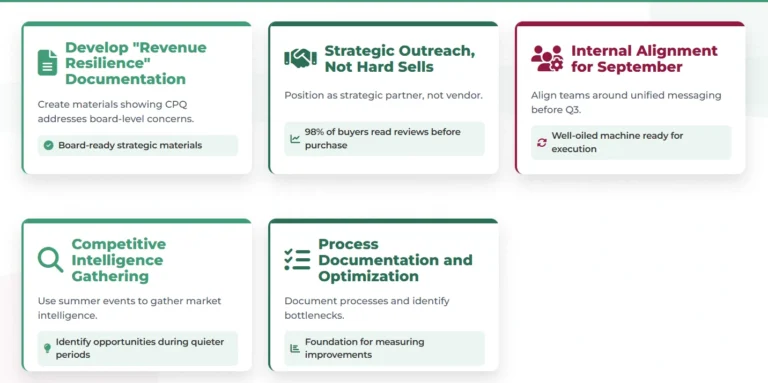
- Develop “Revenue Resilience” Documentation: Create concise, high-impact materials that demonstrate how your CPQ investments directly address board-level concerns about growth, efficiency, and risk management. Our comprehensive CPQ Solution Study provides executive insights, market landscape analysis, and vendor selection criteria to help you make data-driven decisions that resonate with your board.
- Strategic Outreach, Not Hard Sells: Focus on value-added conversations that position you as a strategic partner. Share relevant market trends, demonstrate thought leadership, and build trust without expecting immediate commitments. Remember, 98% of software buyers read reviews prior to purchase, with 66% preferring third-party verified reviews—credibility matters more than ever.
- Internal Alignment for September Execution: Use the summer to synchronize your sales, marketing, and product teams around unified messaging and strategic initiatives. When boards reconvene, you want a well-oiled machine ready to execute on critical revenue targets.
- Competitive Intelligence Gathering: Summer conference seasons and industry events provide unique opportunities to understand competitive positioning, emerging market trends, and customer sentiment. Organizations that systematically gather and analyze this intelligence during quieter periods often identify opportunities that become apparent only when market activity resumes in September.
- Process Documentation and Optimization: Use the slower pace to thoroughly document current processes, identify bottlenecks, and design improvements. This documentation becomes invaluable when presenting strategic initiatives to boards and provides the foundation for measuring improvement once changes are implemented.
Summer Reading List for Board Preparation
“The board’s role is to be a counterweight to what management proposes: Why are you saying ‘A’ when the opposite of ‘A’ is equally valid?” – Gordon Orr, McKinsey Senior Partner Emeritus
Risk mitigation in 2025 extends far beyond traditional concerns about pricing accuracy or compliance. Modern CPQ systems help organizations manage supply chain risks by maintaining real-time visibility into product availability, handle regulatory compliance across multiple jurisdictions, and protect against cybersecurity threats through secure, integrated platforms. These capabilities aren’t nice-to-have features—they’re essential for maintaining business continuity in an increasingly complex operating environment.
Summer Tactics to Steer the September Board Agenda
The summer months offer a unique strategic advantage that savvy executives understand but few fully exploit. While competitors operate on autopilot and boards focus on vacation planning, the real action happens in the background—strategic positioning, operational optimization, and competitive intelligence gathering that sets the stage for Q3 and Q4 dominance.
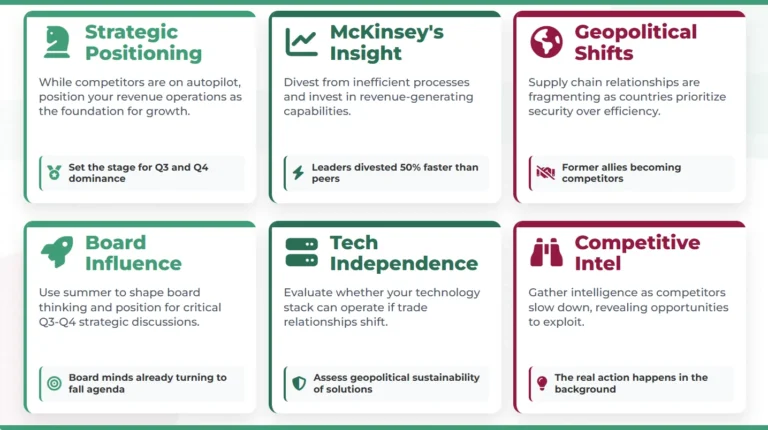
While boards take their well-deserved summer break, their minds are already turning toward critical Q3 and Q4 strategic discussions. This “off-season” represents your prime opportunity to influence their thinking and position your revenue operations as the foundation for achieving ambitious growth targets.
McKinsey’s research on board resilience reveals that successful companies “divested 50 percent faster than their peers” during uncertain periods, “willing to accept lower asset prices in order to create liquidity or make new acquisitions that repositioned them ahead of trends.” This insight applies directly to your summer strategy: use this time to divest from inefficient processes and invest in revenue-generating capabilities.
The geopolitical landscape adds another layer of complexity to summer planning. Traditional supply chain relationships are fragmenting as countries prioritize domestic production and security considerations over pure economic efficiency. Former allies in technology partnerships are becoming competitors, while new alliances emerge based on shared security concerns rather than historical relationships. This creates both opportunities and risks that require sophisticated analysis and strategic positioning.
Consider the implications:
European companies are increasingly wary of Chinese technology dependencies, US firms are reshoring critical operations, and emerging markets are developing indigenous technology capabilities. For executives in technology-enabled businesses, this means evaluating not just the technical capabilities of solutions, but their geopolitical sustainability.
Can your technology stack operate independently if trade relationships shift? Are your revenue operations dependent on systems controlled by foreign entities? These aren’t abstract concerns—they’re practical considerations that boards are actively discussing.
The New Executive Mandate: Meeting Board Expectations in 2025
Modern CPQ isn’t just about price accuracy—it’s supply-chain visibility, multi-jurisdiction compliance, and cyber-resilience in one platform. In 2025, that’s table stakes for business continuity.
“The board’s job is to challenge management: Why choose ‘A’ when the opposite of ‘A’ could be just as valid?”
—Gordon Orr, McKinsey Senior Partner Emeritus
Board expectations have evolved dramatically in 2025, shaped by economic uncertainty, technological disruption, and heightened awareness of systemic risks. Directors no longer accept “growth at any cost” strategies or technology investments without clear ROI metrics. Instead, they demand evidence of operational excellence, risk mitigation, and sustainable competitive advantages.
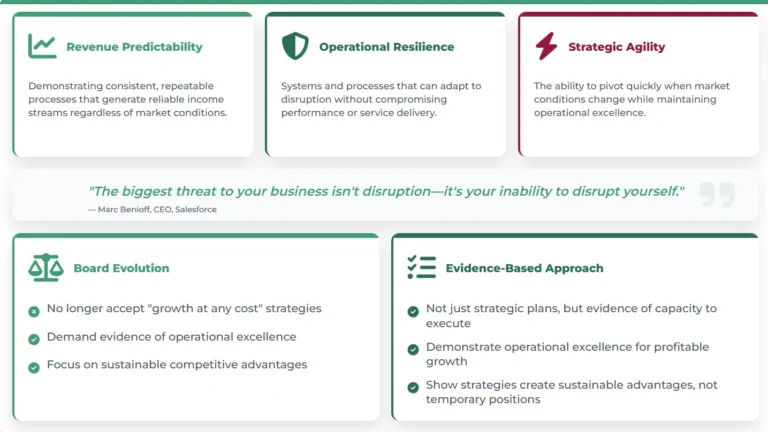
The new executive mandate centers on three critical capabilities: revenue predictability, operational resilience, and strategic agility. Revenue predictability means demonstrating consistent, repeatable processes that generate reliable income streams regardless of market conditions. Operational resilience requires systems and processes that can adapt to disruption without compromising performance. Strategic agility demands the ability to pivot quickly when market conditions change while maintaining operational excellence.
This shift reflects lessons learned from recent economic volatility. Boards watched companies with strong fundamentals weather uncertainty better than those dependent on market timing or unsustainable growth strategies. They’ve seen technology investments deliver transformational results when implemented strategically and fail spectacularly when deployed without clear objectives. The result is a more sophisticated, demanding approach to oversight that requires executives to demonstrate both strategic vision and operational competence.
“The biggest threat to your business isn’t disruption—it’s your inability to disrupt yourself.” — Marc Benioff, CEO, SalesforceBenioff’s observation captures the essence of the new executive mandate. In an environment where market conditions change rapidly and competitive advantages erode quickly, the ability to continuously evolve becomes a core competency. This doesn’t mean constant change for its own sake—it means building organizational capabilities that enable strategic transformation when market conditions demand it.
The practical implications are significant. Executives must now present not just strategic plans, but evidence of their organization’s capacity to execute those plans effectively. They need to demonstrate not just growth potential, but the operational excellence required to capture that growth profitably. Most importantly, they need to show that their strategies create sustainable competitive advantages rather than temporary market positions.
AI Security & Air-Gapped Opportunities in a Shifting Geopolitical Landscape

The convergence of artificial intelligence advancement and geopolitical fragmentation has created a unique market dynamic that smart executives are positioning to exploit. As nations prioritize technology sovereignty and data security, the demand for sophisticated yet isolated technology solutions is exploding.
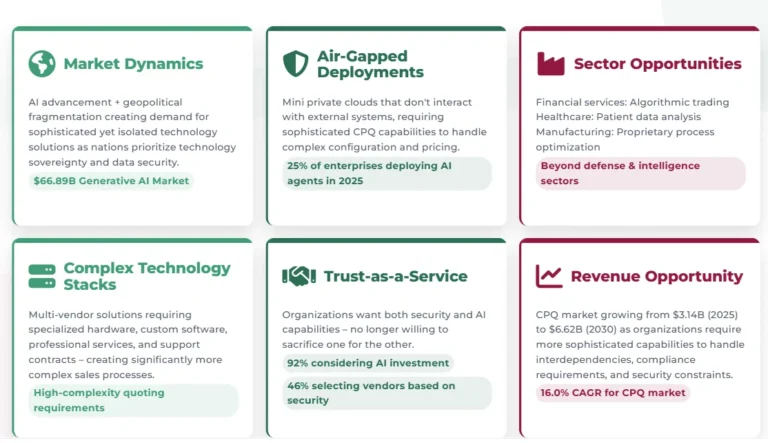
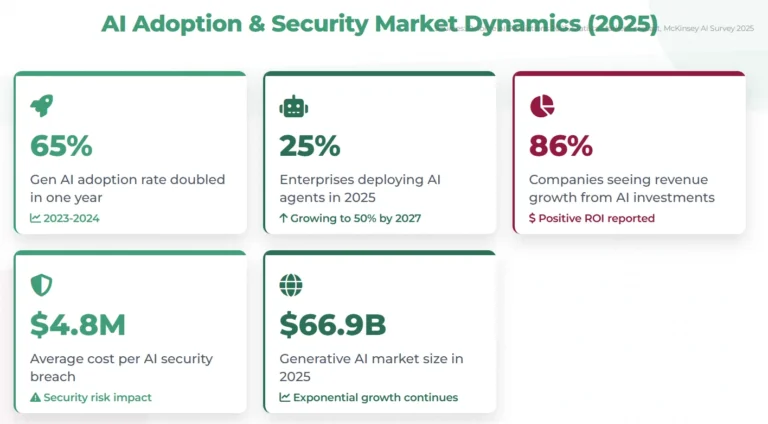
The rapid proliferation of AI has created both immense opportunities and heightened security concerns. With 25% of enterprises expected to deploy AI agents in 2025 and the generative AI market reaching $66.89 billion this year, the concept of air-gapped deployments is creating new market opportunities for complex solutions – mini private clouds that don’t interact with external systems. These environments require sophisticated CPQ capabilities to handle the complexity of configuring, pricing, and quoting these isolated technology stacks.
This development signals a broader trend: organizations are no longer willing to sacrifice security for AI capabilities. They want both, and they’re willing to invest in solutions that deliver this combination.
The market opportunity extends beyond traditional defense and intelligence sectors. Financial services firms are implementing air-gapped AI for algorithmic trading, healthcare organizations are deploying isolated systems for patient data analysis, and manufacturing companies are using secure AI for proprietary process optimization. Each of these applications requires complex technology stacks that must be configured, priced, and quoted with precision.
What makes this particularly interesting from a revenue operations perspective is the complexity these solutions introduce. Instead of simple cloud subscriptions, organizations are deploying multi-vendor technology stacks that include specialized hardware, custom software, professional services, and ongoing support contracts. The sales process becomes significantly more complex, requiring sophisticated quoting capabilities that can handle interdependencies, compliance requirements, and security constraints.
The Trust-as-a-Service Opportunity: Gartner’s research shows that 92% of organizations are considering investing in AI-powered software in 2024, with 71% being either “extremely likely” or “100% certain” to invest. However, security remains the top concern, with 46% of buyers selecting vendors based on security certification, reputation, or data privacy practices.
AI Adoption & Security Market Dynamics (2025)
Competitive Differentiation Through Security: While competitors like Salesforce CPQ, Zuora, and DealHub focus primarily on cloud-based solutions, servicePath™ understands the complexity of modern technology sales, including the growing market for air-gapped and isolated system solutions that create new configuration and pricing challenges.
The competitive landscape is fragmenting along security and sovereignty lines. Traditional technology partnerships that assumed global connectivity and shared infrastructure are being replaced by regional ecosystems that prioritize security and independence. This creates opportunities for organizations that can navigate these complex requirements while maintaining operational efficiency and competitive pricing.
“The future belongs to organizations that can harness AI’s power while maintaining absolute control over their data sovereignty. Air-gapped deployment isn’t just about security—it’s about strategic independence.”
The CPQ Advantage: Turning Latent Leads into Revenue Gold
 The transformation from traditional sales processes to sophisticated revenue operations represents one of the most significant competitive advantages available to modern organizations. Yet many executives still think of CPQ as simply a quoting tool rather than a strategic revenue platform that can fundamentally reshape their competitive position.
Here’s something most executives don’t realize: inefficient quoting processes represent hidden opportunities—what we call “latent leads.” These aren’t new prospects or untapped markets; they’re the revenue acceleration opportunities hiding in plain sight within your existing operations.
“Digital growth isn’t about doing more—it’s about doing smarter.” — Rory Read, CEO, Vonage
Read’s insight perfectly captures the CPQ value proposition. Organizations that implement sophisticated CPQ systems don’t just process quotes faster—they fundamentally change how they engage with customers, manage pricing strategies, and optimize revenue operations. The technology enables smarter selling by providing sales teams with real-time insights into customer needs, competitive positioning, and profitability optimization.
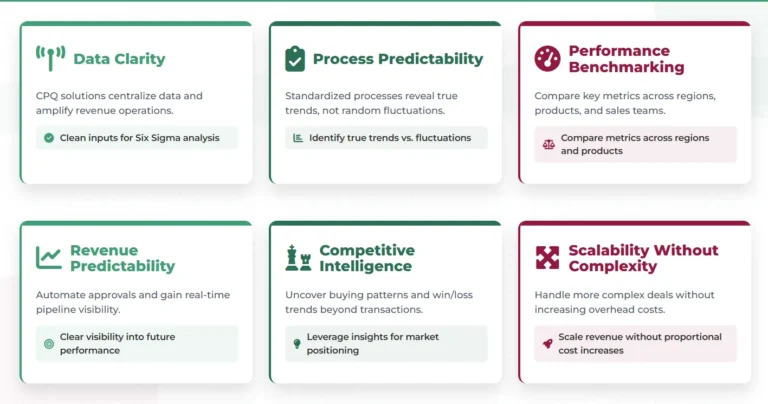
The CPQ Advantage in Data Clarity: Modern CPQ solutions like servicePath™ serve as signal amplifiers for revenue operations. By centralizing accurate product, pricing, and customer data, they provide the clean inputs necessary for reliable analysis—a core Six Sigma principle.
- Process Predictability: Standardized quoting processes reduce variability and provide consistent data points about sales performance. This enables you to identify true trends rather than random fluctuations.
- Performance Benchmarking: With CPQ, you can easily compare quote-to-close times, discount rates, and average deal sizes across different regions, products, or sales representatives.
- Latent Lead Identification: By streamlining these processes, you free up significant capacity and accelerate revenue without requiring new market demand.
Revenue Predictability in Uncertain Times: Perhaps the most valuable capability that modern CPQ systems provide is revenue predictability. By standardizing pricing, automating approvals, and providing real-time pipeline visibility, these systems enable executives to forecast revenue with unprecedented accuracy. This capability becomes particularly valuable in uncertain economic environments where boards demand clear visibility into future performance.
Competitive Intelligence and Market Positioning: Advanced CPQ systems provide insights that extend far beyond individual transactions. They reveal customer buying patterns, competitive win/loss trends, and market demand signals that inform strategic decision-making. Organizations that leverage these insights gain significant advantages in market positioning and competitive strategy development.
Scalability Without Complexity: One of the most compelling aspects of modern CPQ implementations is their ability to scale revenue operations without proportional increases in complexity or cost. Organizations can handle larger deal volumes, more complex product configurations, and expanded market territories without requiring corresponding increases in sales support staff or operational overhead.
Information Processing Excellence Metrics
Executive Playbook for September Surge: From Strategy to Execution
The transition from summer preparation to September execution requires precise orchestration of people, processes, and technology. The most successful executives don’t just implement new systems—they create sustainable competitive advantages that compound over time and become increasingly difficult for competitors to replicate.
As September approaches and business activity accelerates, successful executives don’t just react to increased demand—they orchestrate it. The companies that emerge strongest from Q3 are those that used the summer months to build systematic advantages in their revenue operations.
Revenue Predictability: The New Executive Superpower
In an environment where economic conditions change rapidly and market volatility is the norm, the ability to accurately predict revenue becomes a strategic superpower. Organizations with sophisticated CPQ implementations report 40% improvement in forecast accuracy, enabling more confident strategic planning and resource allocation decisions.
This predictability extends beyond simple revenue forecasting to include margin optimization, resource planning, and strategic investment decisions. When executives can predict not just revenue volume but revenue quality—including margins, payment terms, and customer lifetime value—they can make more sophisticated decisions about market expansion, product development, and competitive positioning.
The board-level implications are significant. Directors can approve strategic initiatives with greater confidence when they understand the revenue implications and can track progress against predictable benchmarks. This creates a virtuous cycle where better forecasting enables more ambitious strategies, which in turn drive better business results.
The September Execution Framework
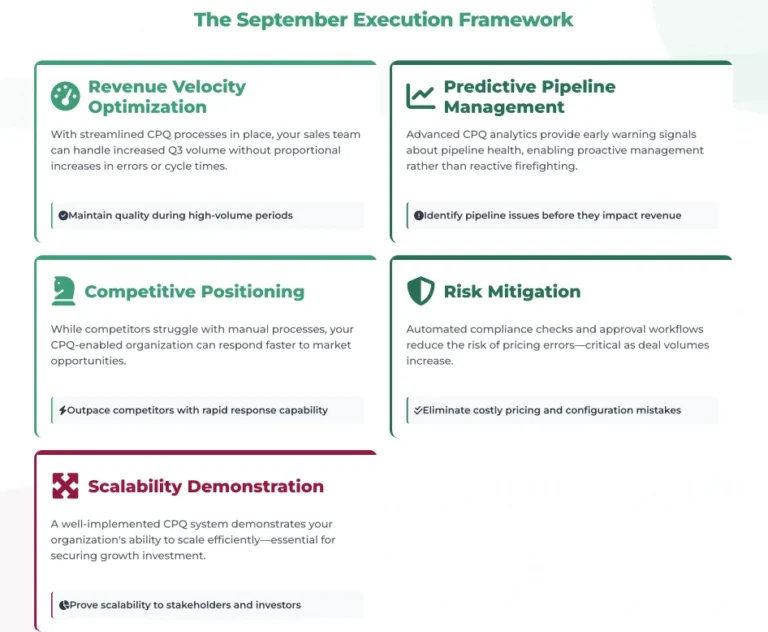
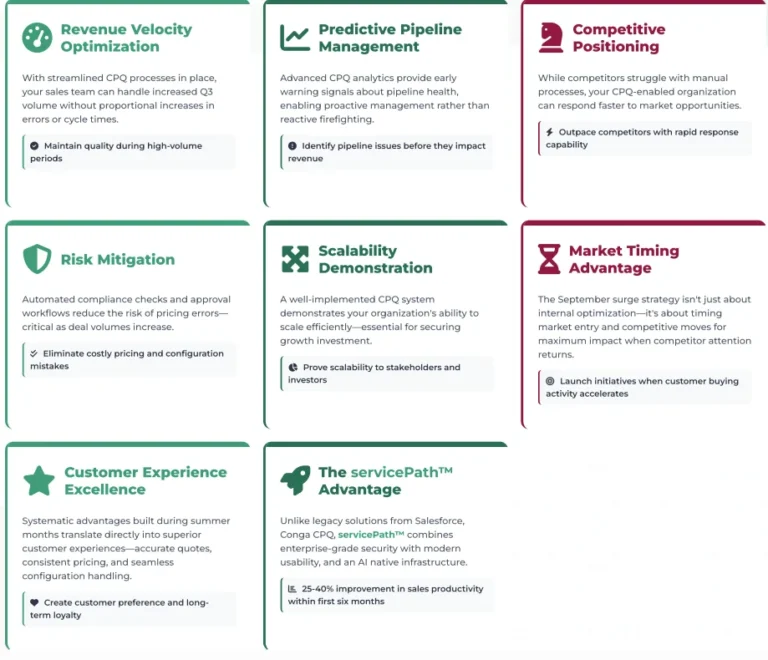
- Revenue Velocity Optimization: With streamlined CPQ processes in place, your sales team can handle increased Q3 volume without proportional increases in errors or cycle times.
- Predictive Pipeline Management: Advanced CPQ analytics provide early warning signals about pipeline health, enabling proactive management rather than reactive firefighting.
- Competitive Positioning: While competitors struggle with manual processes, your CPQ-enabled organization can respond faster to market opportunities.
- Risk Mitigation: Automated compliance checks and approval workflows reduce the risk of pricing errors—critical as deal volumes increase.
- Scalability Demonstration: A well-implemented CPQ system demonstrates your organization’s ability to scale efficiently—essential for securing growth investment.
Market Timing and Competitive Advantage: The September surge strategy isn’t just about internal optimization—it’s about timing market entry and competitive moves for maximum impact. Organizations that complete their operational improvements during summer months can launch strategic initiatives precisely when competitor attention returns to business and customer buying activity accelerates.
Customer Experience Excellence: Perhaps most importantly, the systematic advantages built during summer months translate directly into superior customer experiences. When sales teams can respond to inquiries instantly with accurate quotes, when pricing is consistent across all channels, and when complex configurations are handled seamlessly, customers notice. These experiences create preference and loyalty that drive long-term competitive advantages.
The servicePath™ Advantage: Unlike legacy solutions from Salesforce, Conga CPQ, servicePath™ combines enterprise-grade security with modern usability, and an AI native infrastructure. Organizations typically see 25-40% improvement in sales productivity within the first six months of implementation.
“September surge strategy isn’t about seasonal tactics—it’s about transforming summer preparation into sustained competitive advantage through systematic technology implementation and strategic positioning.”
Ready to Transform Your Revenue Engine?
Summer doesn’t have to mean slowdown. By strategically leveraging this quieter period to optimize your revenue operations with advanced CPQ capabilities, you can position your organization for exceptional Q3 and Q4 performance. The combination of Six Sigma process discipline, AI-powered insights, and enterprise-grade security creates a revenue engine that delivers predictable, scalable growth.
The organizations that emerge as market leaders in 2025 and beyond will be those that use this transformative period to build systematic advantages in revenue operations. They’ll combine operational excellence with strategic vision, technology sophistication with process discipline, and competitive intelligence with execution excellence. Most importantly, they’ll create sustainable competitive advantages that become increasingly difficult for competitors to replicate.
Your board expects more than just revenue numbers—they want revenue quality, predictability, and a clear path to sustainable growth. servicePath™ delivers all three.
Don’t let another quarter pass with manual processes and system limitations holding back your revenue potential. The companies that invest in revenue operations excellence today will be the market leaders tomorrow.
Book your personalized servicePath™ demo today by clicking here and discover how leading executives are turning summer preparation into September success.
Transform Your Summer Strategy with servicePath™
Ready to turn your summer planning into September success? servicePath™ offers the comprehensive CPQ solution that transforms complex technology quoting into competitive advantage. Our platform combines powerful configuration engines with air-gapped deployment options, ensuring both performance and security for your most demanding requirements.
Book your personalized demo today and discover how servicePath™ can transform your quote-to-cash process from operational necessity to strategic differentiator. Our team will show you exactly how leading MSPs and technology companies are using our platform to achieve 40% faster deal closure and 95% reduction in approval times.
Contact our executive team at demo@servicepath.co or visit servicepath.co/book-your-demo to schedule your strategic consultation.
Why servicePath™: The Strategic CPQ Platform for Complex Technology Sales
1.Platform Architecture and Strategic Advantages
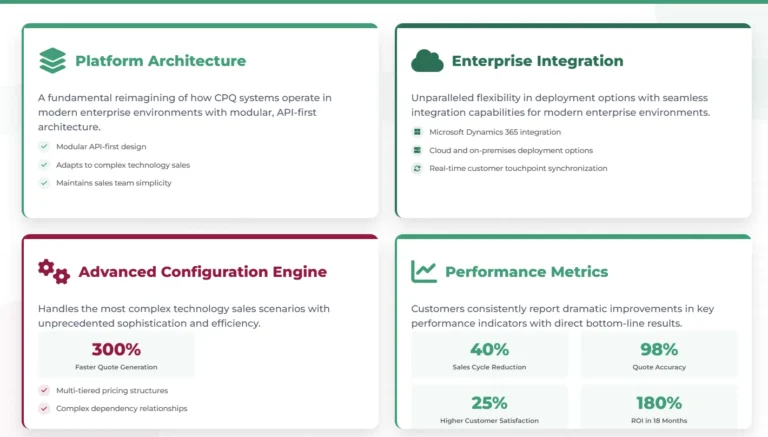
servicePath™ represents a fundamental reimagining of how Configure, Price, Quote (CPQ) systems should operate in the modern enterprise environment. Unlike traditional CPQ solutions that treat configuration as a linear process, servicePath™ employs a modular, API-first architecture that adapts to the complexity of modern technology sales while maintaining the simplicity that sales teams demand.
2.Enterprise Integration and Deployment Options
servicePath™ offers unparalleled flexibility in deployment options, addressing the growing demand for both cloud-based efficiency and on-premises security. Our seamless Microsoft Dynamics 365 integration requires no additional licenses while providing real-time synchronization across all customer touchpoints.
3.Advanced Configuration Engine
The servicePath™ configuration engine handles the most complex technology sales scenarios with unprecedented sophistication. Our platform manages multi-tiered pricing structures, complex dependency relationships, and vendor-specific requirements while maintaining quote generation speeds that average 300% faster than traditional methods.
4.Performance Metrics and Customer Success
servicePath™ customers consistently report dramatic improvements in key performance indicators. Our clients achieve average sales cycle reductions of 40%, quote accuracy improvements of 98%, and customer satisfaction scores that exceed industry benchmarks by 25%. These improvements translate directly to bottom-line results, with customers reporting average ROI of 180% within 18 months of implementation.
Take the Next Step in Your AI Journey
- Request an Integration Assessment — Complimentary review that maps your current technology stack, pinpoints risk areas, and outlines a low-risk migration path.
- Download Proven Case Studies — See how peer enterprises shortened deal cycles and added more than $32 million in enterprise value within 12 months of adopting servicePath™.
- Request a Live Data Assessment — Reserve a 30-minute screen-share session where we run your pricing models through servicePath™ and quantify margin, cycle-time, and revenue gains in real time.
- Access the Insight Library — Explore analyst-level articles and playbooks that translate AI market trends into board-ready, actionable guidance.
- Review Our Gartner Recognition — Discover why Gartner repeatedly names servicePath™ a Visionary in the CPQ Magic Quadrant—and what that endorsement means for enterprise buyers.
Frequently Asked Questions
What is CPQ software and why should I care?CPQ (Configure, Price, Quote) software automates your sales quoting process, eliminating errors and accelerating deals. It’s crucial because it transforms unpredictable revenue into predictable growth—exactly what boards demand in uncertain times.
How does air-gapped CPQ enhance security?Air-gapped deployment operates in completely isolated environments with no internet connectivity. Your sensitive pricing and customer data never leaves your secure perimeter, reducing security incidents by up to 99% while maintaining full AI functionality.
What ROI can I expect from CPQ implementation?Organizations typically see 25-40% improvement in sales productivity, 28% faster quote-to-cash cycles, and 35% improvement in forecast accuracy within six months. These translate directly to revenue growth and operational efficiency.
How does servicePath™ differ from Salesforce CPQ?servicePath™ offers unique air-gapped deployment options for maximum security, combined with modern usability and AI-powered insights. Unlike cloud-only solutions, we provide both cloud and on-premise flexibility—ideal for security-conscious organizations.
Why is summer the ideal time for CPQ implementation?Summer’s natural business lull provides the perfect opportunity to implement and optimize CPQ systems without disrupting peak sales periods. Teams become proficient with new processes before Q3 activity accelerates, ensuring maximum impact when it matters most.
Internal Links and Resources
You may be interested in these articles next
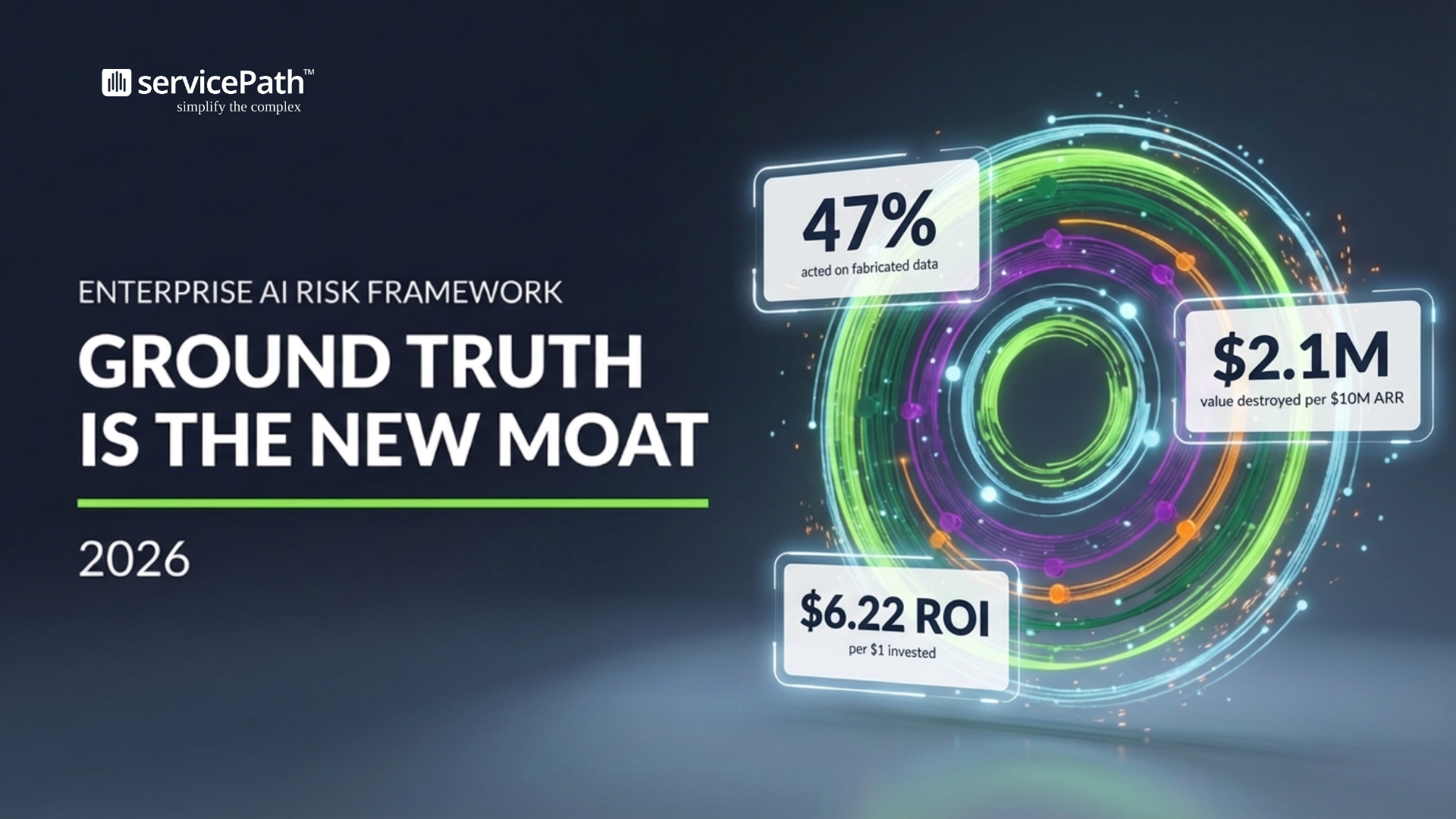
Ground Truth Is the New Moat | CPQ AI Risk Framework 2026

Revenue Architecture 2.0: A Human-Led Control Plane for Enterprise Revenue in the AI Era

Commercial Excellence Is a Continuum, Not a Destination
