Accrual Basis Accounting
Synonyms
- Accrual Accounting
- Accrual Method
- Accrual-Based Accounting
- Accrual Principle
What is Accrual Basis Accounting?
For example, if a company delivers a service in December but receives payment in January, the revenue is still recorded in December under accrual accounting. Likewise, if a business incurs an expense in one period but pays for it in the next, the expense is recorded in the period it was incurred.
Key Features of Accrual Basis Accounting
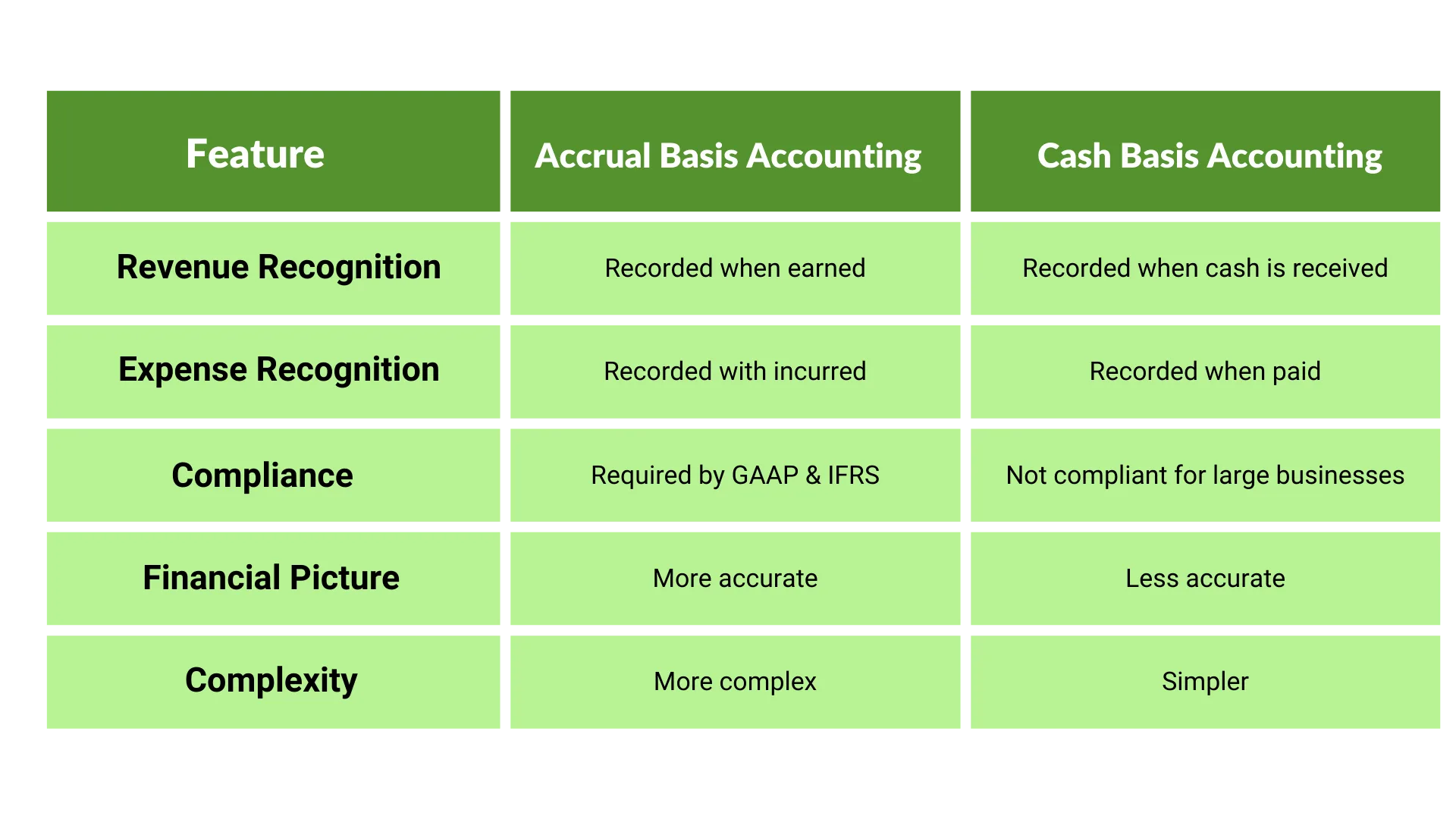
- Revenue Recognition: Revenue is recorded when it is earned, not when payment is received.
- Expense Recognition: Expenses are recorded when they are incurred, not when they are paid.
- Matching Principle: This ensures that expenses are matched to the revenues they help generate in the same accounting period.
- Financial Accuracy: Provides a more comprehensive view of a company’s financial status compared to cash basis accounting.
Fuel Growth Through Accrual-Based Financial Modeling with servicePath™
Accrual vs. Cash Basis Accounting
Benefits of Accrual Basis Accounting
- More Accurate Financial Reporting – Captures all financial activities within the correct period, offering a clearer picture of profitability.
- Better Business Planning – Helps with long-term financial planning, budgeting, and forecasting.
- GAAP & IFRS Compliance – Required for publicly traded companies and businesses over a certain revenue threshold.
- Matching Principle Implementation – Ensures that revenues and expenses are properly matched, improving financial analysis.
Challenges of Accrual Basis Accounting
- Complexity – Requires detailed record-keeping and accounting knowledge.
- Cash Flow Considerations – Since revenue is recorded before cash is received, businesses must manage their cash flow effectively.
- Resource Intensive – May require accounting software or professional accountants to ensure accuracy and compliance.
Types of Accruals
- Accrued Revenues: Income earned but not yet received (e.g., invoicing clients after services are rendered).
- Accrued Expenses: Costs incurred but not yet paid (e.g., salaries payable at the end of a month).
How to Implement Accrual Basis Accounting
- Record revenues when they are earned, not when payment is received.
- Track accounts receivable (amounts owed to the business).
- Record expenses when they are incurred, even if not yet paid.
- Maintain accounts payable to track outstanding expenses.
- Use accounting software like QuickBooks, Xero, or FreshBooks for easier management.
Related Terms
- Cash Basis Accounting
- Matching Principle
- Revenue Recognition Principle
- GAAP (Generally Accepted Accounting Principles)
- Deferred Revenue
- Accounts Receivable
- Accounts Payable
Frequently Asked Questions (FAQs)
1. Is Accrual Basis Accounting Required for All Businesses?
2. How Does Accrual Basis Accounting Affect Taxes?
3. Can a Business Switch from Cash Basis to Accrual Basis Accounting?
Bring Financial Clarity and Strategic Precision to Your Business
Accrual basis accounting provides a more accurate and complete view of your business’s financial health by recognizing revenue and expenses when they’re earned—not just when cash moves. For SaaS and service-led organizations, this method is essential for compliant reporting, strategic forecasting, and long-term growth planning.
Discover the servicePath™ Advantage in Accrual-Based Financial Modeling
servicePath™ CPQ+ empowers finance and sales teams with tools that align seamlessly with accrual accounting principles—delivering accurate modeling, smarter pricing decisions, and scalable forecasting across complex revenue streams.
Contact us for a demo | Explore real-world case studies | Listen to our CEO’s podcast with Frank Sohn of NOVUS CPQ