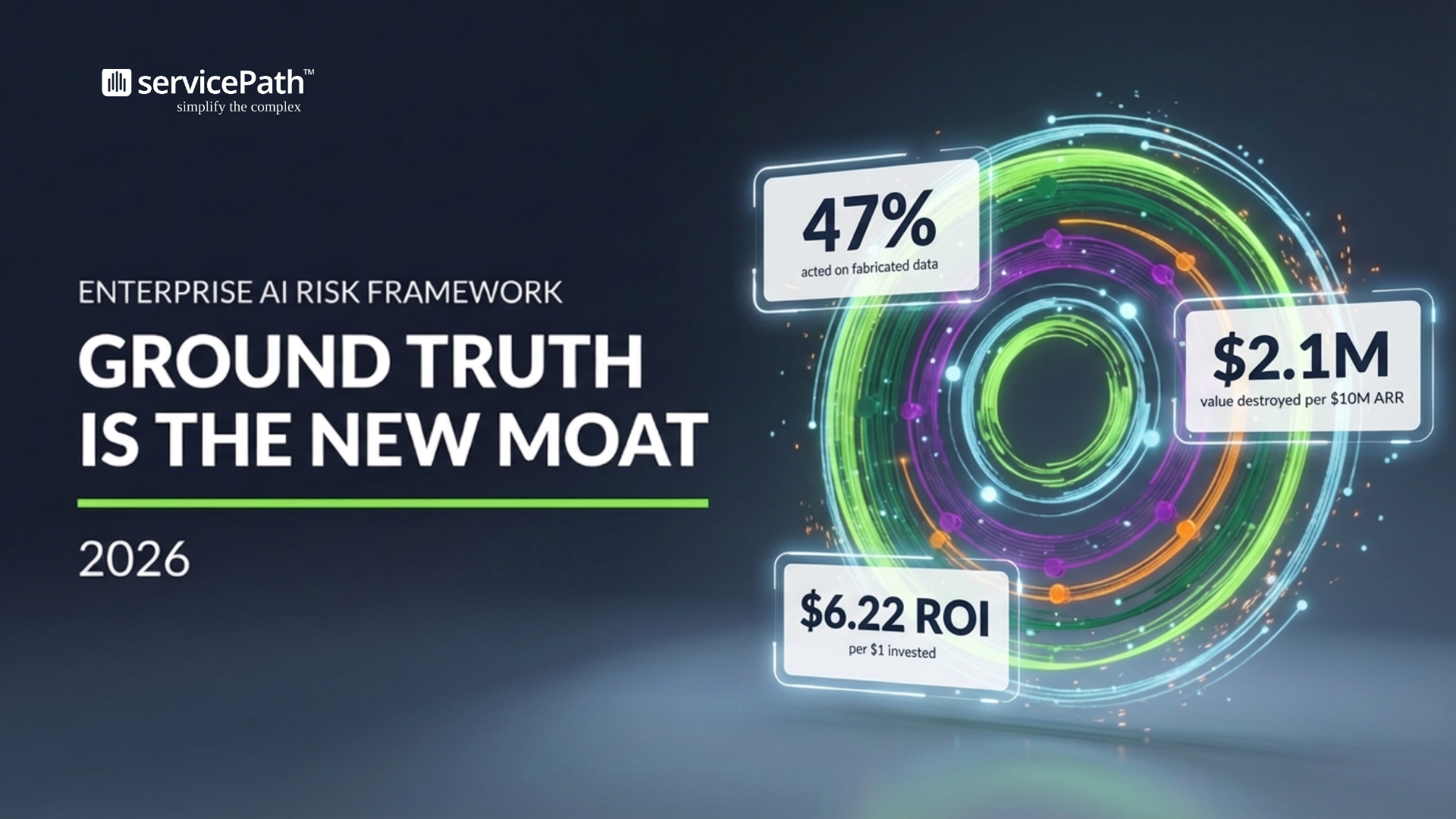
Beyond Billing: Completing the Revenue Puzzle—Why CPQ Is the Corner‑Piece of Usage‑Based Monetization

Executive Overview
Let’s cut through the noise: 61% of SaaS vendors now use usage-based pricing, but most still struggle to monetize it profitably. Why? Because they’re missing the cornerstone piece of the revenue puzzle: CPQ.
Picture this: Salesforce’s legacy CPQ hits End of Life in 2025, and AI workloads are spiking usage volumes overnight. Teams are scrambling—build a custom system, buy a best-of-breed tool like servicePath™, or migrate off clunky EOL platforms. The stakes? Miss the CPQ mark, and you leak margins, frustrate sales teams, and lose deals to nimbler competitors.
But here’s the good news: Leaders who nail CPQ see 30% faster quote-to-cash and 25% fewer order errors. It’s not about chasing trends—it’s about building a revenue engine that bends, not breaks, when AI throws curveballs.
Key Takeaways:
- CPQ prevents 40% of billing disputes by enforcing rules upstream.
- Best-of-breed platforms adopt new metrics (e.g., “GPU-minute”) 67% faster than monolithic suites.
- Migrating off EOL systems reduces TCO by 35% while modernizing workflows.
- AI-driven usage spikes require real-time CPQ agility to avoid 15-20% margin erosion.
- Tokenized pricing models reduce CAC by 18% and accelerate sales cycles by 27%.
- API-first CPQ architectures future-proof stacks.
- Salesforce CPQ EOL migrations present a rare chance to eliminate $2.7M in technical debt over five years.
The Digital Sales Imperative & Why CPQ Matters in the AI Era
B2B buying has irrevocably shifted online. Buyers now expect self-service, instant responses, and personalized experiences. Manual quoting introduces friction—a one-day delay can lose 30% of potential deals (Forrester). Modern CPQ platforms do more than automate quotes—they elevate the buyer experience and generate actionable insights:
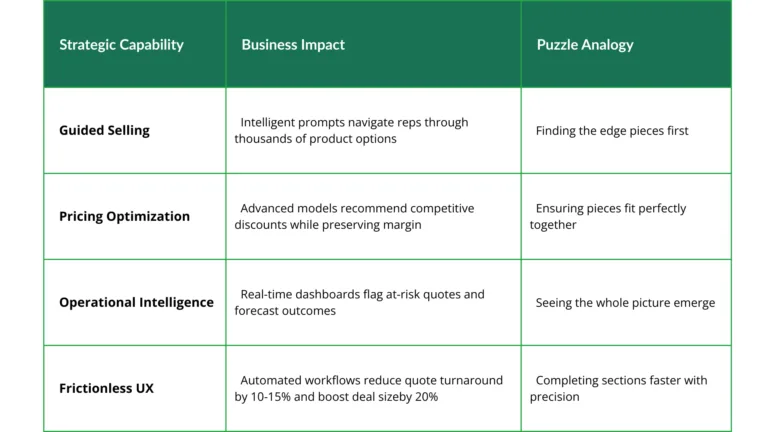
For tech-enabled enterprises, CPQ is not merely a tool but a strategic growth engine—the corner piece that makes the entire revenue puzzle possible.
The Complexity of Modern B2B CPQ
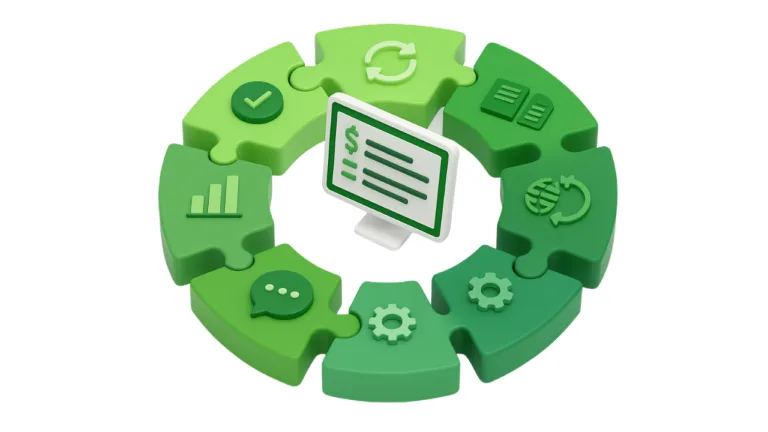
Quoting today involves far more than price lists. A robust CPQ must handle:
- Intricate Configurations: Thousands of SKUs with rule validation to prevent invalid combinations.
- Guided Selling: Dynamic questionnaires and prompts tailored to buyer needs.
- Pricing & Approvals: Volume, channel, and customer-specific discounts with automated workflows.
- Contract Lifecycle: Prorations, co-termination, renewals, and amendments integrated with CLM systems.
- Multi-Channel Support: Direct, partner, reseller, and e-commerce quoting with role-based visibility.
- Regulatory Compliance: Automated tax calculations, trade compliance checks, and full audit trails.
Attempting to replicate these capabilities in-house means rebuilding a configuration engine, pricing engine, workflow designer, document generator, integrations, and intelligent modules—a major R&D effort that’s like trying to carve every puzzle piece by hand.
Monetization Trends Beyond Traditional Billing
Flat subscriptions are the puzzle pieces of yesterday—easy to spot, but no longer enough to complete today’s intricate revenue picture. In the streaming era, buyers demand flexibility, and vendors need revenue models that scale with customer success.
The Rise of Usage-Based Pricing (UBP): Fitting New Pieces into the Revenue Puzzle
- 61% of SaaS vendors now offer usage-based pricing, up from 45% in 2022.
- 70% of AI-native SaaS companies are assembling their own UBP puzzle.
- Usage-led IPOs achieve 137% median net dollar retention (NDR)—a clear sign that when the right pieces are snapped together, the revenue picture becomes far more compelling.
Puzzle Insight:
Just as you group similar colors and patterns to make a puzzle easier, leading SaaS companies are grouping usage, subscription, and tokenized pricing to create a seamless customer experience. Each model is a unique puzzle piece—when combined thoughtfully, they reveal a complete, scalable business model.
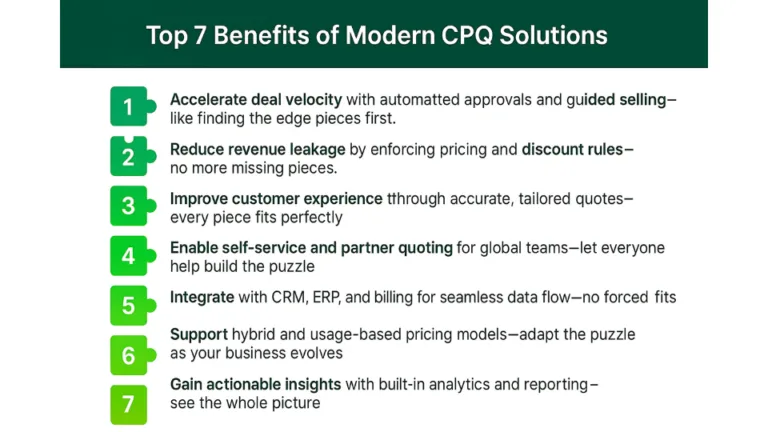
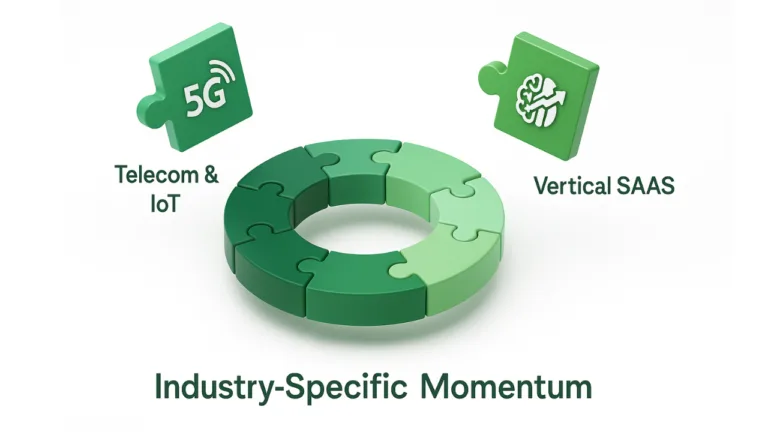
Industry-Specific Momentum: Custom Pieces for Every Vertical
-
Telecom & IoT: Deloitte forecasts 300% growth in 5G/IoT traffic by 2026, driving demand for real-time, usage-aligned pricing models—like adding a whole new section to the puzzle that requires fresh, flexible pieces.
-
Vertical SaaS outperforms: AI-native and vertical SaaS companies grow 2.5x faster than horizontal peers, fueled by outcome-based contracts. These companies have discovered that industry-specific puzzle pieces often fit better and create a clearer picture of value for their customers.
Hybrid Pricing Emerges as the New Standard: The Edge Pieces That Hold It All Together
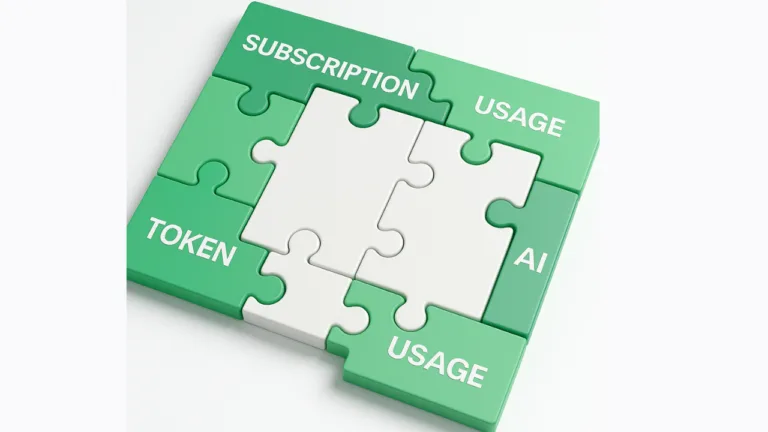
46% of SaaS companies now use hybrid models (e.g., subscriptions plus usage tiers), up from 34% in 2022.
Examples:
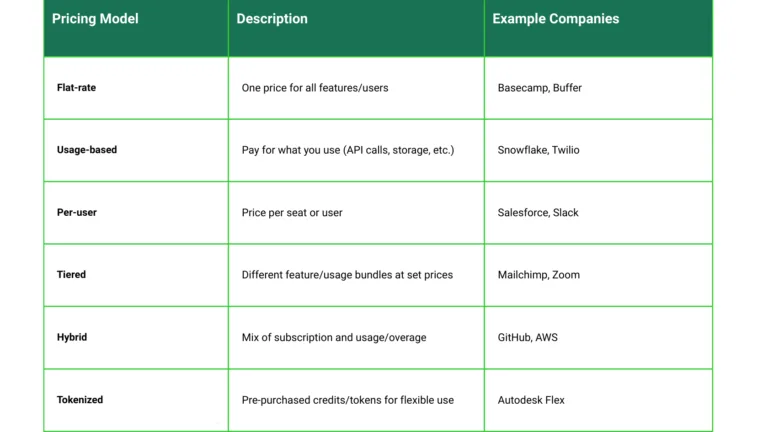
- Autodesk Flex’s tokenized day-rate plans boosted SMB adoption by 40%—a new piece that made the puzzle accessible to a broader market.
- GitHub combines per-user subscriptions with usage caps for AI tools, showing that the best puzzles are built from a mix of shapes and sizes.
Hybrid pricing is like finding the edge pieces first: it gives your revenue model structure and flexibility, allowing you to fill in the middle with innovative offerings and customer-centric pricing.
AI Monetization Challenges: The Missing Pieces

-
77% of SaaS companies added AI features in 2023, but only 15% monetized them effectively.
-
Early adopters like Intercom and Salesforce are pioneering microtransaction models, but many are still searching for the right puzzle piece to capture AI’s true value.
Insight:
Monetizing AI is like working on a puzzle with shifting pieces—what fits today may need to be reconfigured tomorrow as infrastructure and customer needs evolve. Success requires not just new pricing models, but also the operational agility to swap in new pieces as the picture changes.
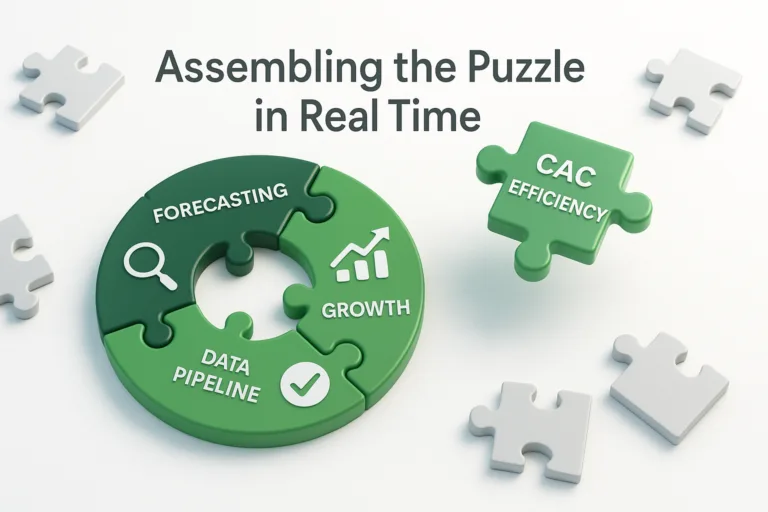
Operational Imperatives: Assembling the Puzzle in Real Time
-
Forecasting complexity: Companies using UBP report 25% longer sales cycles due to usage volatility, requiring advanced data pipelines—like sorting puzzle pieces by shape and color before you can see the final image.
-
CAC efficiency: Top UBP performers achieve 12-month CAC payback periods vs. 18+ months for subscription models, proving that when the pieces fit, growth accelerates.
Puzzle Takeaway:
The fastest-growing SaaS companies treat their pricing strategy like a living puzzle—constantly testing, rearranging, and adding new pieces to keep the picture clear and compelling for both customers and investors.
Common SaaS Pricing Models—Puzzle Piece Edition
Breaking Free from Legacy Subscription Models
Legacy subscription models are like puzzle pieces from an old, outdated set—they might have worked in the past, but they no longer fit the evolving picture of SaaS growth. Usage-based pricing (UBP), on the other hand, unlocks new growth and customer loyalty by letting you assemble your revenue model with pieces that truly fit today’s market.
How Leading Companies Rebuilt Their Revenue Picture
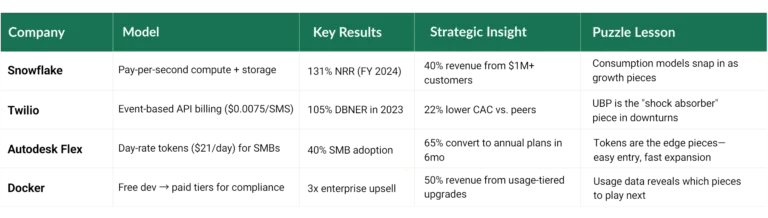
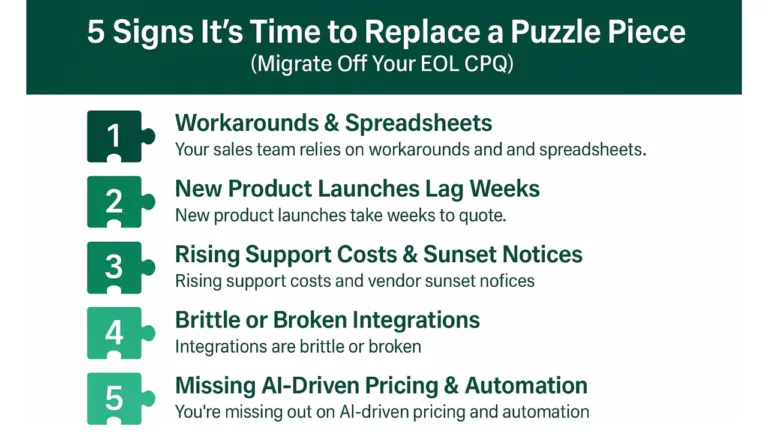
Puzzle Insight:
Each of these leaders didn’t just swap out one piece—they reimagined the whole puzzle, combining usage, tokens, and subscriptions to create a scalable and resilient revenue picture.
Top Billing Platforms for Usage‑Based Monetization
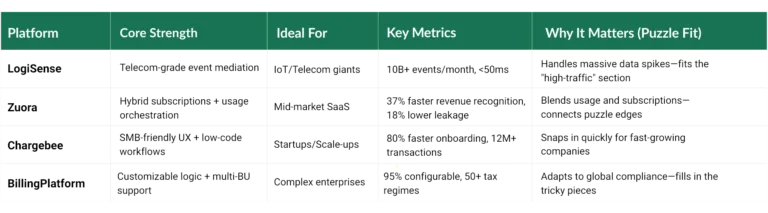
A CPQ without a billing engine is like a puzzle with a missing centerpiece—no matter how many other pieces you fit together, the picture remains incomplete. Modern usage models demand real-time metering, granular pricing, and AI-ready scalability. The right billing platform is the crucial piece that brings your revenue puzzle to life.
Billing Platforms—Which Piece Fits Your Revenue Model?
Best-of-Breed CPQ vs. Traditional CPQ—Which Piece Fits the Future?
Think back to the last time you wrestled with a legacy CPQ system: clunky interfaces, email chains longer than your weekend to-do list, and the ever-present dread of the next upgrade. Sure, traditional CPQ platforms have been stalwart gatekeepers for pricing and quoting—steady, dependable, but sometimes painfully slow. Today’s B2B sales playbook, however, demands more than just reliability: it wants speed, flexibility, and a sprinkle of AI-driven smarts. That’s where best-of-breed solutions like servicePath™ come in—nimbly built to keep pace with your fastest-moving sellers and deliver quotes as sharp as your product vision. Which approach will give you the competitive edge (and sanity) you’re craving? Let’s unpack the pros, the pitfalls, and the future-proof fit for your team:
Pricing Mechanisms
- Traditional CPQ: Relies on manual pricing rules, often leading to inconsistencies and delayed responses to market changes.
- Best-of-Breed CPQ: Employs dynamic, data-driven pricing strategies that adjust in real-time based on market conditions, competitor pricing, and customer behavior.
Insight: Dynamic pricing enhances competitiveness and ensures profitability by responding swiftly to market fluctuations.
Approval Workflows
- Traditional CPQ: Involves manual reviews, which can be time-consuming and prone to bottlenecks.
- Best-of-Breed CPQ: Features automated, exception-based workflows that streamline the approval process and reduce delays.
Insight: Automation in approvals accelerates the sales cycle and minimizes human error, leading to increased efficiency.
Personalization and Recommendations
- Traditional CPQ: Offers static bundles with limited customization, often failing to meet specific customer needs.
- Best-of-Breed CPQ: Provides intelligent recommendations and personalized configurations based on customer data and preferences.
Insight: Personalized offerings enhance customer satisfaction and increase the likelihood of successful sales conversions.
Forecasting and Analytics
- Traditional CPQ: Depends on historical reports, which may not accurately predict future trends.
- Best-of-Breed CPQ: Utilizes advanced predictive analytics to forecast sales trends and customer behaviors.G2
Insight: Predictive analytics enable proactive decision-making, allowing businesses to anticipate market demands and adjust strategies accordingly.
System Integration
- Traditional CPQ: Requires manual integration with other systems, leading to data silos and inefficiencies.
- Best-of-Breed CPQ: Offers real-time, automated integration with CRM, ERP, and other enterprise systems, ensuring seamless data flow.
Insight: Automated integration fosters a unified ecosystem, enhancing data accuracy and operational efficiency.
Transitioning to a best-of-breed CPQ solution like servicePath™ equips businesses with the tools necessary for modern sales success. By embracing dynamic pricing, automated workflows, personalized customer experiences, predictive analytics, and seamless integration, companies can drive efficiency, improve customer satisfaction, and stay ahead in a competitive market.
Puzzle Insight:
Just as every puzzle has unique pieces for the corners, edges, and center, each billing platform offers a specialized fit for different business needs. The right platform ensures the whole revenue picture comes together without forcing mismatched pieces.
6. The Puzzle Metaphor: Where CPQ Snaps In
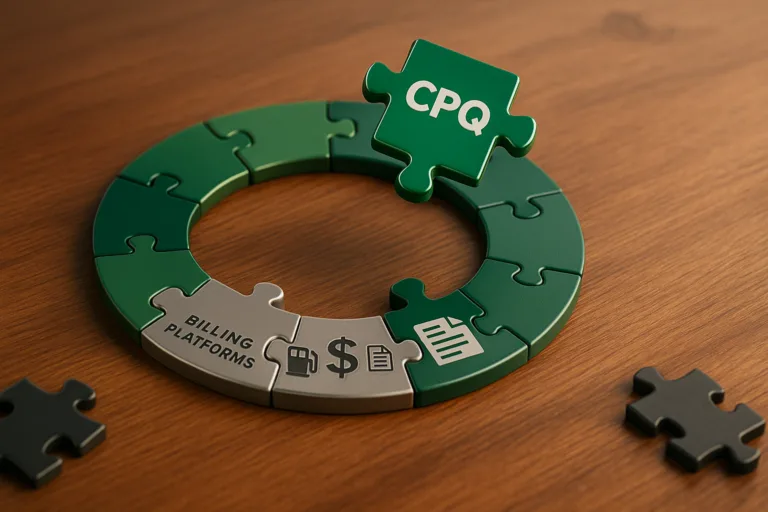
Imagine your revenue operations as an intricate jigsaw puzzle. Billing platforms are the pieces that meter and invoice usage—vital, but they only fill part of the picture. The real challenge comes at the deal desk, where usage-based and hybrid pricing strategies must fit together seamlessly. Without the right CPQ (Configure, Price, Quote) solution, you’re left forcing mismatched pieces, leading to bottlenecks, errors, and lost revenue.
How CPQ Completes the Puzzle
In one move, each capability fixes a different “missing piece” in the quoting puzzle—removing manual effort, enforcing guardrails, and connecting systems so revenue flows end-to-end.
Declarative catalogues
A declarative product catalogue replaces the maze of ad-hoc SKU spreadsheets.
- Single source of truth: every product, bundle, and price list is stored centrally and version-controlled.
- Error-proof configuration: reps choose from valid options only—no more miscoded SKUs or surprise discounts.
- Faster ramp-up: new sellers learn the catalogue instead of hunting through tribal spreadsheets.
Outcome: quoting speed goes up while price-book errors quietly disappear.
Embedded policy engine
Governance moves from after-the-fact policing to real-time prevention.
- Automated guardrails: margin floors, FX rules, and legal clauses fire instantly as reps build a quote.
- In-flight approvals: exceptions route to the right manager with context, cutting email ping-pong.
- Audit-ready trail: every policy hit is logged, satisfying finance and compliance without extra paperwork.
Outcome: deals land in leadership’s inbox already compliant, shrinking approval cycles from days to minutes.
Bi-directional API sync
Data travels cleanly between CPQ, CRM, billing, and ERP—no swivel-chair re-keying.
- Push + pull: order, pricing, and contract data flow both ways, so each system stays current.
- No data gaps: downstream invoicing and revenue recognition use the same numbers sales quoted.
- Future-proof architecture: new apps plug in via the same APIs instead of custom one-off scripts.
Outcome: once the quote is signed, the rest of the process snaps together without gaps or overlaps, creating a seamless revenue engine.
Navigating Your CPQ Strategy: Build, Buy, or Migrate Off EOL
Choosing the Right Puzzle Piece
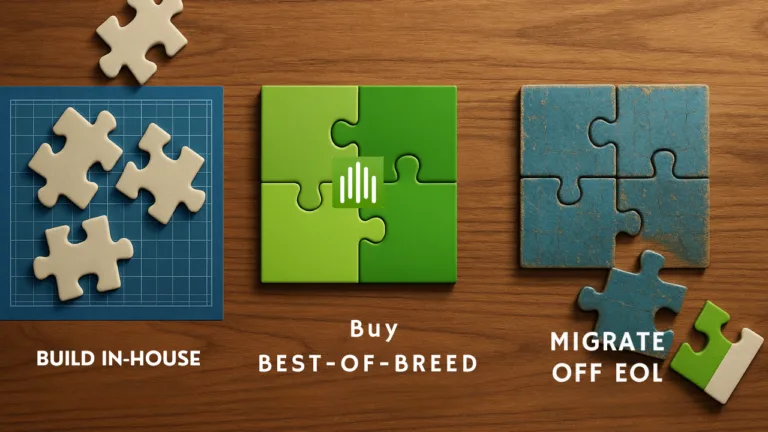
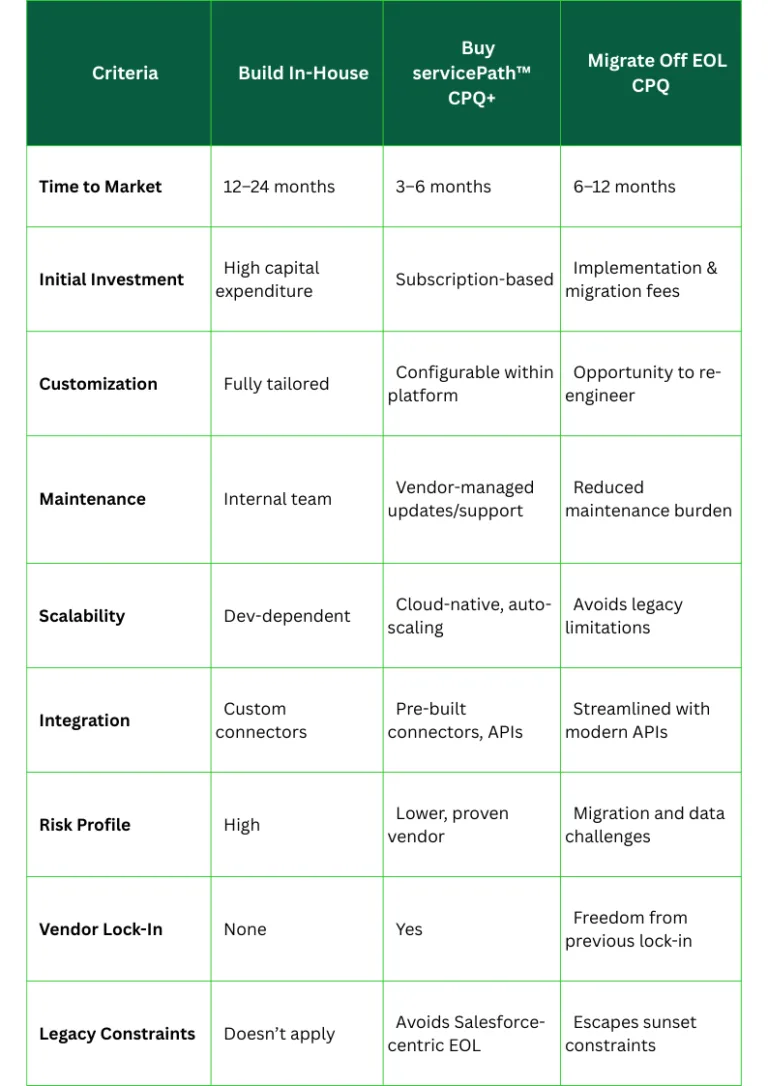
Choosing the right Configure-Price-Quote approach is like finding the perfect puzzle piece to complete your sales engine. Should you craft a bespoke solution in-house, invest in a best-of-breed platform like servicePath™ CPQ+, or extract yourself from a legacy system that’s reached end-of-life? Each path carries its own rhythm and requirements: building gives you total control but demands time and heavy upfront investment; buying accelerates deployment with a predictable subscription model; and migrating off an EOL platform lets you modernize without reinventing the wheel—while escaping looming sunset deadlines. By weighing factors such as time to market, customization needs, maintenance responsibilities, and risk tolerance, you’ll land on the path that aligns best with your team’s goals and resources.
Think of your CPQ strategy as a critical piece of the puzzle that is your sales and revenue operations. Choosing the right piece is essential for the overall picture of efficiency, scalability, and growth.
Quick Comparison: Build vs. Buy vs. Migrate
Key Considerations for Migrating Off EOL CPQ
-
Institutional Memory as a Strategic Asset: Your team’s knowledge of the old CPQ’s strengths and weaknesses is like having a picture of the finished puzzle—use it to guide your next move.
-
Beyond “Lift and Shift”: Migration isn’t just moving pieces—it’s a chance to redesign the puzzle for a better fit, implementing best practices and automation.
-
Best-of-Breed vs. Vendor Lock-in: EOL often results from being stuck with a vendor’s puzzle box. Now is your chance to pick the best piece for your unique picture, not just what fits the old frame.
-
Salesforce CPQ EOL Implications: If you’re on Salesforce CPQ, the end-of-sale status is a signal to reassess your entire puzzle—not just swap a piece, but possibly choose a new box entirely.
-
Discrete Manufacturing Focus: For complex manufacturing puzzles, solutions like Tacton or PROS provide industry-specific edge pieces that generic platforms can’t match.
Why 6–12 Months for EOL Migrations?

Migrating off an EOL CPQ system is like replacing a crucial corner piece in a puzzle—while the rest of the picture is still being assembled. It’s a delicate operation that requires precision, patience, and a clear strategy.
The 6- to 12-month timeframe typically associated with migrating off an end-of-life CPQ system reflects the added complexities of replacing a live, production-critical system. While faster migrations are possible, several factors often extend the timeline:
-
Data Migration Complexity: Extracting, cleansing, and transforming data from a legacy system can be a major undertaking, especially if the data is poorly structured or documented. Ensuring data integrity is paramount to avoid disrupting sales operations.
-
Integration Challenges: Re-establishing integrations with CRM, ERP, and other systems can be complex, as legacy systems may use outdated APIs or custom connections. Careful planning and testing are essential.
-
Business Process Re-engineering: Migrating off an EOL system is an opportunity to optimize sales processes. This may involve significant changes to workflows, approval processes, and pricing models, requiring time for design and implementation.
-
Change Management: User adoption is critical for any CPQ implementation, but it’s particularly important when replacing a familiar system. Training, communication, and support are essential to ensure a smooth transition.
-
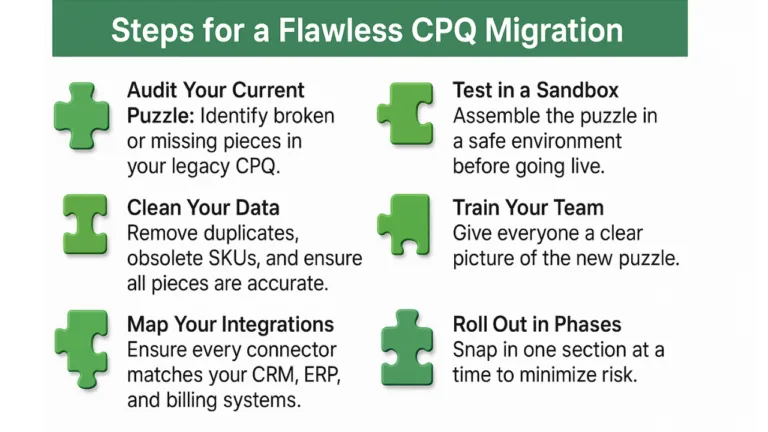
Risk Mitigation: Migrating off a live system carries inherent risks. Thorough testing and phased rollouts are necessary to minimize disruption to sales operations and avoid revenue loss.
In essence, migrating off an EOL CPQ is like replacing the engine of a car while it’s still running. It requires careful planning, skilled execution, and a focus on minimizing disruption. Choosing the right “puzzle piece” – a CPQ solution and implementation partner with experience in these types of migrations – is crucial for success.
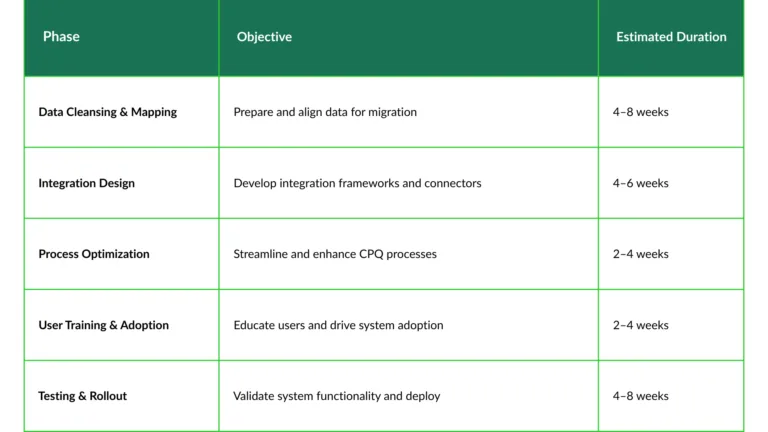
EOL Migration Timeline—Puzzle Piece by Piece
Quantifying Build vs. Buy vs. Migrate: The Cost of Each Puzzle Piece
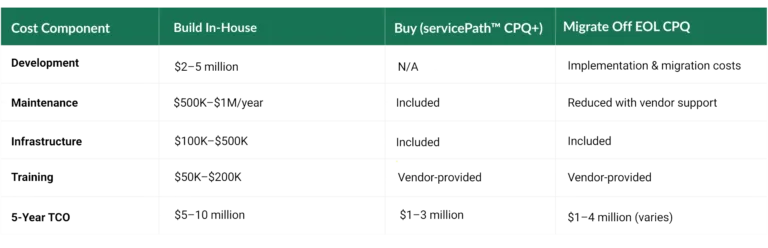
When evaluating CPQ strategies, it’s essential to consider the Total Cost of Ownership (TCO) over a five-year horizon. Here’s a breakdown:
1. Building In-House: Crafting Your Own Puzzle Piece
- Initial Development Costs: Building a custom CPQ solution can require an upfront investment ranging from $1 million to $3 million, depending on complexity.
- Annual Maintenance: Ongoing costs, including bug fixes, system updates, and feature enhancements, can amount to 20–40% of the initial build cost annually, translating to $1M–$4M per year.
- Hidden Costs: Additional expenses may arise from training, documentation, and potential system downtimes.
2. Buying Off-the-Shelf: Selecting a Pre-Made Puzzle Piece
- Subscription Fees: Commercial CPQ solutions typically offer subscription-based pricing, providing predictable costs over time.
- Implementation: Deployment can be achieved in 3–6 months, reducing time to value.
- Maintenance and Support: Vendors handle updates and support, alleviating the internal resource burden.
3. Migrating from EOL Systems: Replacing a Worn-Out Puzzle Piece
- Migration Costs: Transitioning from an end-of-life CPQ system involves data migration, process re-engineering, and potential retraining, with costs varying based on system complexity.
- Timeframe: Typical migration projects span 6–12 months.
- Benefits: Modernizing your CPQ system can lead to improved efficiency, scalability, and alignment with current business processes
5-Year Total Cost of Ownership (TCO) Comparison
Why servicePath™: The Perfect Puzzle Piece for Tech-Enabled Enterprises
When selecting a CPQ solution, servicePath™ stands out as the ideal corner piece that completes your revenue puzzle for several compelling reasons:
1.Industry Recognition and Leadership
-
Gartner Magic Quadrant Visionary for 3 consecutive years (2023-2025), demonstrating consistent innovation and market vision
-
97% user satisfaction rating across recognized software review sites, outperforming competitors like Oracle CPQ (81%) and Salesforce CPQ in user sentiment
2.Purpose-Built for Complex Tech Environments
In the fast-paced world of technology-driven enterprises, servicePath™ CPQ+ stands out as a solution meticulously designed to address the multifaceted challenges of modern sales operations.
- Scalability That Grows With You
servicePath™ CPQ+ is engineered to handle extensive quoting demands, managing billions in quotes seamlessly. Its enterprise-grade scalability is affirmed by 88% of users who commend its robust performance in large-scale environments. - No-Code/Low-Code Flexibility
Empowering business users, servicePath™ CPQ+ offers a no-code/low-code platform that facilitates swift adaptations to products and workflows without the need for extensive IT involvement. This flexibility is highlighted by 76% of users who appreciate the ease of configuration. - Seamless Integration Ecosystem
The platform boasts pre-built connectors for leading CRM and ERP systems, including Salesforce, Microsoft Dynamics, HubSpot, Oracle and other. This extensive integration capability ensures streamlined operations across various business functions. - Enhanced Integration with Workato
Expanding its integration capabilities, servicePath™ has incorporated Workato’s intelligent automation into its Integration Hub. This enhancement eliminates connectivity barriers, enabling businesses to seamlessly integrate with over 1,000 applications. The result is a significant reduction in CPQ-to-CRM integration time—up to 60%—accelerating sales cycles and revenue recognition. - Commitment to Compliance and Security
Understanding the critical importance of data security and regulatory compliance, servicePath™ CPQ+ is designed with robust compliance measures. The platform supports adherence to standards such as SOC 2, ensuring that enterprises can maintain trust and meet stringent compliance requirements in their operations.
3.Competitive Advantage: CPQ Platform Comparison
Choosing the right CPQ platform is more than a technical decision—it’s a strategic move that can accelerate sales cycles, reduce costs, and enhance customer satisfaction. With numerous options available, each offering distinct strengths and limitations, it’s crucial to assess how well a solution aligns with your business’s specific needs and growth objectives.
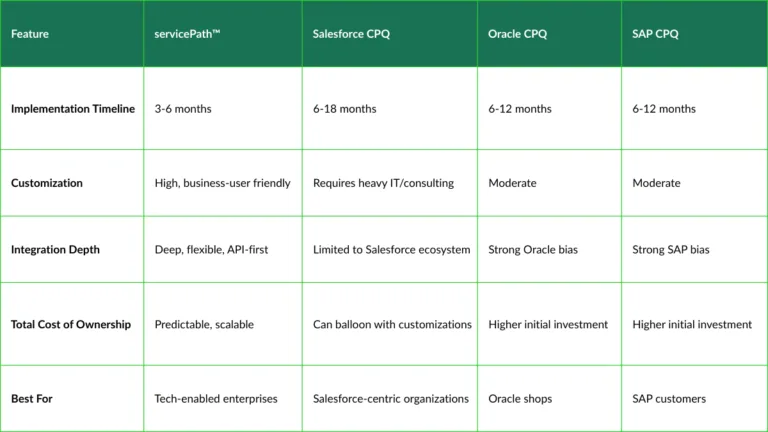
Key Insights:
-
Implementation Timeline: servicePath™ offers a quicker deployment (3–6 months) compared to its competitors, which range from 6 to 18 months.
-
Customization: servicePath™ provides high customization that’s friendly to business users, reducing reliance on IT. In contrast, Salesforce CPQ often requires significant IT or consulting resources for customization.
-
Integration Depth: servicePath™ boasts deep, flexible, API-first integrations, making it adaptable to various systems. Salesforce CPQ is primarily limited to the Salesforce ecosystem, while Oracle and SAP CPQ are more suited to their respective ecosystems.
-
Total Cost of Ownership: servicePath™ offers predictable and scalable costs. Other platforms may have higher initial investments or costs that increase with customizations.
In summary, servicePath™ stands out for its high user satisfaction, rapid implementation, and flexible integration capabilities, making it a strong choice for tech-enabled enterprises seeking a scalable and user-friendly CPQ solution. (source:SelectHub+11Gartner+11Software Advice+11)
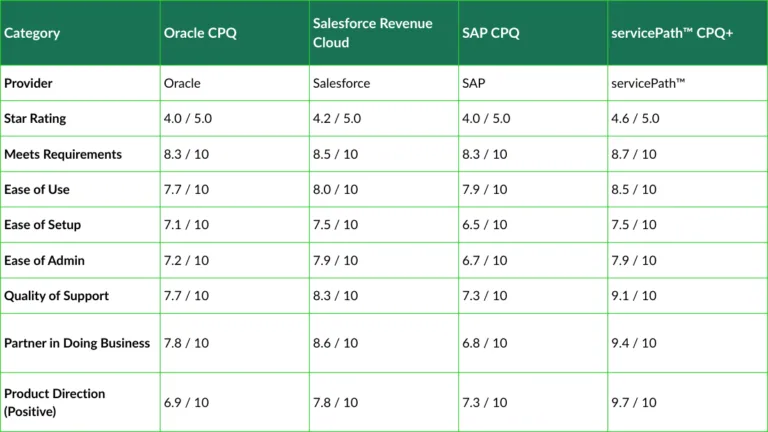
4.User Ratings Snapshot: How CPQ Platforms Stack Up
When it comes to choosing a CPQ solution, real user feedback offers invaluable insights into platform performance and satisfaction. According to recent G2 reviews, servicePath™ CPQ+ leads the pack with a 4.6 out of 5-star rating, surpassing competitors like Salesforce Revenue Cloud (4.2), Oracle CPQ (4.0), and SAP CPQ (4.0). Users particularly commend servicePath™ for its ease of use, setup, administration, and exceptional support, highlighting its effectiveness in meeting complex business requirements.
The Future of the Revenue Puzzle: What’s Next for CPQ?

As AI, automation, and customer expectations evolve, so too does the puzzle. The next generation of CPQ will bring even more advanced pieces to the table:
- Composable Architecture:
API-first, best-of-breed stacks will let you swap out or upgrade puzzle pieces without redoing the entire picture. - AI-Driven Guidance:
CPQ will recommend the next best product, price, or bundle—like having a puzzle expert at your side. - Deeper Analytics:
Real-time margin, risk, and deal health dashboards will help you spot gaps and opportunities as you build. - Self-Service & Partner Enablement:
Customers and partners will be able to assemble their own part of the puzzle, accelerating sales and reducing friction.
Puzzle Takeaway:
The companies that thrive will be those who treat their revenue stack as a living puzzle—constantly optimizing, upgrading, and ensuring every piece, from quoting to billing, fits together seamlessly.
Executive Checklist: Snap Your Puzzle Pieces into Place

s an executive, your mission is clear: ensure every component of your sales and revenue operations aligns seamlessly, much like assembling a well-crafted puzzle. Each piece must fit perfectly to reveal the complete picture of business success. Here’s a comprehensive breakdown of your revenue operations checklist:
1. Know Your Data Ownership
Understanding data ownership isn’t just about clarity—it’s about accountability. Clearly assign responsibility for each stage in the revenue cycle:
- Product Definition: Who ensures the product catalog and options are accurately reflected?
- Pricing & Quoting: Who manages the accuracy and consistency of pricing models and quotes?
- Usage Tracking: Who monitors product/service utilization and billing triggers?
- Invoicing: Who’s accountable for timely, accurate billing?
- Revenue Recognition: Who tracks and confirms revenue is correctly accounted for and reported?
Eliminating confusion at each stage ensures smoother transitions, fewer errors, and better decision-making.
2. Insist on Easy Integration
Integration complexity can slow your business down and add unexpected costs. To prevent this:
- Standard APIs: Require straightforward REST or event-based APIs to ensure systems integrate smoothly.
- Real-Time Connectivity: Prioritize real-time or near-real-time data flow between your CPQ and CRM, ERP, and billing systems.
- Avoid Custom Code: Limit custom integrations, focusing instead on reliable, out-of-the-box connectors or platforms like Workato that simplify integrations.
When integration feels effortless, your business processes flow faster and more reliably.
3. Automate Approvals and Rules
If you’re still using manual approvals and spreadsheets, you’re creating bottlenecks. Instead:
- Embedded Governance: Build your business rules directly into your CPQ system to automate compliance and ensure consistency.
- Streamlined Approvals: Replace manual approvals with automated workflows, eliminating unnecessary delays.
- Transparency & Control: Automated governance reduces errors, prevents rogue pricing or discounting, and enhances your sales velocity.
Removing manual processes frees your team to focus on growth, not paperwork.
4. Plan Your Pricing Logic Early
Many businesses lose valuable time and money by leaving mediation and pricing logic as an afterthought. Instead, be proactive:
- Define Pricing Clearly: Clearly define your pricing models, discount policies, and usage-based billing rules from day one.
- Integrate Pricing & Rating Logic: Build these rules into your product strategy and CPQ system early to avoid costly adjustments later.
Early integration ensures consistency in pricing strategies and prevents revenue leakage.
5. Speed Matters—Aim Under 24 Hours
If quoting to billing takes more than a day, you’ve got puzzle pieces in the wrong places. Quick turnaround is your sign everything fits perfectly.
- Benchmarking: Strive to complete the entire quote-to-bill process within 24 hours. Achieving this benchmark indicates that your revenue operations are well-aligned and efficient.
- Identify Bottlenecks: Analyze each stage of the process to pinpoint delays and implement solutions to streamline operations.
Fast processing not only improves customer satisfaction but also accelerates revenue recognition.
By systematically addressing these areas, executives can ensure that their revenue operations are cohesive, efficient, and poised for sustainable growth.
Complete Your Revenue Puzzle Today
Don’t let your revenue strategy remain incomplete with missing or mismatched pieces. servicePath™ CPQ+ is the corner piece that brings clarity, speed, and scalability to your entire quote-to-cash process.
Take the Next Step:
? Read More: Explore additional blogs and insights on CPQ, quoting transformation, and digital sales enablement.
? Download Our Case Studies: See how leading enterprises have transformed revenue operations with servicePath™.
⭐ Check Out Our G2 Reviews: Discover what real users love about servicePath™.
? Recognized by Gartner: Find out why we’ve been named a Visionary in the Gartner Magic Quadrant for CPQ Application Suites three years in a row.
☕ Book a Virtual Coffee: Let’s chat about your challenges and explore how servicePath™ can help. No pressure—just insights.
Let’s grow revenue together—one smart quote at a time.
Frequently Asked Questions
1. What is CPQ and why is it critical for usage-based pricing?
CPQ (Configure, Price, Quote) automates complex quoting processes. For usage-based pricing, it handles multi-metric tiers, hybrid commits, and real-time approvals that billing systems alone can’t manage.
2.What’s the difference between CPQ and billing platforms?
Billing platforms meter and invoice usage; CPQ configures and prices the deal beforehand. Without CPQ, usage-based strategies break down at the deal desk before they ever reach billing.
3.Why isn’t billing alone sufficient?
Billing engines rate events; CPQ must model multi‑metric tiers, hybrid commits, and real‑time governance upstream.
4. What ROI can companies expect from modern CPQ?
Companies implementing CPQ see faster quote-to-cash cycles (10-15% reduction in quote turnaround), fewer order errors, and increased average deal size (up to 20%).
5.What are the key differences between build, buy, and migrate CPQ options?
Building takes 12-24 months with $5-10M TCO; buying takes 3-6 months with $1-3M TCO; migrating from EOL systems takes 6-12 months with variable costs but escapes vendor lock-in.
6. Why does migrating off an EOL CPQ take 6-12 months?
Migration involves data cleansing, integration rebuilding, process re-engineering, user training, and risk mitigation—all while maintaining a live, business-critical system.
7 How does best-of-breed CPQ compare to suite-based solutions?
Best-of-breed offers deeper integration options, better support for hybrid/usage pricing, faster innovation cycles, and typically lower TCO, while suites offer tighter native ecosystem connections.
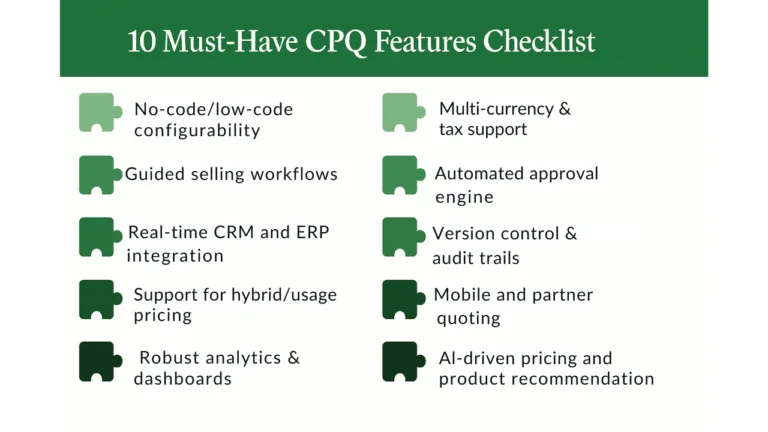
8.What are the top must-have features in a modern CPQ?
No-code configuration, automated approvals, real-time integrations, support for hybrid pricing, and robust analytics are essential for today’s complex deals.
9.How is AI transforming CPQ capabilities?
AI enables dynamic pricing, exception-based approvals, personalized offering recommendations, predictive analytics, and automated integration—making the entire quoting process smarter and more efficient.
10.What key considerations should guide a migration from an EOL CPQ system?
Leveraging institutional knowledge, using the opportunity to re-engineer processes, escaping vendor lock-in, and selecting a solution that best fits your industry needs.
Citations & Sources
- Forrester Research: B2B Digital Sales Imperative (2024)
- Gartner: CPQ Implementation Best Practices (2024)
- IDC MarketScape: CPQ Applications Vendor Assessment (2024)
- Gartner Peer Insights: CPQ Market Definition
- OpenView: State of Usage-Based Pricing (2024)
- Gartner: Top Emerging Technologies & Trends
- Bessemer Venture Partners: Usage-Based Pricing Analysis
- Postman: State of the API 2024 (API-first)
- Deloitte: 5G/IoT Traffic Growth Forecast (2024)
- Snowflake Financial Results (January 2025)
- Twilio Usage-Based Billing Analysis (2023
- Deloitte: 2024 Telecom Industry Outlook
- G2 servicePath™ CPQ Reviews (November 2024)
- SelectHub: servicePath™ vs Oracle CPQ Comparison (February 2025)
- SelectHub: Salesforce CPQ vs servicePath™ Comparison (February 2025)
- Gartner Magic Quadrant for CPQ Applications (December 2023)
- CloudWars: SAP vs. Salesforce Analysis (February 2025)
- Gartner Magic Quadrant for CPQ Applications (December 2024)
- ServicePath: Press Release—Gartner MQ Visionary
- Forrester (2024): Pricing Models to Watch